
Title
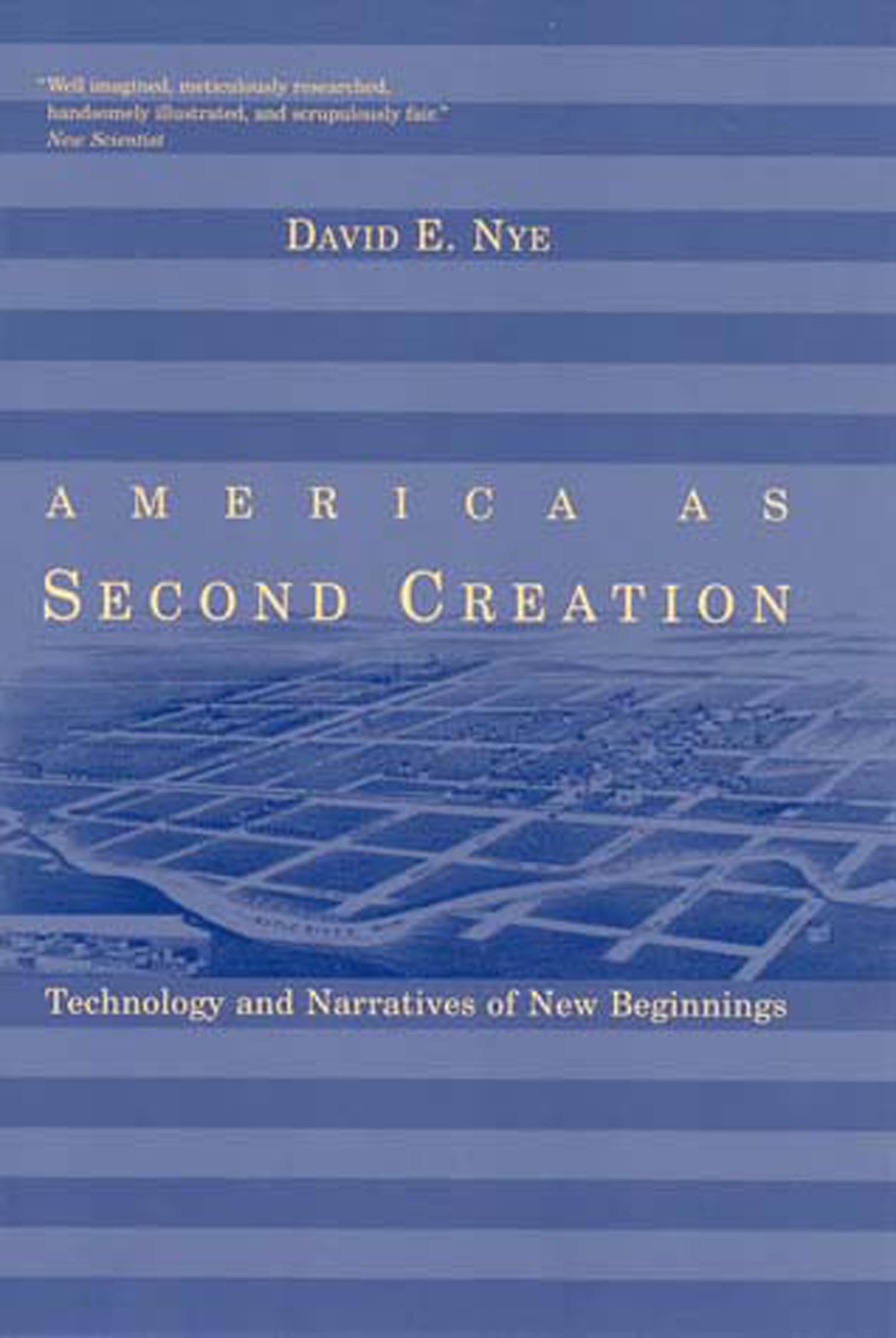
America as Second Creation: Technology and Narratives of New Beginnings (Mit Press),Used
Sold by Ergodebooks, an authorized reseller.
Returns accepted within 30 days | support@ergodebooks.com
Shipping Information
- Free Standard Shipping — United States only
- Processing Time: 3–5 business days
- Estimated Delivery: 6–10 business days after dispatch
- Double-boxed, fully insured & discreetly packaged
- Tracking number sent via email once dispatched
Returns & Refund
Returns accepted within 30 days of delivery.
Damaged or Defective Item
Free return shipping + replacement or full refund
Wrong Item Received
Free return shipping + replacement or full refund
Change of Mind
Return shipping at customer's expense · 25% restocking fee applies
Payment Option

An exploration of the dialogue that emerged after 1776 between different visions of what it meant to use new technologies to transform the land.After 1776, the former American colonies began to reimagine themselves as a unified, selfcreated community. Technologies had an important role in the resulting national narratives, and a few technologies assumed particular prominence. Among these were the axe, the mill, the canal, the railroad, and the irrigation dam. In this book David Nye explores the stories that clustered around these technologies. In doing so, he rediscovers an American story of origins, with America conceived as a second creation built in harmony with God's first creation.While mainstream Americans constructed technological foundation stories to explain their place in the New World, however, marginalized groups told other stories of destruction and loss. Native Americans protested the loss of their forests, fishermen resisted the construction of dams, and early environmentalists feared the exhaustionof resources. A water mill could be viewed as the kernel of a new community or as a new way to exploit labor. If passengers comprehended railways as part of a larger narrative about American expansion and progress, many farmers attacked railroad land grants. To explore these contradictions, Nye devotes alternating chapters to narratives of second creation and to narratives of those who rejected it.Nye draws on popular literature, speeches, advertisements, paintings, and many other media to create a history of American foundation stories. He shows how these stories were revised periodically, as social and economic conditions changed, without ever erasing the earlier stories entirely. The image of the isolated frontier family carving a homestead out of the wilderness with an axe persists to this day, alongside later images and narratives. In the book's conclusion, Nye considers the relation between these earlier stories and such later American developments as the conservation movement, narratives of environmental recovery, and the idealization of wilderness.
⚠️ WARNING (California Proposition 65):
This product may contain chemicals known to the State of California to cause cancer, birth defects, or other reproductive harm.
For more information, please visit www.P65Warnings.ca.gov.
- Q: How many pages does the book have? A: This book has three hundred eighty-four pages. It's a comprehensive exploration of American narratives and technology.
- Q: What is the binding type of this book? A: The binding type is paperback. This makes it lightweight and easy to carry.
- Q: What are the dimensions of the book? A: The book measures six inches in length, nine inches in height, and zero point ninety-six inches in width. These dimensions make it convenient for reading.
- Q: Who is the author of this book? A: The author is David E. Nye. He is known for his work on technology and American narratives.
- Q: What genre does this book belong to? A: This book is categorized under history and technology. It addresses themes of technological impact on American identity.
- Q: What is the main theme of the book? A: The main theme explores the dialogue between technology and narratives after seventeen seventy-six. It reimagines American identity through technology.
- Q: Is this book suitable for young readers? A: The book is aimed at adults and older teens. It covers complex historical themes that may not be suitable for younger audiences.
- Q: How does the book approach the topic of technology? A: The book alternates between narratives of technological progress and those of marginalized groups. It provides a balanced view of American history.
- Q: Can this book be used for academic purposes? A: Yes, this book is suitable for academic study. Its detailed exploration of technology and history makes it a valuable resource.
- Q: What kind of stories are included in the book? A: The book includes narratives from popular literature, speeches, and advertisements. It provides a diverse perspective on American technological history.
- Q: How should I care for this book? A: To keep the book in good condition, store it in a dry, cool place. Avoid direct sunlight to prevent fading.
- Q: Is there any hazardous material in this book? A: No, there are no hazardous materials in this book. It is safe for general reading.
- Q: What if the book arrives damaged? A: If the book arrives damaged, you can contact the seller for a return or exchange. Make sure to keep the original packaging.
- Q: Are there any illustrations in the book? A: Yes, the book includes twenty-six illustrations. These enhance the understanding of the narratives presented.
- Q: Does the book discuss environmental themes? A: Yes, it discusses environmental themes, including the perspectives of early environmentalists. These themes are integral to the narratives.
- Q: Is this book part of a series? A: No, this book is not part of a series. It stands alone as a comprehensive examination of American technology and narratives.