
Title

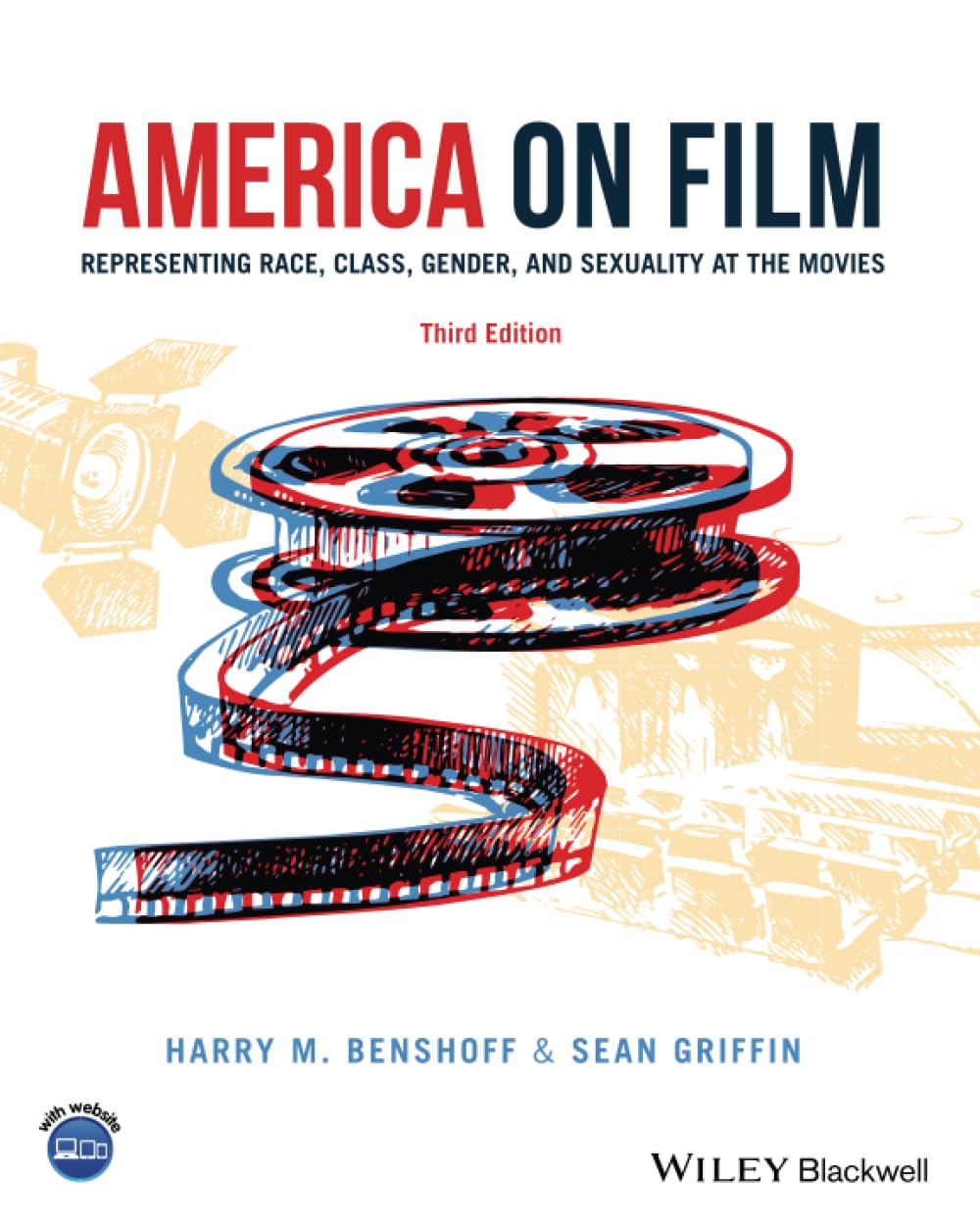
America On Film: Representing Race, Class, Gender, And Sexuality At The Movies, 3Rd Edition
Sold by Ergodebooks, an authorized reseller.
Returns accepted within 30 days | support@ergodebooks.com
Shipping Information
- Free Standard Shipping — United States only
- Processing Time: 3–5 business days
- Estimated Delivery: 6–10 business days after dispatch
- Double-boxed, fully insured & discreetly packaged
- Tracking number sent via email once dispatched
Returns & Refund
Returns accepted within 30 days of delivery.
Damaged or Defective Item
Free return shipping + replacement or full refund
Wrong Item Received
Free return shipping + replacement or full refund
Change of Mind
Return shipping at customer's expense · 25% restocking fee applies
Payment Option

A Comprehensive And Insightful Examination Of The Representation Of Diverse Viewpoints And Perspectives In American Cinema Throughout The 20Th And 21St Centuriesamerica On Film: Representing Race, Class, Gender And Sexuality At The Movies, Now In Its Third Edition, Is An Authoritative And Lively Examination Of Diversity Issues Within American Cinema. Celebrated Authors And Academics Harry M. Benshoff And Sean Griffin Provide Readers With A Comprehensive Discussion And Overview Of The Industrial, Sociocultural, And Aesthetic Factors That Contribute To Cinematic Representations Of Race, Class, Gender, Sexuality, And Ability.The Book Incorporates Several Different Theoretical Perspectives, Including Film Genre, Auteurism, Cultural Studies, Orientalism, The Male Gaze, Feminism, And Queer Theory. The Authors Examine Each Selected Subject Via Representative Films, Figures, And Movements. Each Chapter Also Includes An Indepth Analysis Of A Single Film To Illuminate And Inform Its Discussion Of The Chosen Topic.America On Film Fearlessly Approaches And Tackles Several Controversial Areas Of Representation In Film, Including The Portrayal Of Both Masculinity And Femininity In Film And African And Asianamericans In Film. It Devotes The Entirety Of Part V To An Analysis Of The Depiction Of Sex And Sexuality In American Film, With A Particular Emphasis On The Portrayal Of Homosexuality. Topics Covered Include: The Structure And History Of American Filmmaking, Including A Discussion Of The Evolution Of The Business Of Hollywood Cinema African Americans And American Film, With A Discussion Of Blackkklansman Informing Its Examination Of Broader Issues Asian, Latin/X, And Native Americans On Film Classical Hollywood Cinema And Class, With An Indepth Examination Of The Florida Project Women In Classical Hollywood Filmmaking, Including A Discussion Of The 1955 Film, All That Heaven Allowsperfect For Undergraduate And Graduate Students In Film, Media, And Diversityrelated Courses, The Book Also Belongs On The Shelves Of Anyone Interested In Diversity Issues In The Context Of American Studies, Communications, History, Or Gender Studies. Lastly, It'S Ideal For Use Within Corporate Diversity Training Curricula And Human Relations Training Within The Entertainment Industry.
⚠️ WARNING (California Proposition 65):
This product may contain chemicals known to the State of California to cause cancer, birth defects, or other reproductive harm.
For more information, please visit www.P65Warnings.ca.gov.
- Q: How many pages does the book have? A: The book has four hundred forty-eight pages. This makes it a comprehensive resource for studying representation in American cinema.
- Q: What are the dimensions of the book? A: The book measures seven point nine one inches in length, one point two inches in width, and nine point nine inches in height. These dimensions make it suitable for standard bookshelf storage.
- Q: What binding type does the book use? A: The book is published in paperback binding. This makes it lightweight and easy to handle for reading or studying.
- Q: Who are the authors of this book? A: The authors of the book are Harry M. Benshoff and Sean Griffin. They are recognized academics in the field of film and media studies.
- Q: What edition of the book is it? A: This is the third edition of the book. It includes updated content reflecting more recent discussions on diversity in film.
- Q: What topics does the book cover? A: The book covers topics like race, class, gender, and sexuality in American cinema. It provides a thorough analysis of these issues through various films and theoretical perspectives.
- Q: Is this book suitable for undergraduate students? A: Yes, the book is suitable for undergraduate students. It is ideal for courses in film, media, and diversity studies.
- Q: Can graduate students benefit from this book? A: Yes, graduate students can benefit from this book. It provides in-depth analyses that are valuable for advanced studies in film and media.
- Q: What kind of films does the book analyze? A: The book analyzes a variety of films, including classics and contemporary works. Each chapter features an in-depth analysis of representative films.
- Q: Does the book include theoretical perspectives? A: Yes, the book includes several theoretical perspectives. These range from feminism to queer theory, enhancing the discussion of representation in film.
- Q: Is this book appropriate for diversity training? A: Yes, this book is appropriate for diversity training. It can be used in corporate diversity curricula and human relations training.
- Q: Does the book tackle controversial topics? A: Yes, the book fearlessly tackles controversial topics. It discusses the portrayal of masculinity, femininity, and sexuality in American cinema.
- Q: What is the primary focus of the book? A: The primary focus of the book is on the representation of diverse viewpoints in American film. It examines how these representations have evolved over time.
- Q: Are there specific films highlighted in the book? A: Yes, specific films are highlighted in the book. Notable examples include 'BlacKkKlansman' and 'The Florida Project'.
- Q: Is the book suitable for anyone interested in American studies? A: Yes, the book is suitable for anyone interested in American studies. It offers insights into cultural and historical contexts of film.
- Q: What genres does the book discuss? A: The book discusses multiple genres, including drama and documentary. It examines how these genres approach representation in unique ways.