If you have any questions, you are always welcome to contact us. We'll get back to you as soon as possible, withing 24 hours on weekdays.
Customer service
All questions about your order, return and delivery must be sent to our customer service team by e-mail at yourstore@yourdomain.com
Sale & Press
If you are interested in selling our products, need more information about our brand or wish to make a collaboration, please contact us at press@yourdomain.com
Help
If you have any questions, you are always welcome to contact us. We'll get back to you as soon as possible, withing 24 hours on weekdays.
Customer service
All questions about your order, return and delivery must be sent to our customer service team by e-mail at yourstore@yourdomain.com
Sale & Press
If you are interested in selling our products, need more information about our brand or wish to make a collaboration, please contact us at press@yourdomain.com
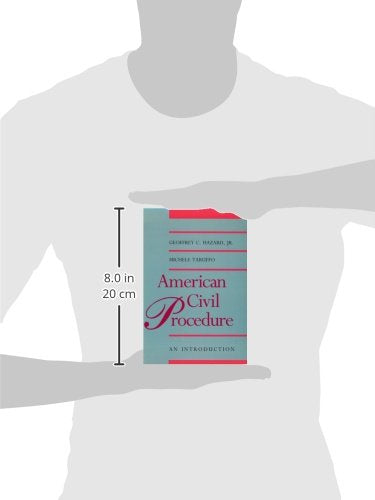
From divorce proceedings to personal injury disputes to lawsuits over busing, affirmative action, and labor relations, most conflicts in American society may eventually find their way into a courtroom. Such civil conflicts, which do not involve violations of the criminal code, encompass both actions between private parties and public controversies.This clear and direct book by two distinguished professors of law describes and analyzes civil litigation in the United States. Geoffrey C. Hazard, Jr., and Michele Taruffo discuss both specific details and broader themes of American civil litigation, explaining (without legalese) jury trial, the adversary system, the power of courts to make law as well as to 'declare' it, and the role of civil justice in government and in the resolution of controversial social issues. Hazard and Taruffo examine the stages of civil procedure, including the lawyers' role in: preparing and presenting cases; the pretrial, pleading and discovery, trial, and appeal process; and procedural variations. They explore the historical evolution of common law and procedure and compare American civil procedure with that in other modern societies in Europe, Latin America, and Japan. They conclude by discussing the economic, political, and moral constraints on litigation, possible innovations to the process, and the political significance of public access to civil justice.
⚠️ WARNING (California Proposition 65):
This product may contain chemicals known to the State of California to cause cancer,
birth defects, or other reproductive harm.
For MAP (Minimum Advertised Price) violations and Intellectual Property (IP) or Trademark concerns, please contact:
support@ergodebooks.com
⚠️ California Proposition 65 Warning: Some products sold on this website may expose you to chemicals known to the State of California to cause cancer, birth defects, or other reproductive harm. For more information, visit www.P65Warnings.ca.gov.