
Title
American Made: What Happens to People When Work Disappears,Used
Sold by Ergodebooks, an authorized reseller.
Returns accepted within 30 days | support@ergodebooks.com
Shipping Information
- Free Standard Shipping — United States only
- Processing Time: 3–5 business days
- Estimated Delivery: 6–10 business days after dispatch
- Double-boxed, fully insured & discreetly packaged
- Tracking number sent via email once dispatched
Returns & Refund
Returns accepted within 30 days of delivery.
Damaged or Defective Item
Free return shipping + replacement or full refund
Wrong Item Received
Free return shipping + replacement or full refund
Change of Mind
Return shipping at customer's expense · 25% restocking fee applies
Payment Option

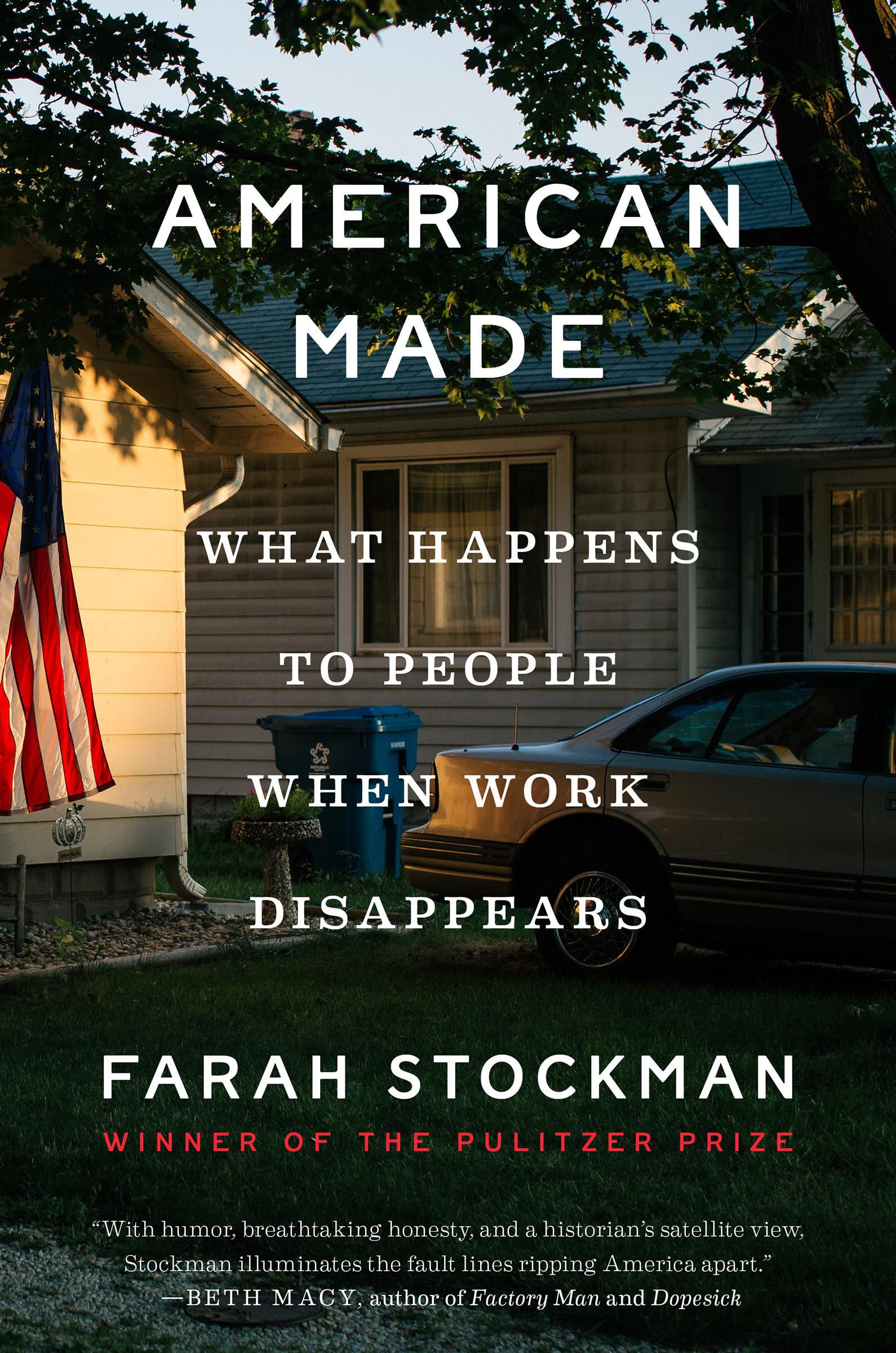
What happens when Americans lose their jobs? In American Made, an illuminating story of ruin and reinvention, Pulitzer Prizewinning journalist Farah Stockman gives an upclose look at the profound role work plays in our sense of identity and belonging, as she follows three workers whose lives unravel when the factory they have dedicated so much to closes down.?ith humor, breathtaking honesty, and a historian? satellite view, American Made illuminates the fault lines ripping America apart.?Beth Macy, author of Factory Man and DopesickShannon, Wally, and John built their lives around their place of work. Shannon, a white single mother, became the first woman to run the dangerous furnaces at the Rexnord manufacturing plant in Indianapolis, Indiana, and was proud of producing one of the world? top brands of steel bearings. Wally, a black man known for his initiative and kindness, was promoted to chairman of efficiency, one of the most coveted posts on the factory floor, and dreamed of starting his own barbecue business one day. John, a white machine operator, came from a multigenerational union family and clashed with a work environment that was increasingly hostile to organized labor.The Rexnord factory had served as one of the economic engines for the surrounding community. When it closed, hundreds of people lost their jobs. What had life been like for Shannon, Wally, and John, before the plant shut down? And what became of them after the jobs moved to Mexico and Texas?American Made is the story of a community struggling to reinvent itself. It is also a story about race, class, and American values, and how jobs serve as a bedrock of people? lives and drive powerful social justice movements. This revealing book shines a light on a crucial political moment, when joblessness and anxiety about the future of work have made themselves heard at a national level. Most of all, American Made is a story about people: who we consider to be one of us and how the dignity of work lies at the heart of who we are.
⚠️ WARNING (California Proposition 65):
This product may contain chemicals known to the State of California to cause cancer, birth defects, or other reproductive harm.
For more information, please visit www.P65Warnings.ca.gov.
- Q: How many pages does the book 'American Made' have? A: The book has four hundred thirty-two pages. This length allows for an in-depth exploration of the themes surrounding work and identity.
- Q: What is the binding type of 'American Made'? A: The book is a hardcover edition. This type of binding is known for its durability and quality.
- Q: What are the dimensions of 'American Made'? A: The book measures six point thirty-four inches in length, one point thirty-eight inches in width, and nine point fifty-seven inches in height. These dimensions make it a suitable size for reading and display.
- Q: Is 'American Made' suitable for young readers? A: Yes, the book is suitable for older teens and adults. It discusses complex themes about work and identity that resonate more with mature audiences.
- Q: What themes are explored in 'American Made'? A: The book explores themes of work, identity, race, and class. It provides insights into how job loss affects individuals and communities.
- Q: Who is the author of 'American Made'? A: The author is Farah Stockman. She is a Pulitzer Prize-winning journalist who offers a deep examination of the impact of job loss.
- Q: How do I care for my copy of 'American Made'? A: To care for your copy, keep it in a dry place and avoid exposure to direct sunlight. This will help preserve the cover and pages.
- Q: Is 'American Made' a good gift for someone interested in social issues? A: Yes, it is an excellent gift for those interested in labor, economics, and social justice. Its thoughtful narrative makes it a compelling read.
- Q: What if my copy of 'American Made' arrives damaged? A: If your copy arrives damaged, you can return it for a replacement or refund. Check the retailer's return policy for specific instructions.
- Q: Can I read 'American Made' in one sitting? A: While it is possible, the book's four hundred thirty-two pages may require multiple sittings for thorough understanding. It's best enjoyed over several sessions.
- Q: What type of stories does 'American Made' include? A: The book includes personal stories of three individuals affected by job loss. Their experiences highlight the broader socio-economic issues in America.
- Q: Is 'American Made' based on real events? A: Yes, it is based on real events and real people. The narrative reflects the struggles of workers in a changing economy.
- Q: What kind of reader would enjoy 'American Made'? A: Readers interested in labor history, economic transitions, and personal narratives will enjoy this book. It appeals to those seeking to understand contemporary social issues.
- Q: Does 'American Made' have any illustrations or photos? A: No, 'American Made' does not include illustrations or photos. It focuses on the narrative and insights provided by the author.
- Q: What makes 'American Made' significant in today's context? A: The book is significant as it addresses current issues of job loss and economic anxiety, resonating with many Americans today. Its insights into work's role in identity are timely.