If you have any questions, you are always welcome to contact us. We'll get back to you as soon as possible, withing 24 hours on weekdays.
Customer service
All questions about your order, return and delivery must be sent to our customer service team by e-mail at yourstore@yourdomain.com
Sale & Press
If you are interested in selling our products, need more information about our brand or wish to make a collaboration, please contact us at press@yourdomain.com
Help
If you have any questions, you are always welcome to contact us. We'll get back to you as soon as possible, withing 24 hours on weekdays.
Customer service
All questions about your order, return and delivery must be sent to our customer service team by e-mail at yourstore@yourdomain.com
Sale & Press
If you are interested in selling our products, need more information about our brand or wish to make a collaboration, please contact us at press@yourdomain.com
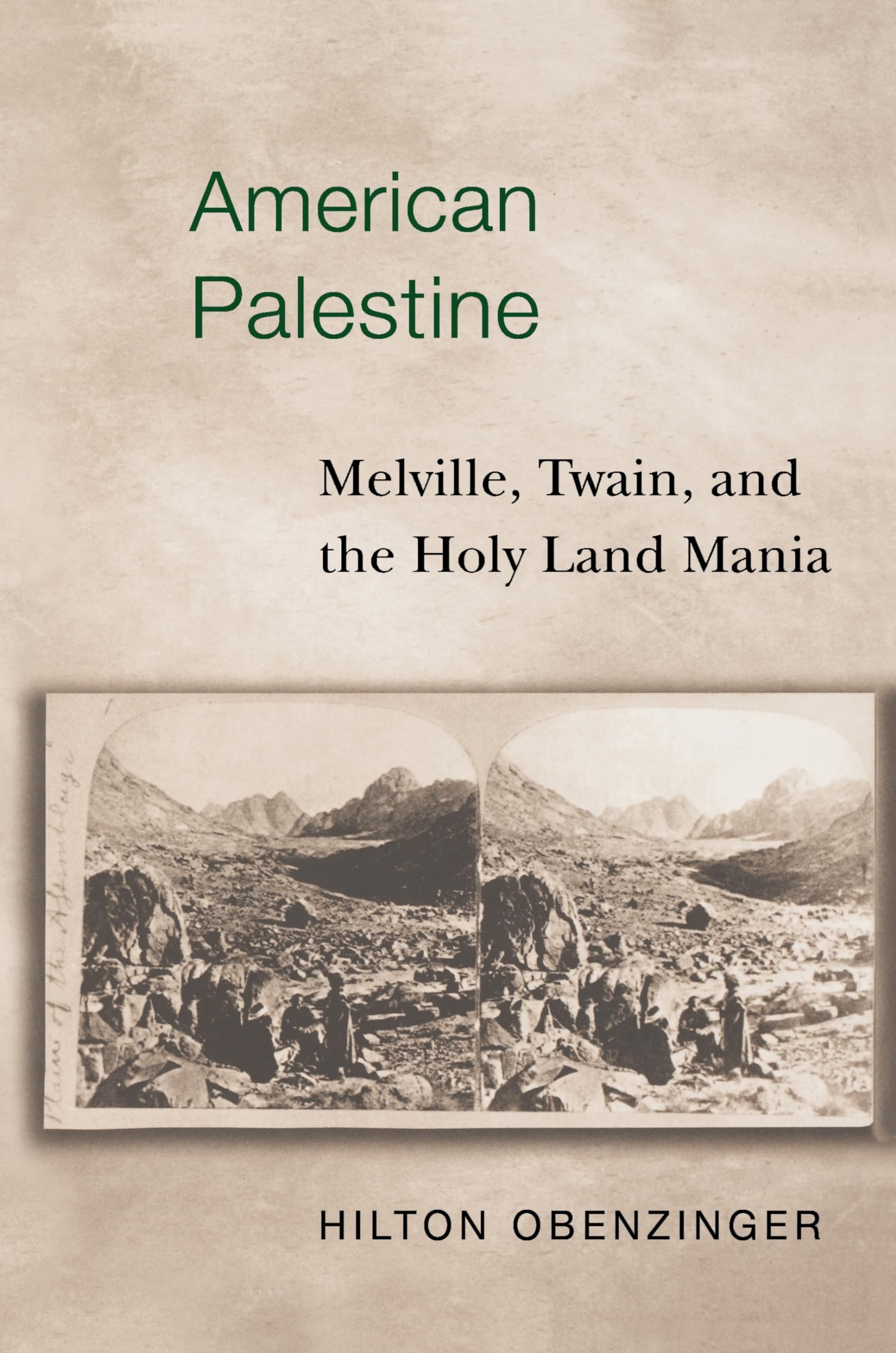
In the nineteenth century, American tourists, scholars, evangelists, writers, and artists flocked to Palestine as part of a 'Holy Land mania.' Many saw America as a New Israel, a modern nation chosen to do God's work on Earth, and produced a rich variety of inspirational art and literature about their travels in the original promised land, which was then part of Ottomancontrolled Palestine. In American Palestine, Hilton Obenzinger explores two 'infidel texts' in this tradition: Herman Melville's Clarel: A Poem and Pilgrimage to the Holy Land (1876) and Mark Twain's The Innocents Abroad: or, The New Pilgrims' Progress (1869). As he shows, these works undermined in very different ways conventional assumptions about America's divine mission.In the darkly philosophical Clarel, Melville found echoes of Palestine's apparent desolation and ruin in his own spiritual doubts and in America's materialism and corruption. Twain's satiric travelogue, by contrast, mocked the romantic naivet of Americans abroad, noting the incongruity of a 'fantastic mob' of 'Yanks' in the Holy Land and contrasting their exalted notions of Palestine with its prosaic reality. Obenzinger demonstrates, however, that Melville and Twain nevertheless shared many colonialist and orientalist assumptions of the day, revealed most clearly in their ideas about Arabs, Jews, and Native Americans.Combining keen literary and historical insights and careful attention to the context of other American writings about Palestine, this book throws new light on the construction of American identity in the nineteenth century.
⚠️ WARNING (California Proposition 65):
This product may contain chemicals known to the State of California to cause cancer,
birth defects, or other reproductive harm.
For MAP (Minimum Advertised Price) violations and Intellectual Property (IP) or Trademark concerns, please contact:
support@ergodebooks.com
⚠️ California Proposition 65 Warning: Some products sold on this website may expose you to chemicals known to the State of California to cause cancer, birth defects, or other reproductive harm. For more information, visit www.P65Warnings.ca.gov.