If you have any questions, you are always welcome to contact us. We'll get back to you as soon as possible, withing 24 hours on weekdays.
Customer service
All questions about your order, return and delivery must be sent to our customer service team by e-mail at yourstore@yourdomain.com
Sale & Press
If you are interested in selling our products, need more information about our brand or wish to make a collaboration, please contact us at press@yourdomain.com
Help
If you have any questions, you are always welcome to contact us. We'll get back to you as soon as possible, withing 24 hours on weekdays.
Customer service
All questions about your order, return and delivery must be sent to our customer service team by e-mail at yourstore@yourdomain.com
Sale & Press
If you are interested in selling our products, need more information about our brand or wish to make a collaboration, please contact us at press@yourdomain.com
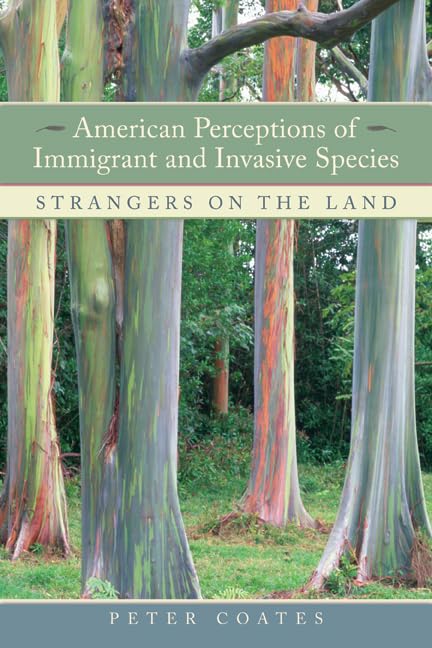
Sometimes by accident and sometimes on purpose, humans have transported plants and animals to new habitats around the world. Arriving in everincreasing numbers to American soil, recent invaders have competed with, preyed on, hybridized with, and carried diseases to native species, transforming our ecosystems and creating anxiety among environmentalists and the general public. But is American anxiety over this crisis of ecological identity a recent phenomenon? Charting shifting attitudes to alien species since the 1850s, Peter Coates brings to light the rich cultural and historical aspects of this story by situating the history of immigrant flora and fauna within the wider context of human immigration. Through an illuminating series of particular invasions, including the English sparrow and the eucalyptus tree, what he finds is that we have always perceived plants and animals in relation to ourselves and the polities to which we belong. Setting the saga of human relations with the environment in the broad context of scientific, social, and cultural history, this thoughtprovoking book demonstrates how profoundly notions of nationality and debates over race and immigration have shaped American understandings of the natural world.
⚠️ WARNING (California Proposition 65):
This product may contain chemicals known to the State of California to cause cancer,
birth defects, or other reproductive harm.
For MAP (Minimum Advertised Price) violations and Intellectual Property (IP) or Trademark concerns, please contact:
support@ergodebooks.com
⚠️ California Proposition 65 Warning: Some products sold on this website may expose you to chemicals known to the State of California to cause cancer, birth defects, or other reproductive harm. For more information, visit www.P65Warnings.ca.gov.