
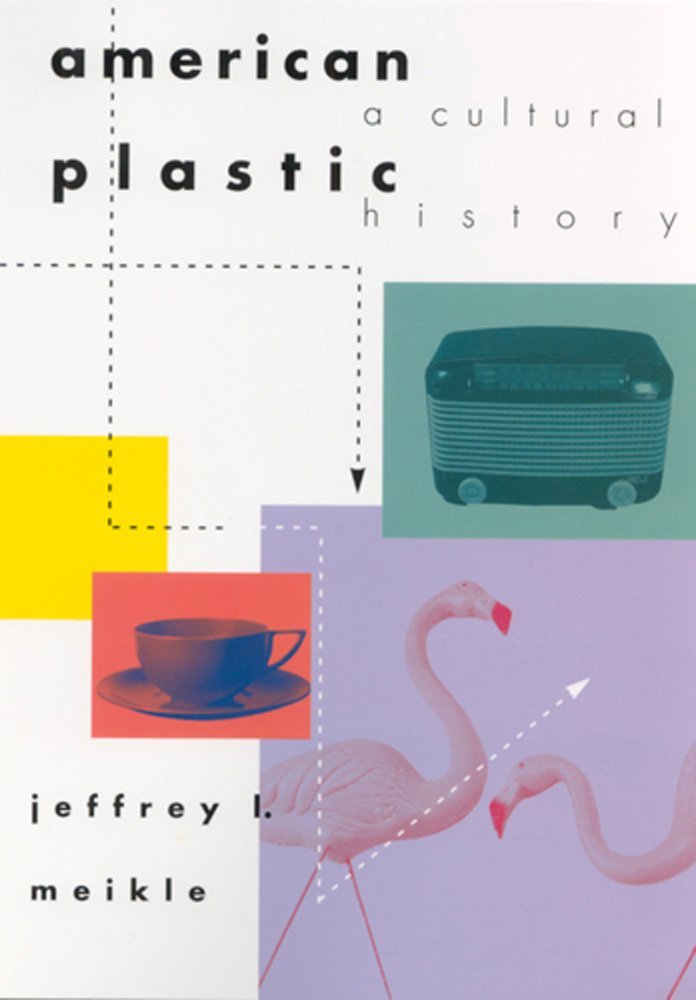
Title
American Plastic: A Cultural History,Used
Sold by Ergodebooks, an authorized reseller.
Returns accepted within 30 days | support@ergodebooks.com
Shipping Information
- Free Standard Shipping — United States only
- Processing Time: 3–5 business days
- Estimated Delivery: 6–10 business days after dispatch
- Double-boxed, fully insured & discreetly packaged
- Tracking number sent via email once dispatched
Returns & Refund
Returns accepted within 30 days of delivery.
Damaged or Defective Item
Free return shipping + replacement or full refund
Wrong Item Received
Free return shipping + replacement or full refund
Change of Mind
Return shipping at customer's expense · 25% restocking fee applies
Payment Option

Winner of the 1996 Dexter Prize from the Society for the History of Technology and a 1996 Choice Outstanding Academic BookA splendid history of plastic. The book is authoritative, thorough, interdisciplinary, and intriguing. . . [Meikle] traces the course of plastics from 19thcentury celluloid and the fist wholly synthetic bakelite, in 1907, through the proliferation of compounds (vinyls, acrylics, polystyrene, nylon, etc.) and recent ecological concerns. . . .Interested readers of whatever predisposition will likely enjoy this comprehensive and thoughtful treatise.Publishers WeeklyA landmark account. . . . He combines a firstrate technological history with a most impressive cultural analysis of how plastics evolved from a material surrounded by utopian expectations to a material epitomizing inferiority and eventually to a part of everyday life. . . . One of the most significant works ever written in the history of American technology and culture.Nature[A] truly outstanding work . . . here is a work of intellectual strength written with great literary style. . . . This significant work is likely to be widely cited in academic circles, defining the field for a generation of readers. Dont let it pass you by! An extraordinary contribution, for all levels of readers.ChoiceThis is real interdisciplinary work, roaming in focus, adaptive in method.Journal of American HistoryThis scholarly and comprehensive work . . . is nontechnical and emphasizes the social and cultural impact of plastics. . . . Highly recommended for anyone with an interest in understanding contemporary society.Library Journal
⚠️ WARNING (California Proposition 65):
This product may contain chemicals known to the State of California to cause cancer, birth defects, or other reproductive harm.
For more information, please visit www.P65Warnings.ca.gov.
- Q: What is the main subject of 'American Plastic: A Cultural History'? A: The book explores the history and cultural significance of plastic, tracing its evolution from early materials like celluloid and bakelite to its impact on contemporary society.
- Q: Who is the author of this book? A: The author is Jeffrey Meikle, a recognized expert in the field of materials science and cultural history.
- Q: What type of binding does this book have? A: This book is available in hardcover binding, providing durability and a professional appearance.
- Q: How many pages does 'American Plastic: A Cultural History' contain? A: The book contains a total of 403 pages, offering an in-depth exploration of its subject matter.
- Q: When was 'American Plastic: A Cultural History' published? A: The book was published on December 1, 1995.
- Q: What condition is the used book in? A: The used book is in good condition, indicating that it has been well-maintained with minimal wear.
- Q: Is this book suitable for academic study? A: Yes, the book is highly regarded and has been recognized as a Choice Outstanding Academic Book, making it suitable for academic study and research.
- Q: Does the book discuss environmental concerns related to plastics? A: Yes, the book addresses recent ecological concerns surrounding plastics and their impact on society and the environment.
- Q: Is there any specific audience for this book? A: The book is intended for a broad audience, including scholars, students, and anyone interested in the cultural and historical significance of plastics.
- Q: What makes this book unique in its field? A: Its interdisciplinary approach combines technological history with cultural analysis, making it a significant contribution to the understanding of American technology and culture.