
Title
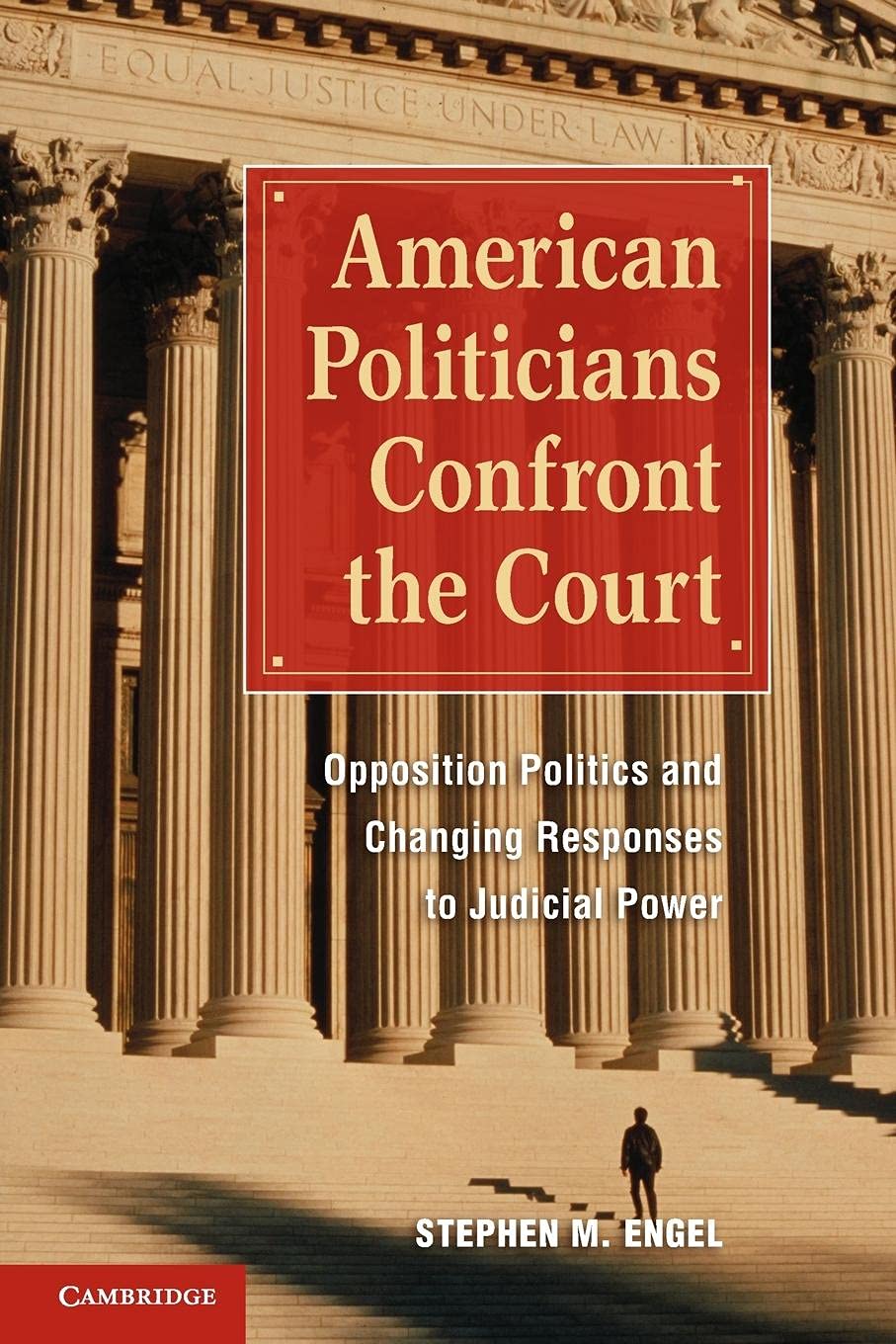
American Politicians Confront the Court: Opposition Politics and Changing Responses to Judicial Power,Used
Sold by Ergodebooks, an authorized reseller.
Returns accepted within 30 days | support@ergodebooks.com
Shipping Information
- Free Standard Shipping — United States only
- Processing Time: 3–5 business days
- Estimated Delivery: 6–10 business days after dispatch
- Double-boxed, fully insured & discreetly packaged
- Tracking number sent via email once dispatched
Returns & Refund
Returns accepted within 30 days of delivery.
Damaged or Defective Item
Free return shipping + replacement or full refund
Wrong Item Received
Free return shipping + replacement or full refund
Change of Mind
Return shipping at customer's expense · 25% restocking fee applies
Payment Option

Politicians have long questioned, or even been openly hostile to, the legitimacy of judicial authority, but that authority seems to have become more secure over time. What explains the recurrence of hostilities and yet the security of judicial power? Addressing this question anew, Stephen Engel points to the gradual acceptance of dissenting views of the Constitution, that is, the legitimacy and loyalty of stable opposition. Politicians' changing perception of the threat posed by opposition influenced how manipulations of judicial authority took shape. As politicians' views toward opposition changed over time, their approach toward the judiciary where opposition could become entrenched changed as well. Once opposition was no longer seen as a fundamental threat to the Constitution's survival, and multiple constitutional interpretations were considered legitimate, judicial power could be construed less as the seat of an illegitimate opposition and more as an instrument to achieve political ends. Politicians were more likely to harness it to serve their aims than to openly undermine its legitimacy. In short, conflicts between the elected branches and the judiciary have not subsided. They have changed form. They have shifted from measures that undermine judicial legitimacy to measures that harness judicial power for political ends. Engel's book brings our understanding of these manipulations into line with other developments, such as the establishment of political parties, the acceptance of loyal opposition, the development of different modes of constitutional interpretation, and the emergence of rightsbased pluralism.
⚠️ WARNING (California Proposition 65):
This product may contain chemicals known to the State of California to cause cancer, birth defects, or other reproductive harm.
For more information, please visit www.P65Warnings.ca.gov.