
Title
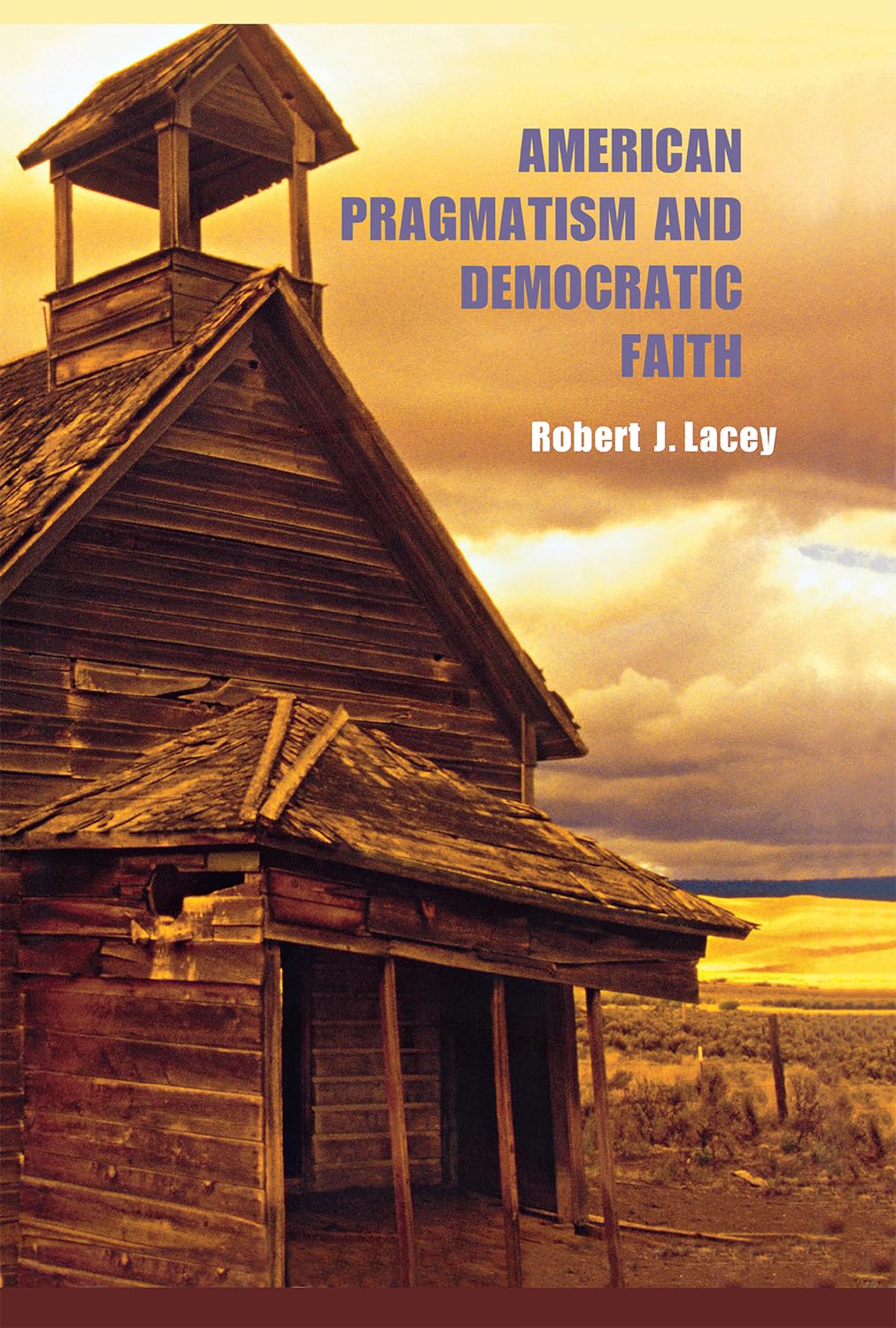
American Pragmatism and Democratic Faith,Used
Sold by Ergodebooks, an authorized reseller.
Returns accepted within 30 days | support@ergodebooks.com
Shipping Information
- Free Standard Shipping — United States only
- Processing Time: 3–5 business days
- Estimated Delivery: 6–10 business days after dispatch
- Double-boxed, fully insured & discreetly packaged
- Tracking number sent via email once dispatched
Returns & Refund
Returns accepted within 30 days of delivery.
Damaged or Defective Item
Free return shipping + replacement or full refund
Wrong Item Received
Free return shipping + replacement or full refund
Change of Mind
Return shipping at customer's expense · 25% restocking fee applies
Payment Option

In June 1962, a group calling themselves the Students for a Democratic Society gathered at a retreat in rural Michigan to discuss and revise their founding manifesto. The result of that meeting was the famous Port Huron Statement, a document that not only reflected their disenchantment with America's elitecontrolled social and political institutions but also called for the creation of a "participatory democracy" in which all citizens engage in public life and share the responsibility of political decision making.This demand for participatory democracy characterized the New Left ethos and captured the imagination of a generation of radicals and political activists from the late 1950s to the close of the 1960s. So, why did participatory democracy fail to materialize in any recognizable form? Why was it forced to retreat from mainstream public discourse into the academy? Its fate, political scientist Robert Lacey asserts, was determined in large part by its intellectual origins.The idea of participatory democracy germinated in the philosophy of Charles Sanders Peirce and William James, founders of American pragmatism, and fully blossomed in the work of John Dewey, who argued that democracy should (and could) be a "way of life" for every person. Dewey rested his democratic faith on three pragmatist tenets: truth is probabilistic and socially determined; humans are malleable and educable; and humans, endowed with free will, can act collectively for their individual and social betterment.When the realities of modern life in the mid to latetwentieth century posed serious challenges to these tenets, the very foundation of participatory democratic thought began to crumble. Yet, willfully disregarding the rubble, C. Wright Mills, Sheldon Wolin, Benjamin Barber, and other theorists have continued to support participatory democracy as a viable political idea. Today's participatory democrats have constructed a fragile theoretical enterprise that rests on questionable assumptions inherited from the pragmatist tradition about truth, human nature, and free will.Tracing the history of a salient idea in American political thought, Lacey elucidates the assumptions underlying participatory democracy, assesses both its usefulness and coherence, and ultimately reveals it to be less a theory than a faitha faith that has largely failed to follow through on its promise.
⚠️ WARNING (California Proposition 65):
This product may contain chemicals known to the State of California to cause cancer, birth defects, or other reproductive harm.
For more information, please visit www.P65Warnings.ca.gov.