
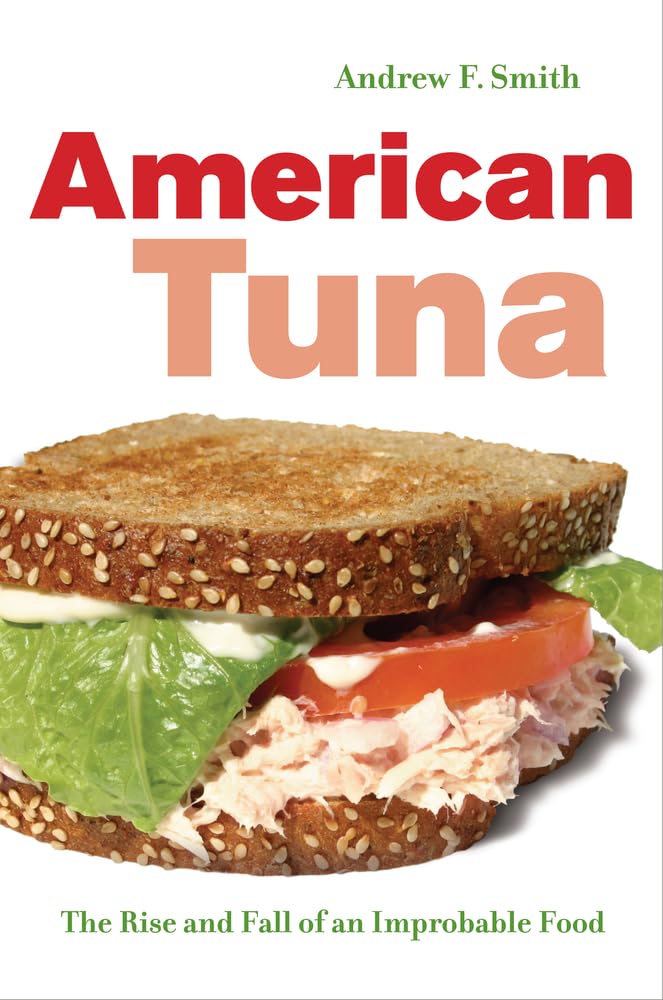
Title
American Tuna: The Rise And Fall Of An Improbable Food (Volume 37) (California Studies In Food And Culture)
Sold by Ergodebooks, an authorized reseller.
Returns accepted within 30 days | support@ergodebooks.com
Shipping Information
- Free Standard Shipping — United States only
- Processing Time: 3–5 business days
- Estimated Delivery: 6–10 business days after dispatch
- Double-boxed, fully insured & discreetly packaged
- Tracking number sent via email once dispatched
Returns & Refund
Returns accepted within 30 days of delivery.
Damaged or Defective Item
Free return shipping + replacement or full refund
Wrong Item Received
Free return shipping + replacement or full refund
Change of Mind
Return shipping at customer's expense · 25% restocking fee applies
Payment Option

In A Lively Account Of The American Tuna Industry Over The Past Century, Celebrated Food Writer And Scholar Andrew F. Smith Relates How Tuna Went From Being Sold Primarily As A Fertilizer To Becoming The Most Commonly Consumed Fish In The Country. In American Tuna, The Socalled Chicken Of The Sea Is Both The Subject And The Backdrop For Other Facets Of American History: U.S. Foreign Policy, Immigration And Environmental Politics, And Dietary Trends.Smith Recounts How Tuna Became A Popular Lowcost Highprotein Food Beginning In 1903, When The First Can Rolled Off The Assembly Line. By 1918, Skyrocketing Sales Made It One Of Americas Most Popular Seafoods. In The Decades That Followed, The American Tuna Industry Employed Thousands, Yet At At Midcentury Production Started To Fade. Concerns About Toxic Levels Of Methylmercury, Bycatch Issues, And Overharvesting All Contributed To The Demise Of The Industry Today, When Only Three Major Canned Tuna Brands Exist In The United States, All Foreign Owned. A Remarkable Cast Of Characters Fishermen, Advertisers, Immigrants, Epicures, And Environmentalists, Among Many Otherspopulate This Fascinating Chronicle Of American Tastes And The Forces That Influence Them.
⚠️ WARNING (California Proposition 65):
This product may contain chemicals known to the State of California to cause cancer, birth defects, or other reproductive harm.
For more information, please visit www.P65Warnings.ca.gov.
- Q: How many pages are in American Tuna? A: There are two hundred sixty-four pages in American Tuna. This provides a comprehensive look at the American tuna industry's history and evolution.
- Q: What is the binding type of this book? A: The book is hardcover. This durable binding type ensures longevity and makes it a great addition to any collection.
- Q: What dimensions does the book have? A: The book measures six inches in length, zero point nine inches in width, and nine point zero two inches in height. These dimensions make it a convenient size for reading and storage.
- Q: Is American Tuna suitable for all ages? A: Yes, American Tuna is suitable for a general audience. However, it may appeal more to older teens and adults interested in history and food culture.
- Q: How do I read this book effectively? A: To get the most from American Tuna, read it in sections while taking notes on key themes. Engaging with the historical context will enhance your understanding.
- Q: Can I use this book for a school project? A: Yes, American Tuna is an excellent resource for school projects on food history or American culture. Its detailed accounts provide valuable insights.
- Q: How should I care for this hardcover book? A: To care for your hardcover book, keep it in a dry, cool place and avoid exposing it to direct sunlight. This will help preserve its condition.
- Q: Is this book safe for children? A: Yes, but adult supervision is recommended. The content deals with complex themes like environmental politics and U.S. history.
- Q: How should I store American Tuna? A: Store American Tuna upright on a shelf or in a bookcase. Avoid stacking heavy items on top to prevent damage.
- Q: Is American Tuna worth reading compared to other food history books? A: Yes, American Tuna offers unique insights into the American tuna industry's impact on culture and history, setting it apart from other food history books.
- Q: What themes are explored in American Tuna? A: American Tuna explores themes of U.S. foreign policy, immigration, environmental politics, and dietary trends, providing a multifaceted view of the industry.
- Q: Do I need prior knowledge to understand this book? A: No, prior knowledge is not required. American Tuna is written for a general audience and explains historical concepts clearly.
- Q: What makes American Tuna a notable book in its genre? A: American Tuna is notable for its in-depth research and engaging storytelling, making complex historical topics accessible and interesting.
- Q: Are there any illustrations or photos in the book? A: No, American Tuna does not include illustrations or photos. The focus is primarily on the text and historical narrative.
- Q: What is the author's background? A: The author, Andrew F. Smith, is a celebrated food writer and scholar known for his expertise in food history and culture.