
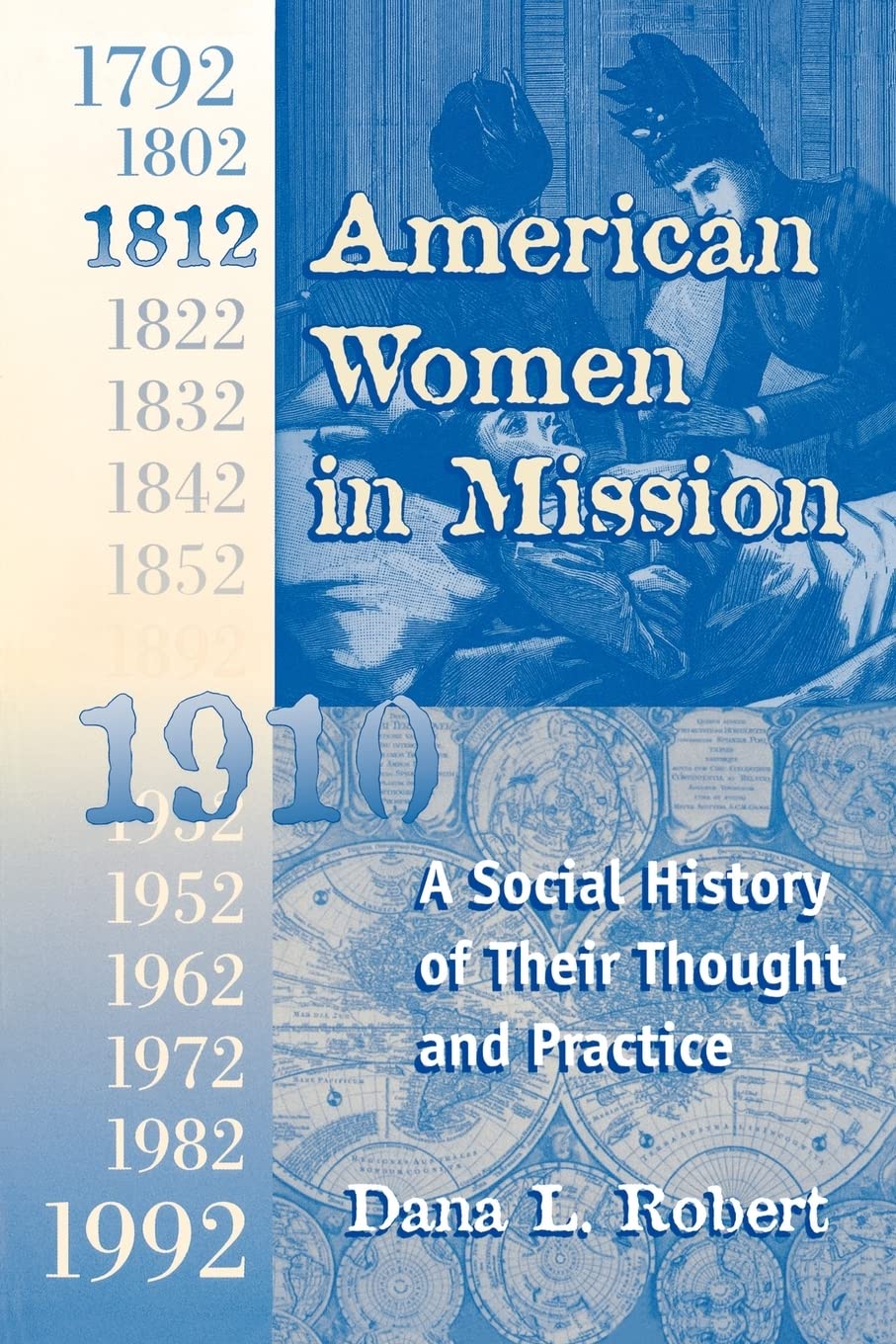
Title
American Women In Mission: The Modern Mission Era 17921992,New
Sold by Ergodebooks, an authorized reseller.
Returns accepted within 30 days | support@ergodebooks.com
Shipping Information
- Free Standard Shipping — United States only
- Processing Time: 3–5 business days
- Estimated Delivery: 6–10 business days after dispatch
- Double-boxed, fully insured & discreetly packaged
- Tracking number sent via email once dispatched
Returns & Refund
Returns accepted within 30 days of delivery.
Damaged or Defective Item
Free return shipping + replacement or full refund
Wrong Item Received
Free return shipping + replacement or full refund
Change of Mind
Return shipping at customer's expense · 25% restocking fee applies
Payment Option

The Stereotype Of The Woman Missionary Has Ranged From That Of The Longsuffering Wife, Characterized By The Epitaph Died, Given Over To Hospitality, To That Of The Spinster In Her Unstylish Dress And Wirerimmed Glasses, Alone Somewhere For Thirty Years Teaching Heathen Children. Like All Caricatures, Those Of The Exhausted Wife And Frustrated Old Maid Carry Some Truth: The Underlying Message Of The Sterotypes Is That Missionary Women Were Perceived As Marginal To The Central Tasks Of Mission. Rather Than Being Remembered For Preaching The Gospel, The Quintessential Male Task, Missionary Women Were Noted For Meeting Human Needs And Helping Others, Sacrificing Themselves Without Plan Or Reason, All For The Sake Of Bringing The World To Jesus Christ.Historical Evidence, However, Gives Lie To The Truism That Women Missionaries Were And Are Doers But Not Thinkers, Reactive Secondary Figures Rather Than Proactive Primary Ones. The First American Women To Serve As Foreign Missionaries In 1812 Were Among The Besteducated Women Of Their Time. Although Barred From Obtaining The College Education Or Ministerial Credentials Of Their Husbands, The Early Missionary Wives Had Read Their Jonathan Edwards And Samuel Hopkins. Not Only Did They Go Abroad With Particular Theologies To Share, But Their Identities As Women Caused Them To Develop Genderbased Mission Theories. Early Nineteenthcentury Women Seldom Wrote Theologies Of Mission, But They Wrote Letters And Kept Journals That Reveal A Thought World And Set Of Assumptions About Women'S Roles In The Missionary Task. The Activities Of Missionary Wives Were Not Random: They Were Part Of A Mission Strategy That Gave Women A Particular Role Inthe Advancement Of The Reign Of God.By Moving From Mission Field To Mission Field In Chronological Order Of Missionary Presence, Robert Charts Missiological Developments As They Took Place In Dialogue With The Urgent Context Of The Day. Each Case Study Marks The Beginning Of The Mission Theory. Baptist Women In Burma, For Example, Are Only Considered In Their First Decades There And Are Not Traced Into The Present. Robert Believes That At This Early Stage Of Research Into Women'S Mission Theory, Integrity And Analysis Lies More In A Succession Of Contextualized Case Studies Than In Gross Generalizations.
⚠️ WARNING (California Proposition 65):
This product may contain chemicals known to the State of California to cause cancer, birth defects, or other reproductive harm.
For more information, please visit www.P65Warnings.ca.gov.
- Q: How many pages does the book have? A: The book has four hundred eighty-two pages. This length allows for an in-depth exploration of American women's roles in missions.
- Q: What is the binding type of this book? A: This book is paperback bound. The paperback format makes it lightweight and easy to carry.
- Q: Who is the author of this book? A: The author is Dana L. Robert. She is known for her expertise in the field of mission studies.
- Q: What are the dimensions of the book? A: The book measures six inches in length, one point four six inches in width, and nine point zero two inches in height. These dimensions make it a standard size for easy reading.
- Q: What genre does this book belong to? A: This book belongs to the genre of Christianity. It provides a historical perspective on women's contributions to missions.
- Q: Is this book suitable for all ages? A: Yes, the book is suitable for a general audience. However, it is best suited for readers interested in history and theology.
- Q: How can I use this book for study? A: You can use this book as a primary text for research or personal study. It offers insights into the historical context of women missionaries.
- Q: Is this book good for academic purposes? A: Yes, this book is excellent for academic purposes. It includes contextual case studies relevant to missions and gender studies.
- Q: Can this book be used in a group study setting? A: Yes, this book is suitable for group study settings. Its themes encourage discussion about women's contributions to missions.
- Q: How should I store this book? A: Store this book in a cool, dry place to maintain its condition. Avoid direct sunlight to prevent fading of the cover.
- Q: Is there a specific way to clean the book? A: Yes, gently wipe the cover with a soft cloth. Avoid using water or cleaning solutions on the pages.
- Q: What if the book arrives damaged? A: If the book arrives damaged, you should contact the seller for a return or exchange. Always check the return policy beforehand.
- Q: Does the book come with any warranty? A: No, this book does not come with a warranty. However, ensure you check the seller's return policy.
- Q: Is this book a good choice for beginners in mission studies? A: Yes, this book is a good choice for beginners. It provides foundational knowledge about women's roles in missions.
- Q: How does this book compare to other mission studies? A: This book offers a unique focus on women’s contributions, setting it apart from other mission studies that may center on male figures.
- Q: Can I find additional resources related to this book? A: Yes, there are additional resources available, including academic journals and online discussions about women in missions. Look for bibliographies in the book for more references.