
Title
America'S Waterfront Revival: Port Authorities And Urban Redevelopment (The City In The Twentyfirst Century),Used
Sold by Ergodebooks, an authorized reseller.
Returns accepted within 30 days | support@ergodebooks.com
Shipping Information
- Free Standard Shipping — United States only
- Processing Time: 3–5 business days
- Estimated Delivery: 6–10 business days after dispatch
- Double-boxed, fully insured & discreetly packaged
- Tracking number sent via email once dispatched
Returns & Refund
Returns accepted within 30 days of delivery.
Damaged or Defective Item
Free return shipping + replacement or full refund
Wrong Item Received
Free return shipping + replacement or full refund
Change of Mind
Return shipping at customer's expense · 25% restocking fee applies
Payment Option

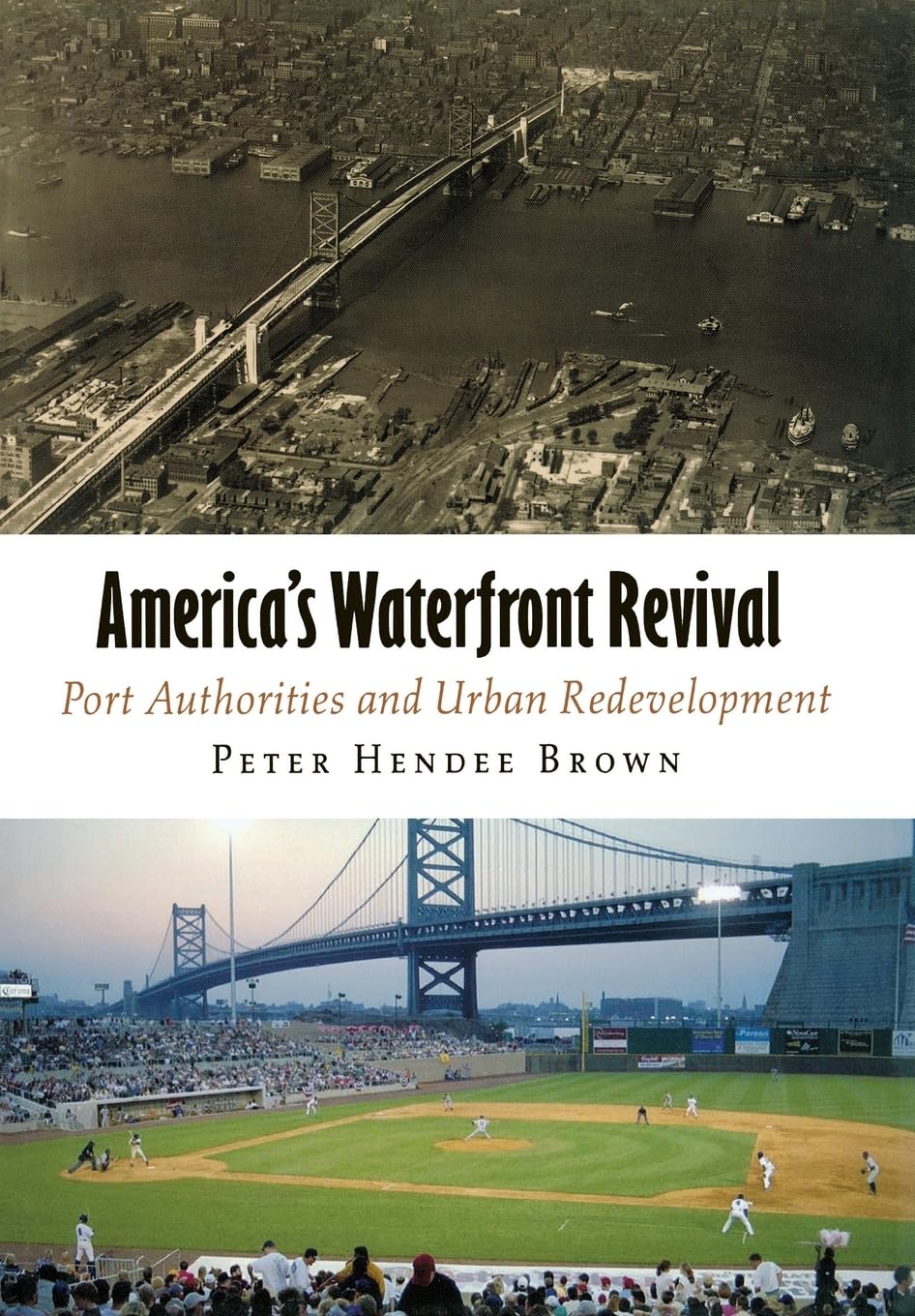
Since the early years of the twentieth century, public authorities have been providing an enormous share of the public infrastructure in the United States and have shaped our urban environment in powerful ways. Politicians have continued to create new public authorities, but many older ones remain influential, adapting to everchanging economic trends, technologies, and user demands by entering new lines of business. Among the authorities that have continued to change and have remained relevant are many of the nation's industrialera port authorities, including the Tampa Port Authority, the Port of San Francisco, the Port of San Diego, and the Delaware River Port Authority.Despite their unique histories, markets, and geographic locations, these four ports have many similarities. Most important, as globalization and technological change led to declines in shipping, they all evolved from singlepurpose maritime cargohandling operations into diversified business organizations focused on waterfront revitalization. All four ports became deeply involved in real estate development in support of nontraditional maritime and nonmaritime public and commercial uses.In America's Waterfront Revival, Peter Hendee Brown examines the experiences of these four port authorities, considering three important questions. First, how did external and internal forces encourage or impede these authorities as they engaged in new functions? How did the port authorities transform themselves as organizations in order to implement waterfront redevelopment? Do public authorities change as institutions when they diversify into new functional areas and, if so, do abstract theoretical models of public authorities adequately account for this institutional evolution?Drawing on a wide range of sources, including enabling legislation, annual reports, financial statements, strategic business plans, land use plans, audits, media accounts, and interviews, this book delivers significant new findings on the opportunities and challenges existing authorities face when they engage in new functions.
⚠️ WARNING (California Proposition 65):
This product may contain chemicals known to the State of California to cause cancer, birth defects, or other reproductive harm.
For more information, please visit www.P65Warnings.ca.gov.