If you have any questions, you are always welcome to contact us. We'll get back to you as soon as possible, withing 24 hours on weekdays.
Customer service
All questions about your order, return and delivery must be sent to our customer service team by e-mail at yourstore@yourdomain.com
Sale & Press
If you are interested in selling our products, need more information about our brand or wish to make a collaboration, please contact us at press@yourdomain.com
Help
If you have any questions, you are always welcome to contact us. We'll get back to you as soon as possible, withing 24 hours on weekdays.
Customer service
All questions about your order, return and delivery must be sent to our customer service team by e-mail at yourstore@yourdomain.com
Sale & Press
If you are interested in selling our products, need more information about our brand or wish to make a collaboration, please contact us at press@yourdomain.com
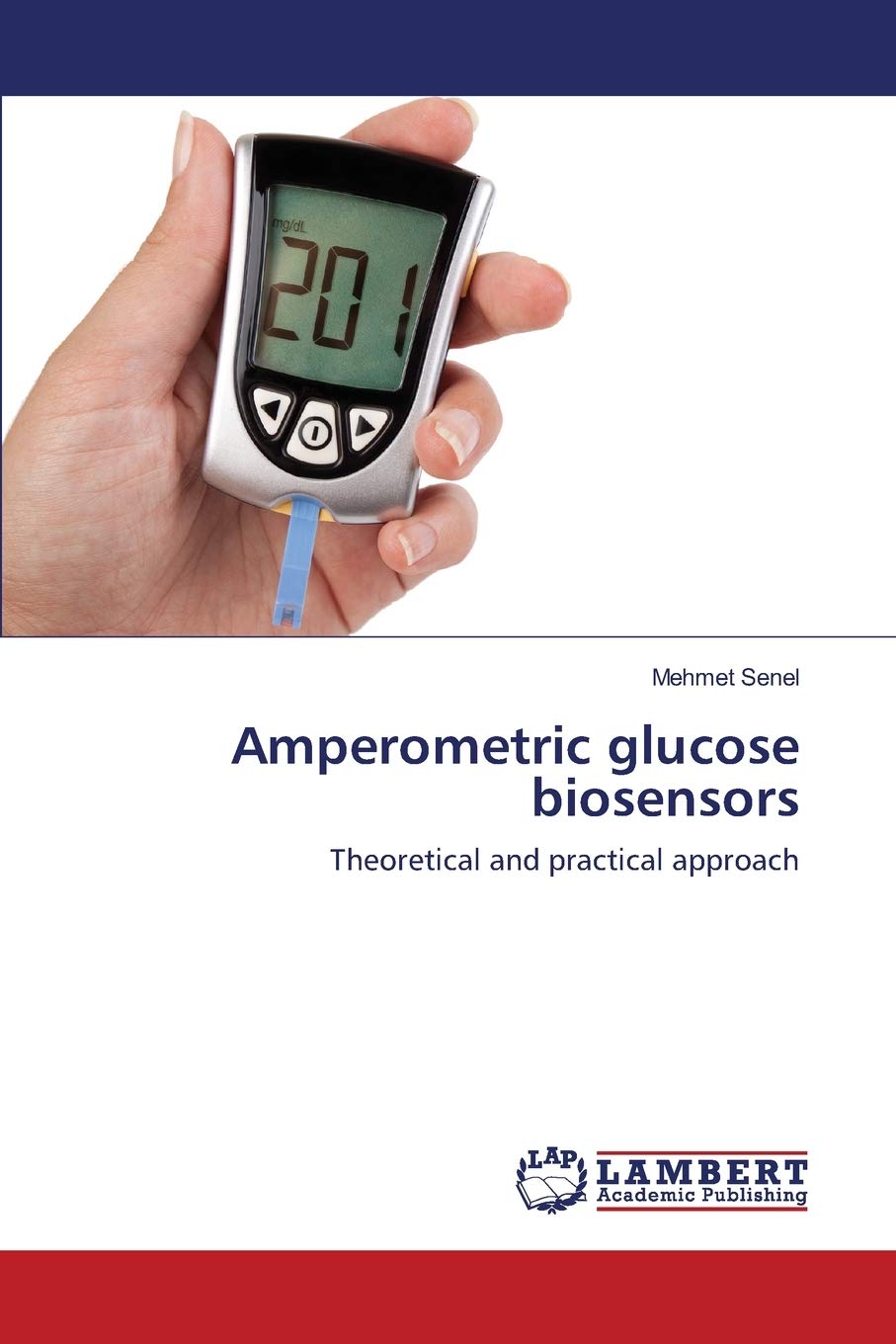
The development of glucose biosensors to monitor glucose levels rapidly, accurately and continuously from biological liquids has been extensively studied. The most commonly used glucose biosensor is based on the enzymatic amperometric biosensor. The performance of the enzymebased biosensors relies heavily on the properties of the supporting materials and immobilization techniques. They should provide a good environment for immobilized biomaterial and should be able to maintain their biological activity. For this purposes, different matrices as support materials and some methods for immobilizing glucose oxidase onto a suitable electrode support were studied in literature. This book provides theoretical and practical knowledge about amperometric glucose biosensors to get new ideas for developing next generation biosensors and could be useful for graduate students.
⚠️ WARNING (California Proposition 65):
This product may contain chemicals known to the State of California to cause cancer,
birth defects, or other reproductive harm.
For MAP (Minimum Advertised Price) violations and Intellectual Property (IP) or Trademark concerns, please contact:
support@ergodebooks.com
⚠️ California Proposition 65 Warning: Some products sold on this website may expose you to chemicals known to the State of California to cause cancer, birth defects, or other reproductive harm. For more information, visit www.P65Warnings.ca.gov.