
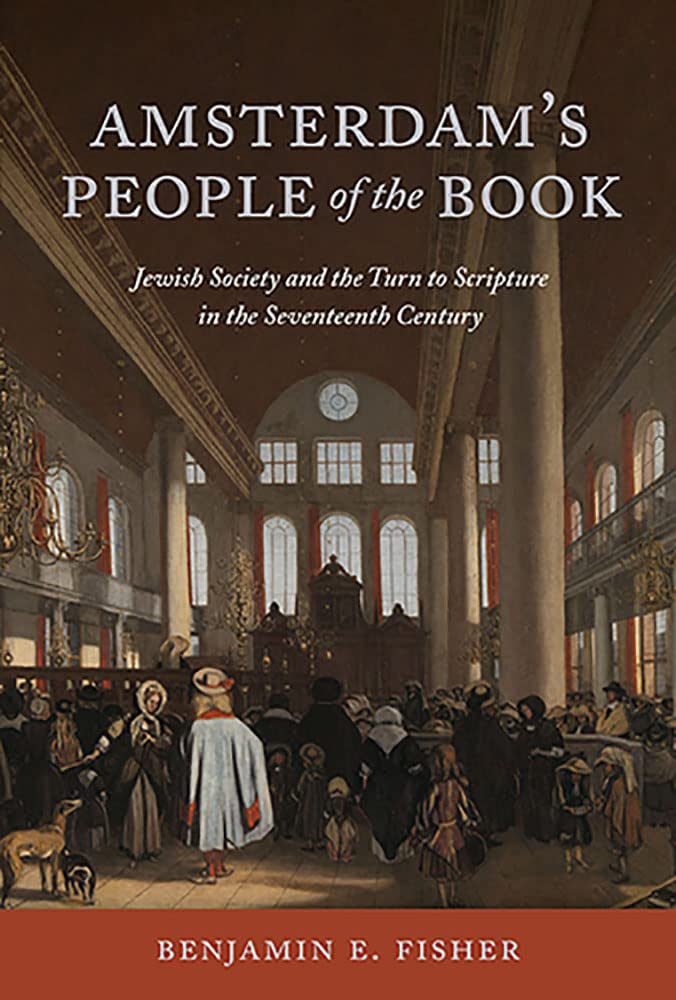
Title
Amsterdam's People of the Book: Jewish Society and the Turn to Scripture in the Seventeenth Century,Used
Sold by Ergodebooks, an authorized reseller.
Returns accepted within 30 days | support@ergodebooks.com
Shipping Information
- Free Standard Shipping — United States only
- Processing Time: 3–5 business days
- Estimated Delivery: 6–10 business days after dispatch
- Double-boxed, fully insured & discreetly packaged
- Tracking number sent via email once dispatched
Returns & Refund
Returns accepted within 30 days of delivery.
Damaged or Defective Item
Free return shipping + replacement or full refund
Wrong Item Received
Free return shipping + replacement or full refund
Change of Mind
Return shipping at customer's expense · 25% restocking fee applies
Payment Option

The Spanish and Portuguese Jews of seventeenthcentury Amsterdam cultivated a remarkable culture centered on the Bible. School children studied the Bible systematically, while rabbinic literature was pushed to levels reached by few students; adults met in confraternities to study Scripture; and families listened to Scripturebased sermons in synagogue, and to help pass the long, cold winter nights of northwest Europe. The community's rabbis produced creative, and often unprecedented scholarship on the Jewish Bible as well as the New Testament Amsterdam's People of the Book shows that this unique, Biblecentered culture resulted from the confluence of the Jewish community's Catholic and converso past with the Protestant world in which they came to live. Studying Amsterdam's Jews offers an early window into the prioritization of the Bible over rabbinic literature a trend that continues through modernity in western Europe. It allows us to see how Amsterdam's rabbis experimented with new historical methods for understanding the Bible, and how they grappled with doubts about the authority and truth of the Bible that were growing in the world around them. Amsterdam's People of the Book allows us to appreciate how Benedict Spinoza's ideas were in fact shaped by the approaches to reading the Bible in the community where he was born, raised, and educated. After all, as Spinoza himself remarked, before becoming Amsterdam's most famous heretic and one of Europe's leading philosophers and biblical critics, he was "steeped in the common beliefs about the Bible from childhood on."
⚠️ WARNING (California Proposition 65):
This product may contain chemicals known to the State of California to cause cancer, birth defects, or other reproductive harm.
For more information, please visit www.P65Warnings.ca.gov.