If you have any questions, you are always welcome to contact us. We'll get back to you as soon as possible, withing 24 hours on weekdays.
Customer service
All questions about your order, return and delivery must be sent to our customer service team by e-mail at yourstore@yourdomain.com
Sale & Press
If you are interested in selling our products, need more information about our brand or wish to make a collaboration, please contact us at press@yourdomain.com
Help
If you have any questions, you are always welcome to contact us. We'll get back to you as soon as possible, withing 24 hours on weekdays.
Customer service
All questions about your order, return and delivery must be sent to our customer service team by e-mail at yourstore@yourdomain.com
Sale & Press
If you are interested in selling our products, need more information about our brand or wish to make a collaboration, please contact us at press@yourdomain.com
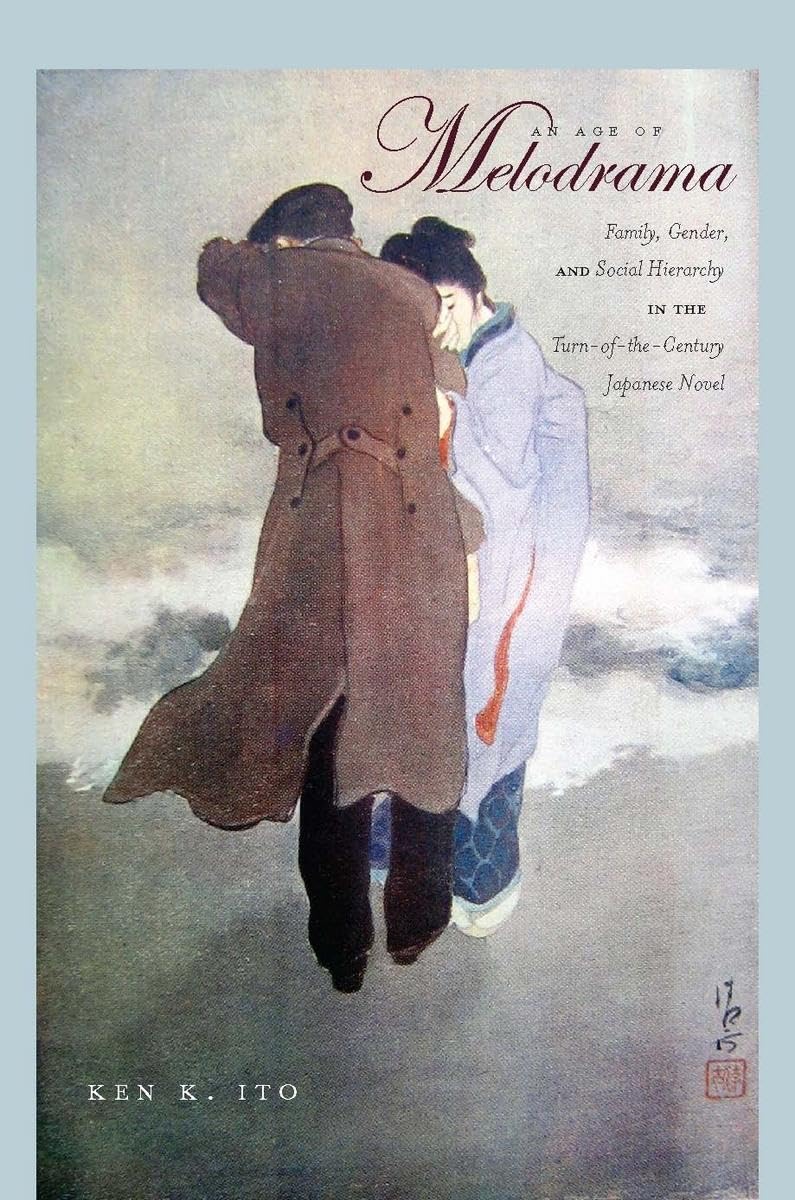
At the end of the nineteenth century and beginning of the twentieth, Japanese fiction pulsed with an urge to render good and evil in ways that evoked dramatic emotions. An Age of Melodrama examines four enormously popular novels from this period by interweaving two threads of argument. Using approaches to melodrama developed in Western literary and film criticism, it first shows how these texts used their binary morality to construct a semblance of moral certainty in a moment of social transformation. It then examines how the novels responded to a particular set of ideologies of the family, which the Japanese state attempted to use as an instrument of social control. The melodramatic novels of the Meiji period generated a plethora of alternative family models that explored the myriad ways in which human beings could connect in a modernizing culture. The fictional families in these works revealed the ties of the family to the nation, delineated traumatic changes in social hierarchy, and showed the effects of new discourses of gender. These powerful portrayals and the social discourses that surround them reveal that melodrama was a central mode of sensibility in Meiji culture.
⚠️ WARNING (California Proposition 65):
This product may contain chemicals known to the State of California to cause cancer,
birth defects, or other reproductive harm.
For MAP (Minimum Advertised Price) violations and Intellectual Property (IP) or Trademark concerns, please contact:
support@ergodebooks.com
⚠️ California Proposition 65 Warning: Some products sold on this website may expose you to chemicals known to the State of California to cause cancer, birth defects, or other reproductive harm. For more information, visit www.P65Warnings.ca.gov.