
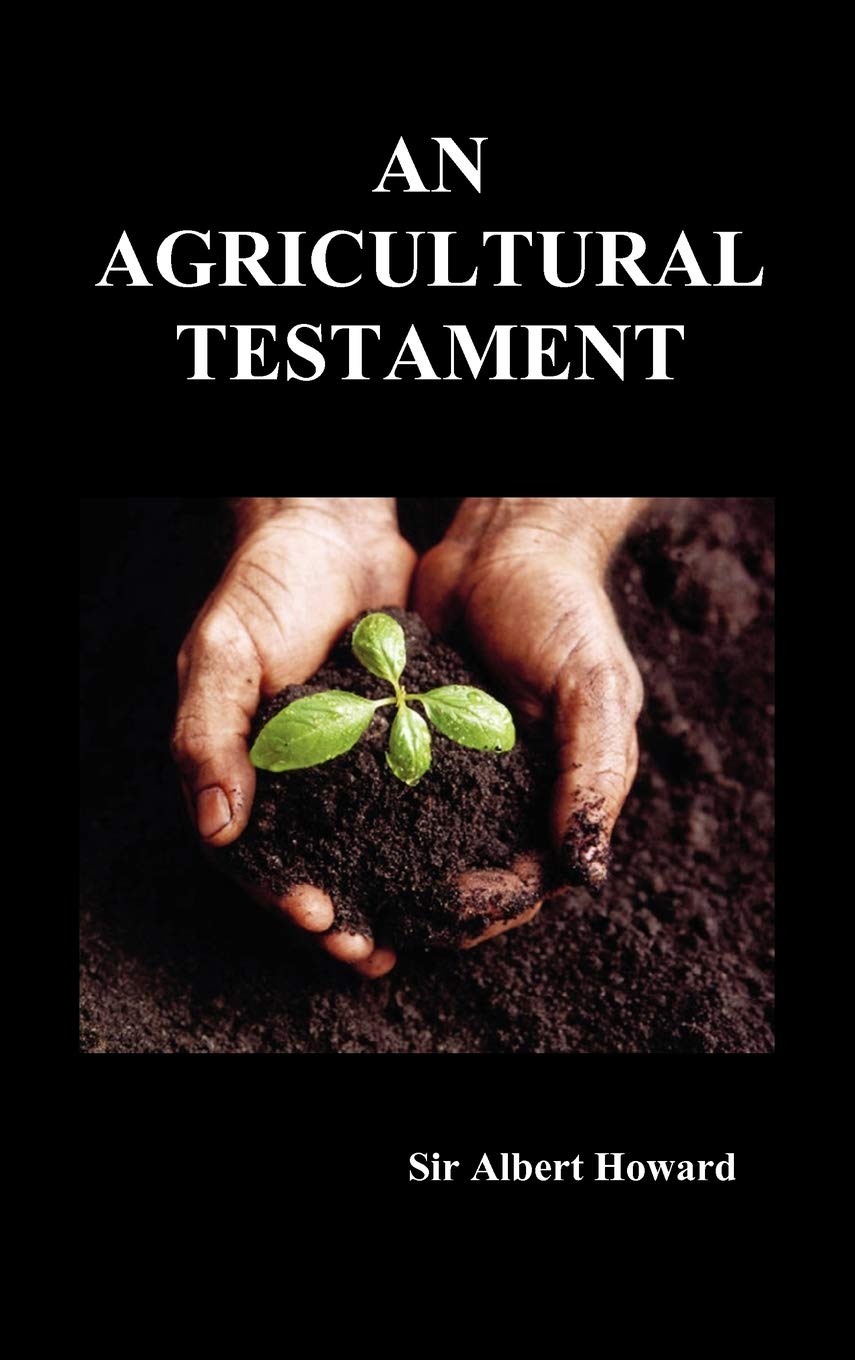
Title
An Agricultural Testament
Sold by Ergodebooks, an authorized reseller.
Returns accepted within 30 days | support@ergodebooks.com
Shipping Information
- Free Standard Shipping — United States only
- Processing Time: 3–5 business days
- Estimated Delivery: 6–10 business days after dispatch
- Double-boxed, fully insured & discreetly packaged
- Tracking number sent via email once dispatched
Returns & Refund
Returns accepted within 30 days of delivery.
Damaged or Defective Item
Free return shipping + replacement or full refund
Wrong Item Received
Free return shipping + replacement or full refund
Change of Mind
Return shipping at customer's expense · 25% restocking fee applies
Payment Option

An Agricultural Testament, Sir Albert Howard'S Bestknown Book, Is A Classic Of Organic Farming And An Essential Introduction To Organic Gardening And Farming.The Health Of Soil, Plant, Animal And Man Is One And Indivisible. Albert Howard.At The Turn Of The Twentieth Century, Chemical Fertilizers Seemed To Offer Limitless Potential In Agriculture. However, When British Agriculturalist Albert Howard Travelled To India As Imperial Economic Botanist To The Government Of India, He Observed Vedic Agriculture As Practiced By India Peasant Farmers, And Noted The Health Benefits To Plants, Animals And Humans From What We Now Call Organic Agriculture. Albert Howard, Rudolph Steiner And Lady Eve Balfour Are Considered The First Proponents Of Organic Agriculture.In His Own Words: The Soil Is, As A Matter Of Fact, Full Of Live Organisms. It Is Essential To Conceive Of It As Something Pulsating With Life, Not As A Dead Or Inert Mass. There Could Be No Greater Misconception Than To Regard The Earth As Dead: A Handful Of Soil Is Teeming With Life. The Living Fungi, Bacteria, And Protozoa, Invisibly Present In The Soil Complex, Are Known As The Soil Population. This Population Of Millions And Millions Of Minute Existences, Quite Invisible To Our Eyes Of Course, Pursue Their Own Lives.The First Duty Of The Agriculturalist Must Always Be To Understand That He Is A Part Of Nature And Cannot Escape From His Environment. He Must Therefore Obey Nature'S Rules, Howard Wrote. He Believed That The Farmer Must Work With Nature Instead Of With Chemical Fertilizers And Pesticides For Longterm Sustained Yields. Howard'S Belief In The Importance Of Manures, Compost And Mycorrhizal Fungi Is Now Generally Accepted, And Is Echoed In The Organic Gardening Motto, Feed The Soil Not The Plant.Anyone Interested In Permaculture Or Organic Gardening And Farming Will Find This A Fascinating Book.Sir Albert Howard (1873 1947) Was An English Botanist. He Studied At Cambridge University As A Foundation Scholar And Lectured In The West Indies And The United Kingdom. From 1905 To 1924 He Was Imperial Economic Botanist In India. He Promoted Organic Methods Through The Rodale Institute In The Usa And The Soil Association In The Uk And Is One Of The Pioneers In The Field.
⚠️ WARNING (California Proposition 65):
This product may contain chemicals known to the State of California to cause cancer, birth defects, or other reproductive harm.
For more information, please visit www.P65Warnings.ca.gov.
- Q: How many pages does 'An Agricultural Testament' have? A: This book has two hundred sixty-six pages. It's a comprehensive exploration of organic farming principles.
- Q: What is the binding type of this book? A: The binding type is hardcover. This durable format ensures the book withstands frequent use.
- Q: What are the dimensions of 'An Agricultural Testament'? A: The dimensions are six inches in length, zero point seventy-five inches in width, and nine point zero two inches in height. These measurements make it a compact and portable book.
- Q: Who is the author of 'An Agricultural Testament'? A: The author is Sir Albert Howard. He is a pioneer in the field of organic agriculture.
- Q: What category does this book belong to? A: This book is categorized under Organic & Sustainable. It provides insights into organic farming practices.
- Q: How should I read 'An Agricultural Testament'? A: You can read this book at your own pace. It's suitable for anyone interested in organic gardening and farming.
- Q: Is 'An Agricultural Testament' suitable for beginners? A: Yes, it is suitable for beginners. The book serves as an essential introduction to organic gardening.
- Q: Can this book help me with my organic gardening? A: Yes, it offers valuable insights into organic farming practices. You will learn about soil health and sustainable methods.
- Q: How should I store 'An Agricultural Testament'? A: Store it in a cool, dry place. Keeping it away from direct sunlight will help preserve its condition.
- Q: Is this book safe to handle for all ages? A: Yes, it is safe for all ages. There are no adult themes, making it suitable for a general audience.
- Q: What should I do if my book arrives damaged? A: If your book arrives damaged, contact customer support for a return or exchange. They will assist you with the process.
- Q: Is there a warranty for 'An Agricultural Testament'? A: There is no warranty for books. However, check the return policy for any issues upon receipt.
- Q: Can I find comparisons to other organic gardening books in this one? A: While this book stands alone, it references other significant works in organic agriculture. It helps contextualize its teachings.
- Q: What if I want to learn more after reading this book? A: You can explore additional resources on organic farming. Many organizations offer courses and workshops.
- Q: What features make this book unique? A: The book is unique for its historical perspective on organic farming. It combines personal observations with scientific insights.