
Title


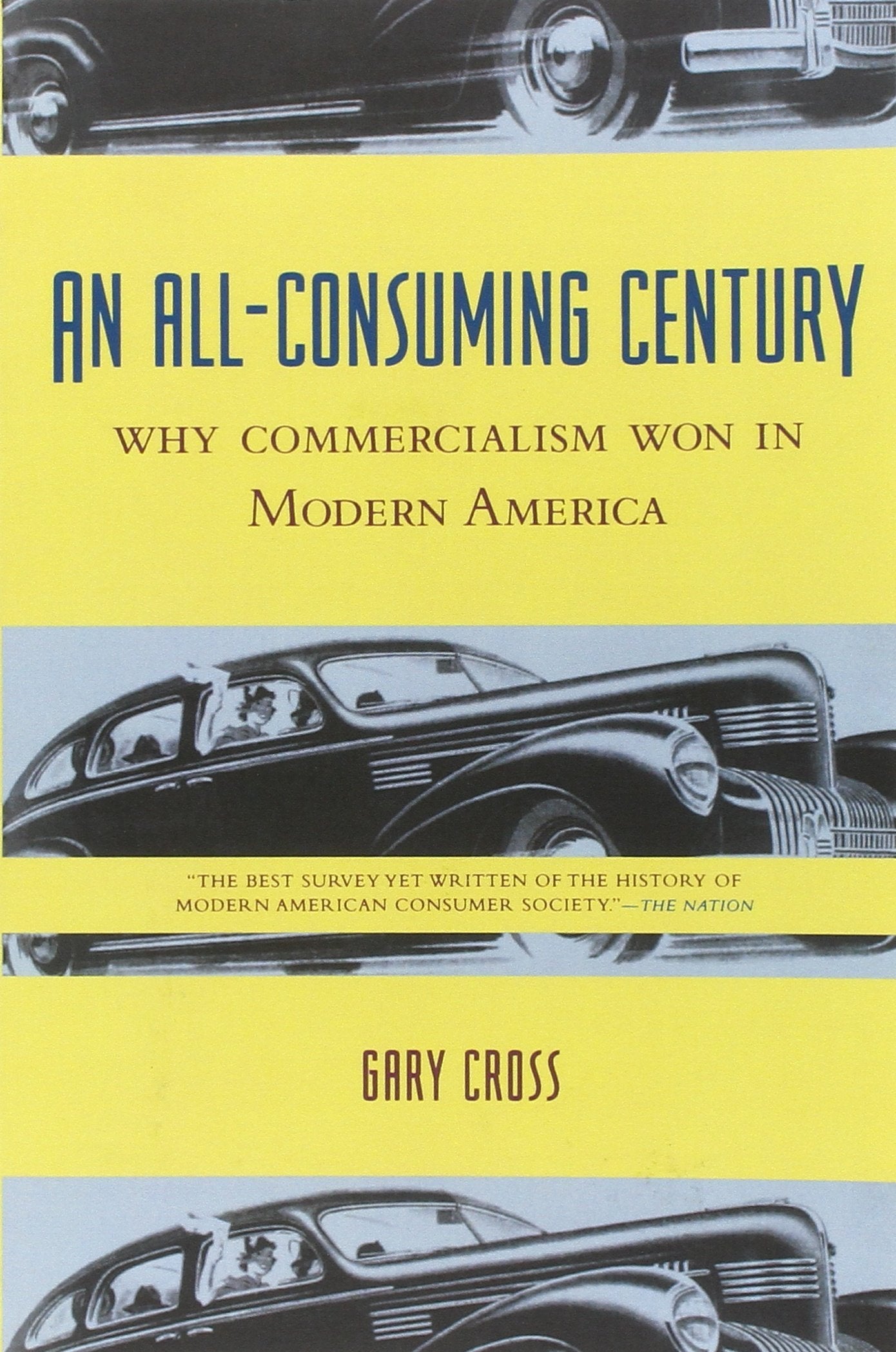
An AllConsuming Century: Why Commercialism Won in Modern America,Used
Sold by Ergodebooks, an authorized reseller.
Returns accepted within 30 days | support@ergodebooks.com
Shipping Information
- Free Standard Shipping — United States only
- Processing Time: 3–5 business days
- Estimated Delivery: 6–10 business days after dispatch
- Double-boxed, fully insured & discreetly packaged
- Tracking number sent via email once dispatched
Returns & Refund
Returns accepted within 30 days of delivery.
Damaged or Defective Item
Free return shipping + replacement or full refund
Wrong Item Received
Free return shipping + replacement or full refund
Change of Mind
Return shipping at customer's expense · 25% restocking fee applies
Payment Option

The unqualified victory of consumerism in America was not a foregone conclusion. The United States has traditionally been the home of the most aggressive and often thoughtful criticism of consumption, including Puritanism, Prohibition, the simplicity movement, the '60s hippies, and the consumer rights movement. But at the dawn of the twentyfirst century, not only has American consumerism triumphed, there isn't even an 'ism' left to challenge it. An AllConsuming Century is a rich history of how market goods came to dominate American life over that remarkable hundred years between 1900 and 2000 and why for the first time in history there are no practical limits to consumerism.By 1930 a distinct consumer society had emerged in the United States in which the taste, speed, control, and comfort of goods offered new meanings of freedom, thus laying the groundwork for a fullscale ideology of consumer's democracy after World War II. From the introduction of Henry Ford's Model T ('so low in price that no man making a good salary will be unable to own one') and the innovations in selling that arrived with the department store (window displays, self service, the installment plan) to the development of new arenas for spending (amusement parks, penny arcades, baseball parks, and dance halls), Americans embraced the new culture of commercialismwith reservations. However, Gary Cross shows that even the Depression, the counterculture of the 1960s, and the inflation of the 1970s made Americans more materialistic, opening new channels of desire and offering opportunities for more innovative and aggressive marketing. The conservative upsurge of the 1980s and '90s indulged in its own brand of selfaggrandizement by promoting unrestricted markets. The consumerism of today, thriving and largely unchecked, no longer brings families and communities together; instead, it increasingly divides and isolates Americans.Consumer culture has provided affluent societies with peaceful alternatives to tribalism and class war, Cross writes, and it has fueled extraordinary economic growth. The challenge for the future is to find ways to revive the still valid portion of the culture of constraint and control the overpowering success of the allconsuming twentieth century.
⚠️ WARNING (California Proposition 65):
This product may contain chemicals known to the State of California to cause cancer, birth defects, or other reproductive harm.
For more information, please visit www.P65Warnings.ca.gov.