
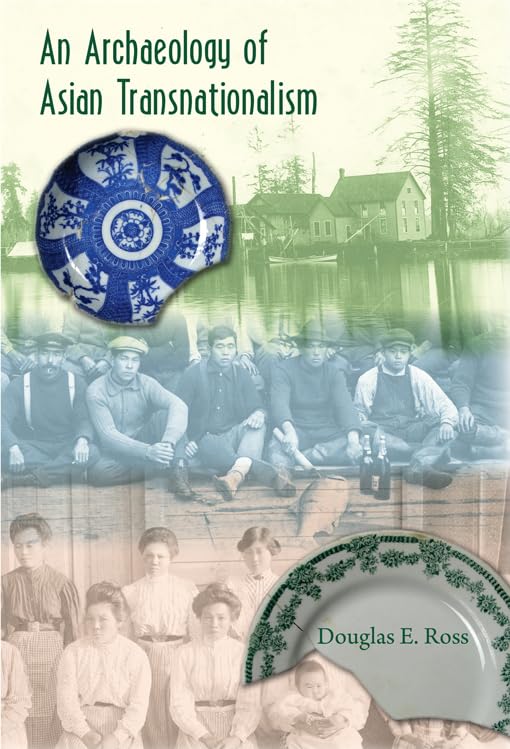
Title
An Archaeology Of Asian Transnationalism (Copublished With The Society For Historical Archaeology),Used
Sold by Ergodebooks, an authorized reseller.
Returns accepted within 30 days | support@ergodebooks.com
Shipping Information
- Free Standard Shipping — United States only
- Processing Time: 3–5 business days
- Estimated Delivery: 6–10 business days after dispatch
- Double-boxed, fully insured & discreetly packaged
- Tracking number sent via email once dispatched
Returns & Refund
Returns accepted within 30 days of delivery.
Damaged or Defective Item
Free return shipping + replacement or full refund
Wrong Item Received
Free return shipping + replacement or full refund
Change of Mind
Return shipping at customer's expense · 25% restocking fee applies
Payment Option

Pushes the historical archaeology of Asian diasporas in new and exciting methodological and theoretical directions.Stacey Lynn Camp, author of The Archaeology of CitizenshipBuilding an innovative methodology that emphasizes diasporic, rather than ethnic, identity, this book provides a model for the archaeology of material culture in pluralistic societies. An essential reference for the archaeology of labor and immigration.Barbara Voss, coeditor of The Archaeology of ColonialismA dynamic narrative blending historical and material data to interpret the complex topics and social relations of diasporic identity formation, transnationalism, and alienation. Well thought out and an important contribution to social archaeology and issues of social justice.Stephen A. Brighton, University of MarylandIn the early twentieth century, an industrial salmon cannery thrived along the Fraser River in British Columbia. Chinese factory workers lived in an adjoining bunkhouse, and Japanese fishermen lived with their families in a nearby camp. Today the complex is mostly gone and the site overgrown with vegetation, but artifacts from these immigrant communities remain, waiting below the surface.In this groundbreaking comparative archaeological study of Asian immigrants in North America, Douglas Ross excavates the Ewen Cannery to explore how its immigrant workers formed new cultural identities in the face of dramatic displacement. Ross demonstrates how some homeland practices persisted while others changed in response to new contextual factors, reflecting the complexity of migrant experiences. Instead of treating ethnicity as a bounded, stable category, Ross shows that ethnic identity is shaped and transformed as cultural traditions from home and host societies come together in the context of local choices, structural constraints, and consumer society.
⚠️ WARNING (California Proposition 65):
This product may contain chemicals known to the State of California to cause cancer, birth defects, or other reproductive harm.
For more information, please visit www.P65Warnings.ca.gov.