If you have any questions, you are always welcome to contact us. We'll get back to you as soon as possible, withing 24 hours on weekdays.
Customer service
All questions about your order, return and delivery must be sent to our customer service team by e-mail at yourstore@yourdomain.com
Sale & Press
If you are interested in selling our products, need more information about our brand or wish to make a collaboration, please contact us at press@yourdomain.com
Help
If you have any questions, you are always welcome to contact us. We'll get back to you as soon as possible, withing 24 hours on weekdays.
Customer service
All questions about your order, return and delivery must be sent to our customer service team by e-mail at yourstore@yourdomain.com
Sale & Press
If you are interested in selling our products, need more information about our brand or wish to make a collaboration, please contact us at press@yourdomain.com
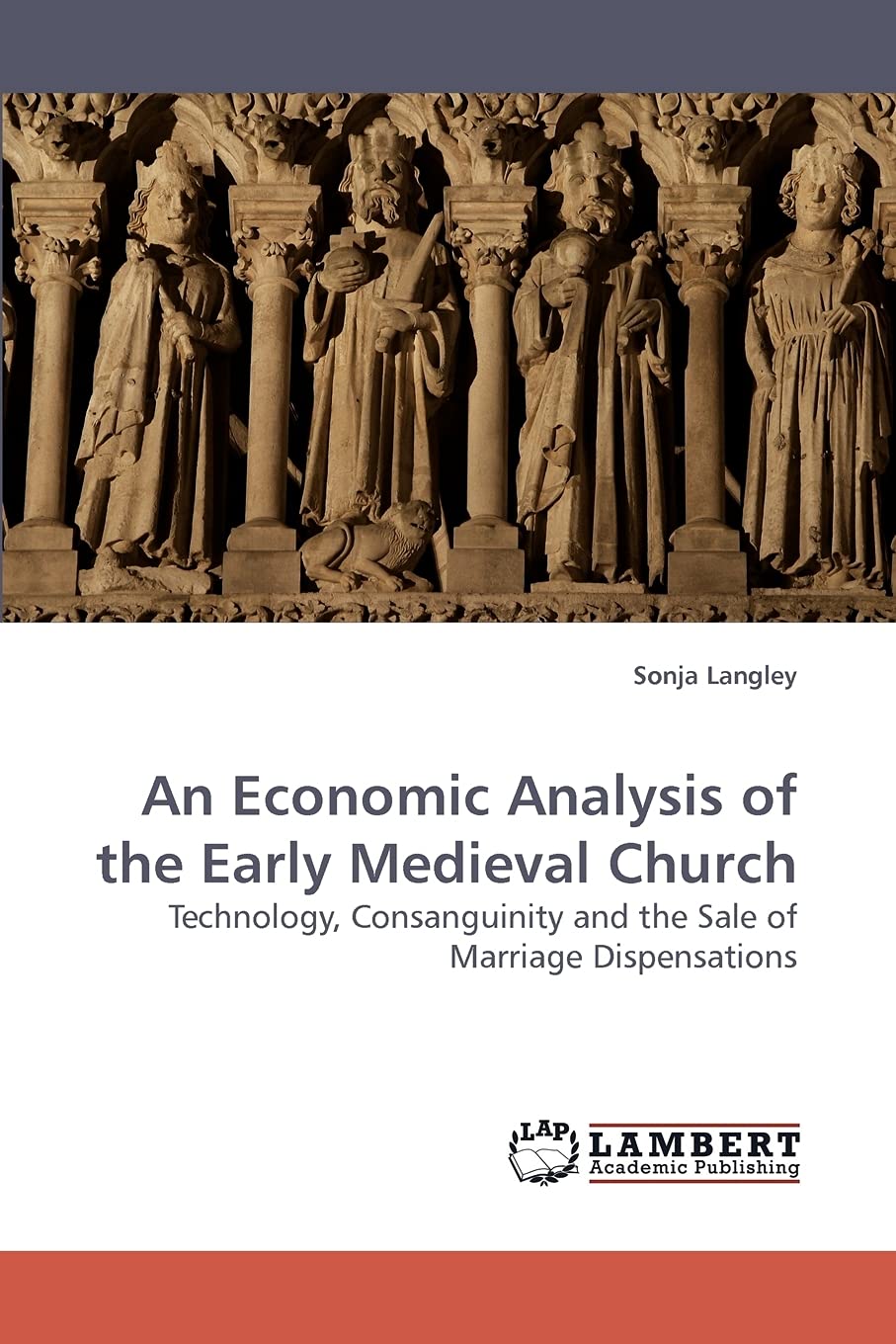
Having been described as a rentseeking monopoly firm, the Church of the High Middle Ages spent a thousand years reaching its pinnacle of power. Over this period, as this fledgling religion took root throughout Europe, the Early Medieval Church saw political, social, economic and institutional factors slowly evolve in her favor. Controlling the acceptance and dissemination of technology, the Early Medieval Church may have utilized her imposition of consanguinity rules as a means of controlling the growth rate of her adherents. A protracted conversion process and the persistence of paganism may have been a primary motive for controlling population growth. In addition, the sale of marriage dispensations within the forbidden degrees of kinship served as a revenue source. This revenue source could have been used to offset the cost of rearing the offspring resulting from consanguineous unions as these chidlren were often abandoned to the Church. Although presented in an economic framework, this analysis can be appreciated by all readers who enjoy the early medieval period, and the history of Europe and the Catholic Church.
⚠️ WARNING (California Proposition 65):
This product may contain chemicals known to the State of California to cause cancer,
birth defects, or other reproductive harm.
For MAP (Minimum Advertised Price) violations and Intellectual Property (IP) or Trademark concerns, please contact:
support@ergodebooks.com
⚠️ California Proposition 65 Warning: Some products sold on this website may expose you to chemicals known to the State of California to cause cancer, birth defects, or other reproductive harm. For more information, visit www.P65Warnings.ca.gov.