
Title
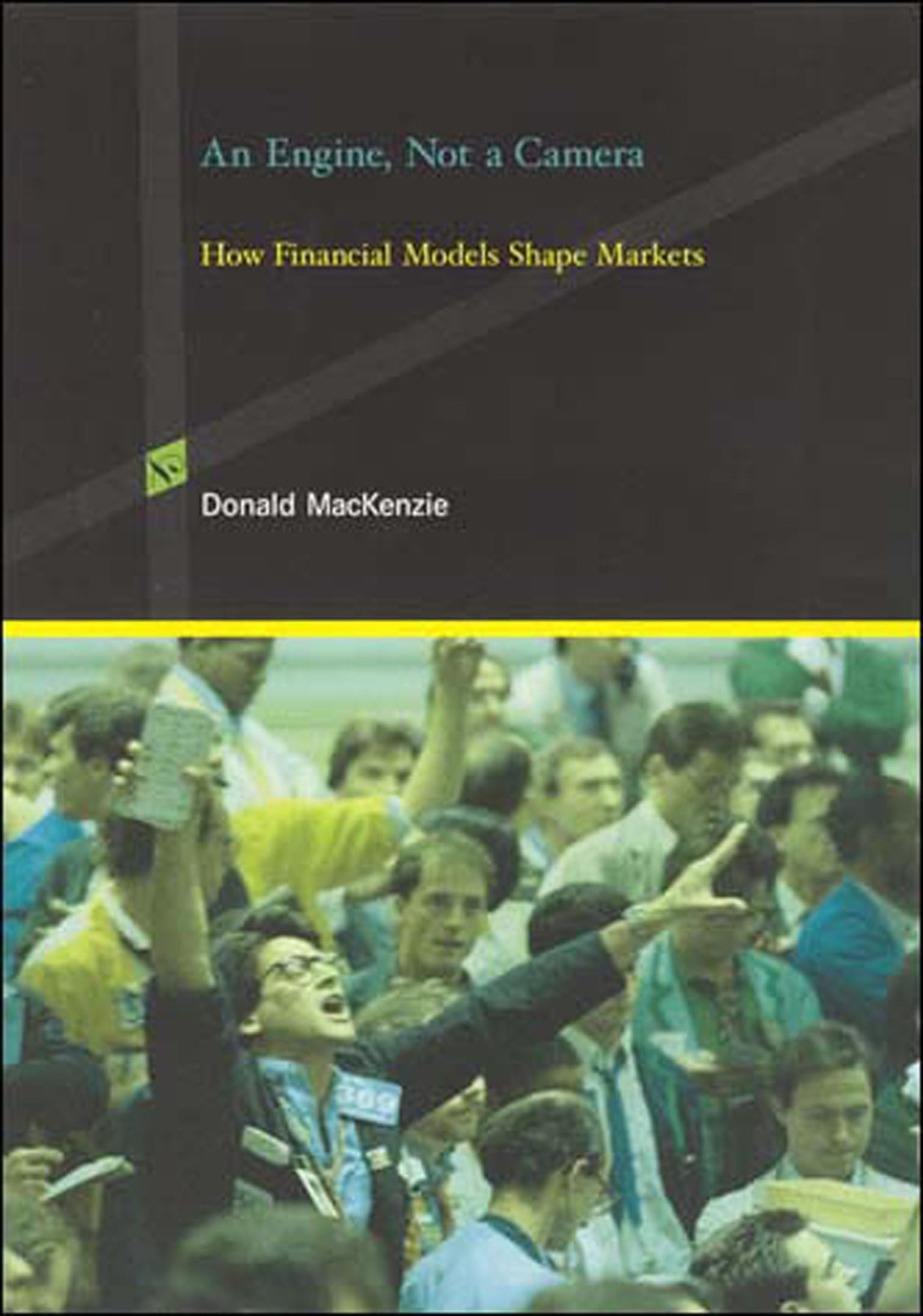
An Engine, Not a Camera: How Financial Models Shape Markets (Inside Technology),Used
Sold by Ergodebooks, an authorized reseller.
Returns accepted within 30 days | support@ergodebooks.com
Shipping Information
- Free Standard Shipping — United States only
- Processing Time: 3–5 business days
- Estimated Delivery: 6–10 business days after dispatch
- Double-boxed, fully insured & discreetly packaged
- Tracking number sent via email once dispatched
Returns & Refund
Returns accepted within 30 days of delivery.
Damaged or Defective Item
Free return shipping + replacement or full refund
Wrong Item Received
Free return shipping + replacement or full refund
Change of Mind
Return shipping at customer's expense · 25% restocking fee applies
Payment Option

In An Engine, Not a Camera, Donald MacKenzie argues that the emergence of modern economic theories of finance affected financial markets in fundamental ways. These new, Nobel Prizewinning theories, based on elegant mathematical models of markets, were not simply external analyses but intrinsic parts of economic processes.Paraphrasing Milton Friedman, MacKenzie says that economic models are an engine of inquiry rather than a camera to reproduce empirical facts. More than that, the emergence of an authoritative theory of financial markets altered those markets fundamentally. For example, in 1970, there was almost no trading in financial derivatives such as 'futures.' By June of 2004, derivatives contracts totaling $273 trillion were outstanding worldwide. MacKenzie suggests that this growth could never have happened without the development of theories that gave derivatives legitimacy and explained their complexities.MacKenzie examines the role played by finance theory in the two most serious crises to hit the world's financial markets in recent years: the stock market crash of 1987 and the market turmoil that engulfed the hedge fund LongTerm Capital Management in 1998. He also looks at finance theory that is somewhat beyond the mainstreamchaos theorist Benoit Mandelbrot's model of 'wild' randomness. MacKenzie's pioneering work in the social studies of finance will interest anyone who wants to understand how America's financial markets have grown into their current form.
⚠️ WARNING (California Proposition 65):
This product may contain chemicals known to the State of California to cause cancer, birth defects, or other reproductive harm.
For more information, please visit www.P65Warnings.ca.gov.
- Q: What is the page count of this book? A: The book has three hundred ninety-two pages. It provides extensive insights into how financial models influence markets.
- Q: What are the dimensions of this book? A: The book measures five point ninety-eight inches in length, one point zero six inches in width, and nine point zero two inches in height. These dimensions make it a standard paperback size.
- Q: What is the binding type of this book? A: The book is available in paperback binding. This type allows for easier handling and reading.
- Q: Who is the author of this book? A: The author is Donald MacKenzie. He is a recognized figure in the social studies of finance.
- Q: What genre does this book belong to? A: This book belongs to the finance genre. It discusses the intersection of financial theories and market behaviors.
- Q: What is the main theme of this book? A: The main theme revolves around how financial models shape and influence market dynamics. It argues against viewing models merely as observers.
- Q: How can I apply the concepts in this book? A: You can apply the concepts by analyzing financial models and their real-world implications. The book encourages critical thinking regarding economic theories.
- Q: Is this book suitable for beginners in finance? A: Yes, the book is suitable for beginners but may require some background knowledge in economic theories. It presents complex ideas in an accessible manner.
- Q: Can I read this book if I’m not a finance expert? A: Yes, you can read this book even without being a finance expert. It aims to explain intricate concepts in a way that is understandable.
- Q: How should I store this book to keep it in good condition? A: Store the book in a cool, dry place away from direct sunlight. This helps prevent damage to the pages and binding.
- Q: What is the recommended way to clean this book? A: To clean the book, gently wipe the cover with a dry cloth. Avoid using liquids, as they can damage the pages.
- Q: What if I receive a damaged copy of this book? A: If you receive a damaged copy, you should contact the seller for a return or replacement. Most sellers have return policies for such issues.
- Q: Is there a warranty on this book? A: No, typically books do not come with a warranty. However, check with the seller for their specific return policies.
- Q: Are there any specific storage tips for this book? A: Yes, avoid stacking heavy items on top of this book. This prevents bending or damaging the pages.
- Q: Can I gift this book to someone interested in finance? A: Yes, this book makes a great gift for anyone interested in finance or economic theories. It provides valuable insights into market dynamics.
- Q: Will this book help me understand financial markets better? A: Yes, this book will enhance your understanding of financial markets by explaining the role of economic theories in shaping them.