
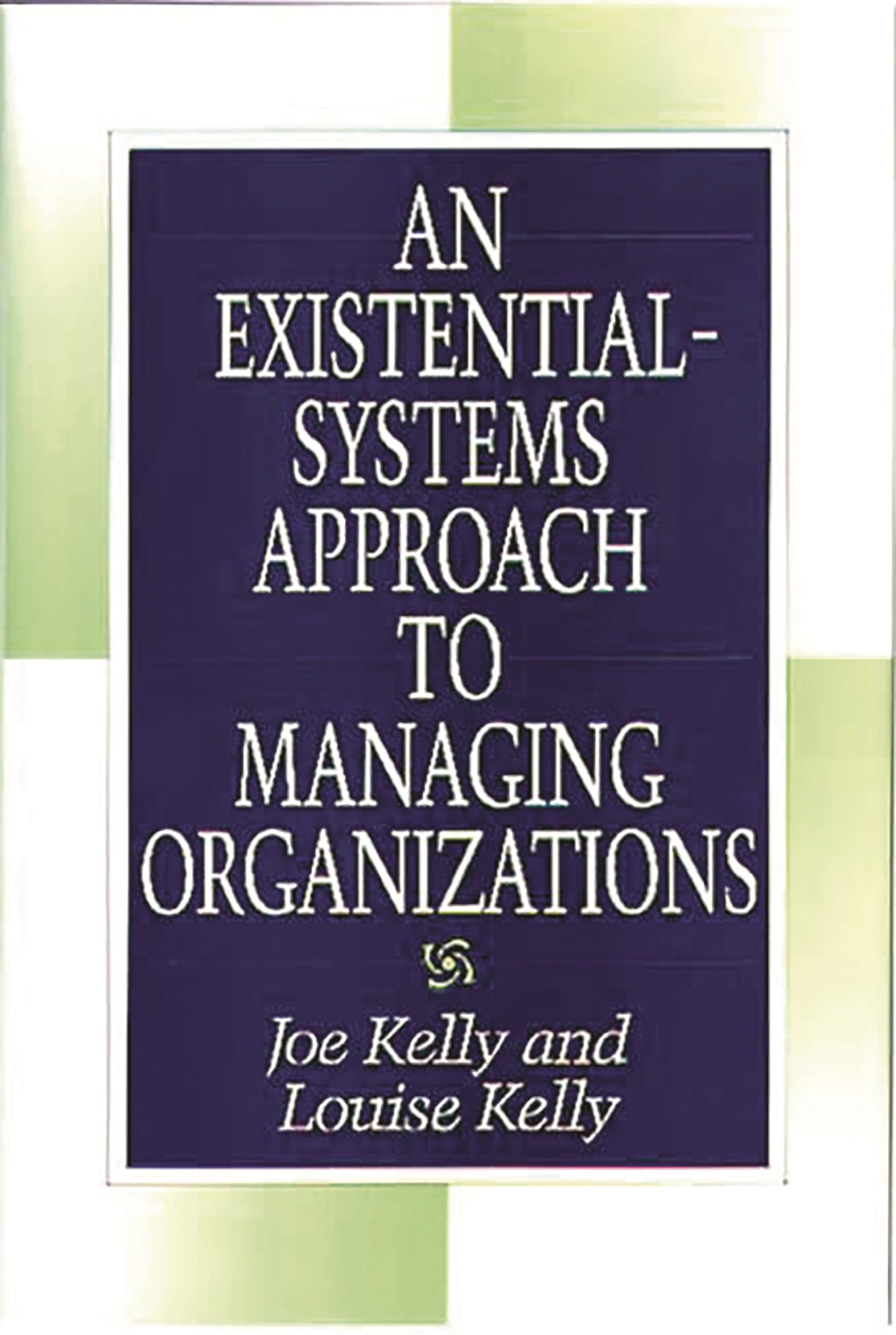
Title
An ExistentialSystems Approach to Managing Organizations,New
Sold by Ergodebooks, an authorized reseller.
Returns accepted within 30 days | support@ergodebooks.com
Shipping Information
- Free Standard Shipping — United States only
- Processing Time: 3–5 business days
- Estimated Delivery: 6–10 business days after dispatch
- Double-boxed, fully insured & discreetly packaged
- Tracking number sent via email once dispatched
Returns & Refund
Returns accepted within 30 days of delivery.
Damaged or Defective Item
Free return shipping + replacement or full refund
Wrong Item Received
Free return shipping + replacement or full refund
Change of Mind
Return shipping at customer's expense · 25% restocking fee applies
Payment Option

At a time of corporate downsizing and bonecrushing international competition, how can executives reconcile their individual personalities and human needs with the equally compelling needs of the harddriving organization? It is an existential dilemma, say Joe and Louise Kelly, and one with critical implications, not only for executives but for their organizations as well. The Kellys, by no means blithe theorists, take a hard look at this hardedged problem by positing a threepronged model for analysis based upon structure, process, and values. They synthesize these elements under an overarching concept of existentialism, in which the emphasis is on a search for meaning. And with that, they provide a clearheaded look at organizational behaviorits contributions to our understanding of how organizations work but, also its failures and, indeed, its frequent selfdeceptions. A wellwritten, vigorous, farranging examination, not only for executives who need the kind of help the Kellys offer in their daily combats on the job, but also for their colleagues in the academic community who have their own organizational problems to deal with.The Kellys make clear that their book reflects a movement away from the academicpurist position, where the sole concern is with theoretically significant research, to a position which recognizes that organizational behavior is a crossroads subject where traffic [that comes] mainly from behavioral science, computer technology, and economics coalesces with the ideas streaming out of organizational practice. Aimed at professional managers and students, both undergraduates as well as those on the M.B.A. level, this book assumes little prior knowledge of behavioral science or organizational theory. Readers will get what they need of those subjects here, enough to follow Kelly's argument. They will see how behavioral and organizational research has helped (but sometimes hindered) executives as they attempt to deal with critical happenings in their jobs. With case study material woven into the text and with observations from his own experiences with business as well as academic organizations, the Kellys' book is a readable, engrossing argument for and against the orthodoxies of organizational behavior studiesand the assurance that whatever else it may or not be, organizational behavior is certainly not static.
⚠️ WARNING (California Proposition 65):
This product may contain chemicals known to the State of California to cause cancer, birth defects, or other reproductive harm.
For more information, please visit www.P65Warnings.ca.gov.