
Title
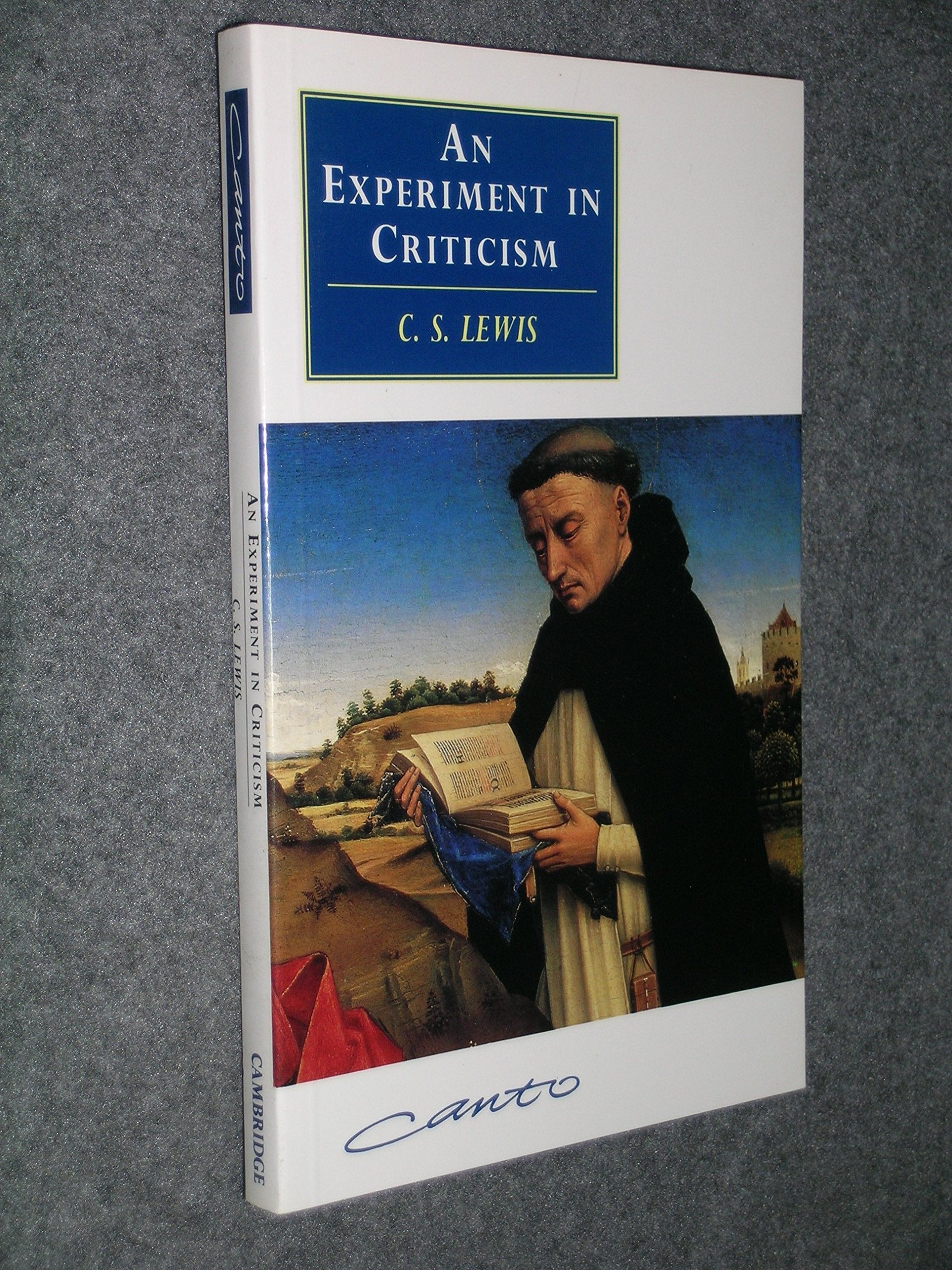
An Experiment in Criticism (Canto),Used
Sold by Ergodebooks, an authorized reseller.
Returns accepted within 30 days | support@ergodebooks.com
Shipping Information
- Free Standard Shipping — United States only
- Processing Time: 3–5 business days
- Estimated Delivery: 6–10 business days after dispatch
- Double-boxed, fully insured & discreetly packaged
- Tracking number sent via email once dispatched
Returns & Refund
Returns accepted within 30 days of delivery.
Damaged or Defective Item
Free return shipping + replacement or full refund
Wrong Item Received
Free return shipping + replacement or full refund
Change of Mind
Return shipping at customer's expense · 25% restocking fee applies
Payment Option

Why do we read literature and how do we judge it? C. S. Lewis's classic An Experiment in Criticism springs from the conviction that literature exists for the joy of the reader and that books should be judged by the kind of reading they invite. He argues that 'good reading', like moral action or religious experience, involves surrender to the work in hand and a process of entering fully into the opinions of others: 'in reading great literature I become a thousand men and yet remain myself'. Crucial to his notion of judging literature is a commitment to laying aside expectations and values extraneous to the work, in order to approach it with an open mind. Amid the complex welter of current critical theories, C. S. Lewis's wisdom is valuably downtoearth, refreshing and stimulating in the questions it raises about the experience of reading.
⚠️ WARNING (California Proposition 65):
This product may contain chemicals known to the State of California to cause cancer, birth defects, or other reproductive harm.
For more information, please visit www.P65Warnings.ca.gov.
- Q: How many pages does the book have? A: This book has one hundred fifty-two pages. It provides a concise exploration of C. S. Lewis's thoughts on literature.
- Q: What are the dimensions of the book? A: The book measures five point five one inches in length, zero point seven five inches in width, and eight point five inches in height.
- Q: What type of binding does this book have? A: The book features a paperback binding. This makes it lightweight and easy to handle for reading.
- Q: Who is the author of 'An Experiment in Criticism'? A: The author is C. S. Lewis. He is known for his impactful contributions to literary criticism and literature.
- Q: What genre does this book belong to? A: This book falls under the Criticism & Theory genre. It delves into philosophical discussions about literature and reading.
- Q: Is this book suitable for young readers? A: Yes, this book can be suitable for young readers. However, it is recommended for those with a mature understanding of literature.
- Q: What themes are explored in this book? A: The book explores themes of joy in reading, judgment of literature, and the transformative power of great literature.
- Q: How does C. S. Lewis suggest we approach reading? A: C. S. Lewis suggests approaching reading with an open mind. He emphasizes the importance of setting aside personal biases.
- Q: What is the main argument presented in 'An Experiment in Criticism'? A: The main argument is that literature should be judged by the kind of reading it invites. Lewis believes in the joy of reading.
- Q: Can this book be used for academic purposes? A: Yes, this book can be useful for academic purposes. It provides valuable insights into literary criticism and reading practices.
- Q: What condition is the used book in? A: The used book is in good condition. It is suitable for readers looking for a quality second-hand copy.
- Q: How can I benefit from reading this book? A: Reading this book can enhance your understanding of literature. It encourages critical thinking and appreciation for literary works.
- Q: What kind of reading experience does this book encourage? A: The book encourages an immersive reading experience. Lewis advocates for readers to fully engage with the text.
- Q: Is there a specific audience for this book? A: While it is aimed at literature enthusiasts, it appeals to anyone interested in critical thinking about reading.
- Q: What makes this book different from other literary critiques? A: This book stands out for its down-to-earth approach to literary criticism, making complex ideas accessible and relatable.