
Title

An Illustrated Guide to Iowa Prairie Plants,Used
Sold by Ergodebooks, an authorized reseller.
Returns accepted within 30 days | support@ergodebooks.com
Shipping Information
- Free Standard Shipping — United States only
- Processing Time: 3–5 business days
- Estimated Delivery: 6–10 business days after dispatch
- Double-boxed, fully insured & discreetly packaged
- Tracking number sent via email once dispatched
Returns & Refund
Returns accepted within 30 days of delivery.
Damaged or Defective Item
Free return shipping + replacement or full refund
Wrong Item Received
Free return shipping + replacement or full refund
Change of Mind
Return shipping at customer's expense · 25% restocking fee applies
Payment Option

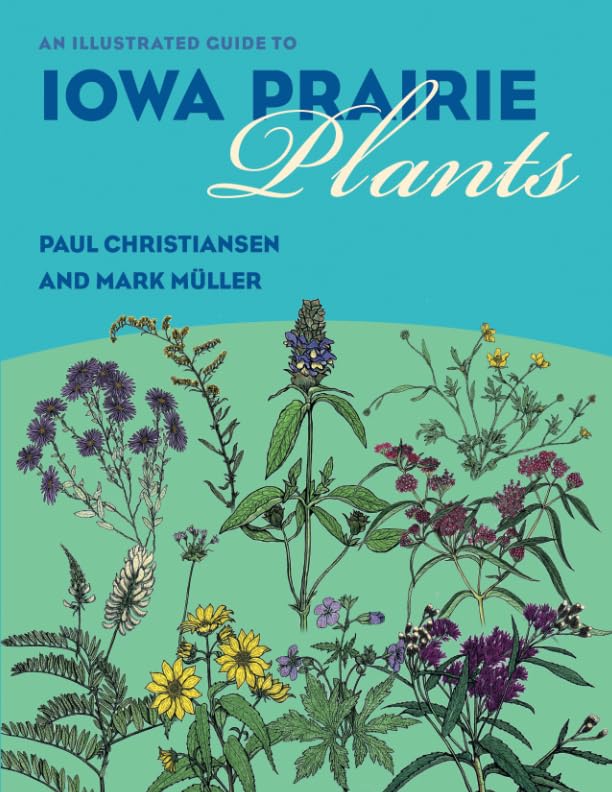
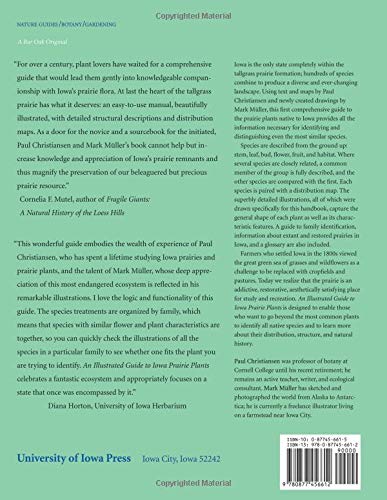
Iowa is the only state completely within the tallgrass prairie formation. Thanks to rich soil, adequate rainfall, and warm summer temperatures, hundreds of species combine to produce a diverse and colorful and everchanging landscape. Using text and maps by Paul Christiansen and newly created drawings by Mark Mller, this first comprehensive guide to the prairie plants native to Iowa provides all the information necessary for identifying and distinguishing even the most similar species.Species are described from the ground up: stem, leaf, bud, flower, fruit, and habitat. The time of flowering and fruiting is given for the central part of Iowa. Where several species are closely related, a common member of the group is fully described, and the other species are compared with the first. Each species is paired with a distribution map. The superbly detailed illustrations, all of which were drawn specifically for this handbook, capture the general shape of each plant as well as its characteristic features. A guide to family identification, information about extant and restored prairies in Iowa, and a glossary are also included.Farmers who settled Iowa in the 1800s viewed the great green sea of grasses and wildflowers as a challenge to be replaced with cropfields and pastures. Today we realize that the prairie is an addictive, restorative, aesthetically satisfying place for study and recreation. An Illustrated Guide to Iowa Prairie Plants is designed to enable those who want to go beyond the most common plants to identify all native species and to learn more about their distribution, structure, and natural history.
⚠️ WARNING (California Proposition 65):
This product may contain chemicals known to the State of California to cause cancer, birth defects, or other reproductive harm.
For more information, please visit www.P65Warnings.ca.gov.
- Q: What is 'An Illustrated Guide to Iowa Prairie Plants' about? A: This guide provides comprehensive information on native prairie plants in Iowa, detailing their identification, habitats, and characteristics.
- Q: Who is the author of this book? A: The author is Paul Christiansen, who collaborated with illustrator Mark Müller to create this detailed guide.
- Q: How many pages does the book contain? A: The book contains 252 pages, offering extensive insights into Iowa's prairie plants.
- Q: What type of binding does this book have? A: The book is available in a paperback binding, making it lightweight and portable.
- Q: When was 'An Illustrated Guide to Iowa Prairie Plants' published? A: The book was published on May 1, 1999.
- Q: Does the book include illustrations? A: Yes, it features detailed illustrations specifically drawn for the handbook, showcasing the unique characteristics of each plant.
- Q: Is the book suitable for beginners in botany? A: Yes, the guide is designed for both beginners and experienced botanists, providing clear identification methods and detailed descriptions.
- Q: Are there any maps included in the book? A: Yes, each species is paired with a distribution map, illustrating its habitat in Iowa.
- Q: What additional information does the book provide? A: It includes a guide to family identification, restoration information about Iowa prairies, and a glossary of terms used in botany.
- Q: Can this book help with identifying similar species? A: Yes, it compares closely related species, helping readers distinguish between them effectively.