
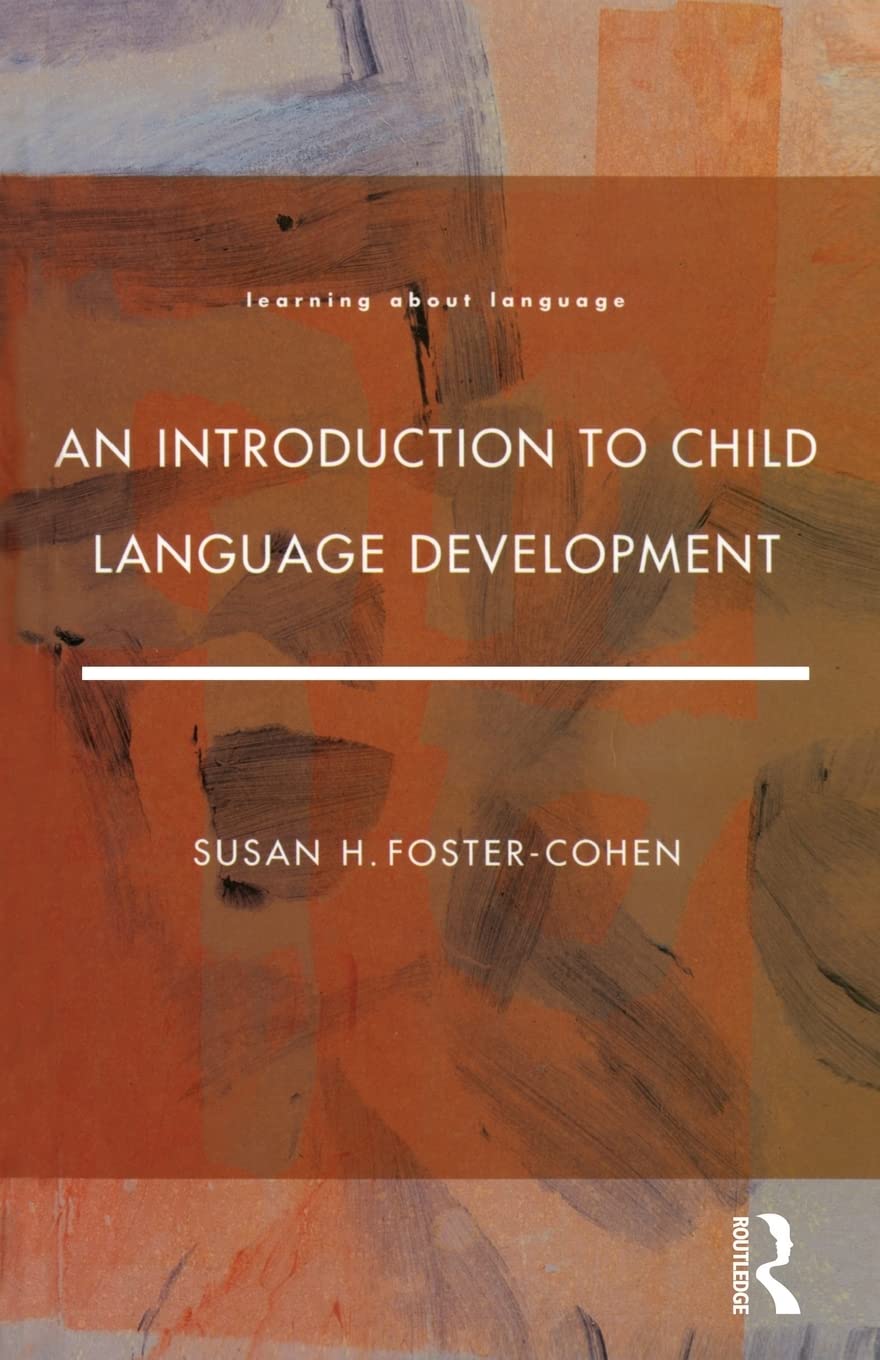
Title
An Introduction to Child Language Development,New
Sold by Ergodebooks, an authorized reseller.
Returns accepted within 30 days | support@ergodebooks.com
Shipping Information
- Free Standard Shipping — United States only
- Processing Time: 3–5 business days
- Estimated Delivery: 6–10 business days after dispatch
- Double-boxed, fully insured & discreetly packaged
- Tracking number sent via email once dispatched
Returns & Refund
Returns accepted within 30 days of delivery.
Damaged or Defective Item
Free return shipping + replacement or full refund
Wrong Item Received
Free return shipping + replacement or full refund
Change of Mind
Return shipping at customer's expense · 25% restocking fee applies
Payment Option

This volume introduces the field of child language development studies, and presents hypotheses in an accessible, largely nontechnical language, aiming to demonstrate the relationship between these hypotheses and interpretations of data. It makes the assumption that having a theory of language development is as important as having reliable data about what children say and understand, and it advocates a combination of both rationalist' and more 'empiricist' traditions. In fact, the author overtly argues that different traditions provide different pieces of the picture, and that taking any single approach is unlikely to lead to productive understanding.Susan FosterCohen explores a range of issues, including the nature of prelinguistic communication and its possible relationship to linguistic development; early stages of language development and how they can be viewed in the light of later developments; the nature and role of children's experience with the language(s) around them; variations in language development due to both pathological and nonpathological differences between children, and (in the latter case) between the languages they learn; later oral language development; and literacy. The approach is distinctly psycholinguistic and linguistic rather than sociolinguistic, although there is significant treatment of issues which intersect with more sociolinguistic concerns (e.g. literacy, language play, and bilingualism). There are exercises and discussion questions throughout, designed to reinforce the ideas being presented, as well as to offer the student the opportunity to think beyond the text to ideas at the cutting edge of research.The accessible presentation of key issues will appeal to the intended undergraduate readership, and will be of interest to those taking courses in language development, linguistics, developmental psychology, educational linguistics, and speech pathology. The book will also serve as a useful introduction to students wishing to pursue postgraduate courses which deal with child language development.
⚠️ WARNING (California Proposition 65):
This product may contain chemicals known to the State of California to cause cancer, birth defects, or other reproductive harm.
For more information, please visit www.P65Warnings.ca.gov.