
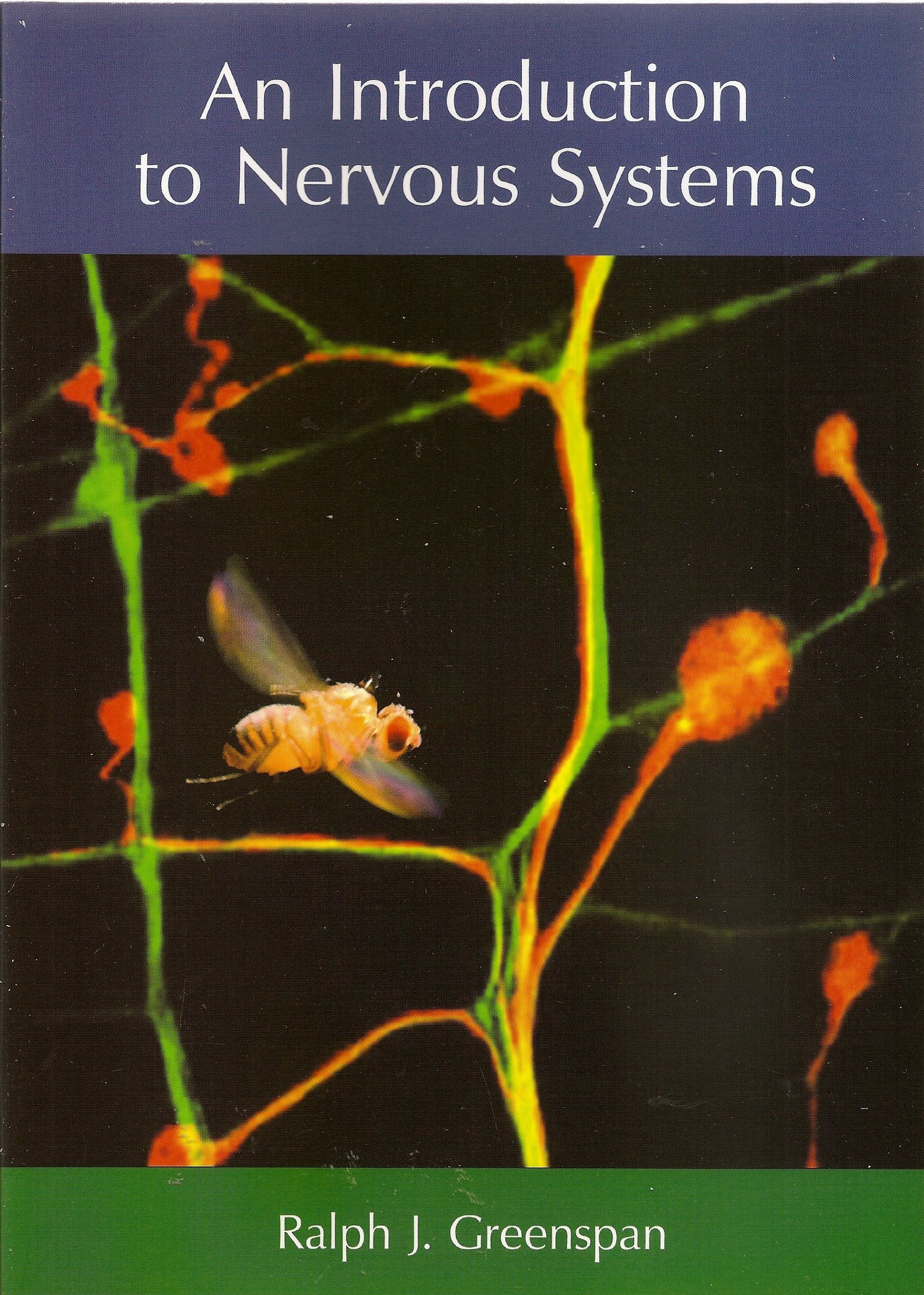
Title
An Introduction To Nervous Systems,New
Sold by Ergodebooks, an authorized reseller.
Returns accepted within 30 days | support@ergodebooks.com
Shipping Information
- Free Standard Shipping — United States only
- Processing Time: 3–5 business days
- Estimated Delivery: 6–10 business days after dispatch
- Double-boxed, fully insured & discreetly packaged
- Tracking number sent via email once dispatched
Returns & Refund
Returns accepted within 30 days of delivery.
Damaged or Defective Item
Free return shipping + replacement or full refund
Wrong Item Received
Free return shipping + replacement or full refund
Change of Mind
Return shipping at customer's expense · 25% restocking fee applies
Payment Option

An Introduction To Nervous Systems Presents The Principles Of Neurobiology From An Evolutionary Perspectivefrom Singlecelled Organisms To Complex Invertebrates Such As Fliesand Is Ideal For Use As A Supplemental Textbook. Greenspan Describes The Mechanisms That Allow Behavior To Become Ever More Sophisticatedfrom Simple Avoidance Behavior Of Paramecium Through To The Complex Cognitive Behaviors Of The Honeybeeand Shows How These Mechanisms Produce The Increasing Neural Complexity Found In These Organisms. The Book Ends With A Discussion Of What Is Universal About Nervous Systems And What May Be Required, Neurobiologically, To Be Human. This Novel And Highly Readable Presentation Of Fundamental Principles Of Neurobiology Is Designed To Be Accessible To Undergraduate And Graduate Students Not Already Steeped In The Subject.
⚠️ WARNING (California Proposition 65):
This product may contain chemicals known to the State of California to cause cancer, birth defects, or other reproductive harm.
For more information, please visit www.P65Warnings.ca.gov.
- Q: How many pages is 'An Introduction to Nervous Systems'? A: This book has one hundred seventy-two pages. It provides a concise overview of neurobiology principles through an evolutionary lens.
- Q: What is the binding type of this book? A: The binding type is paperback. This makes it lightweight and easy to handle for students.
- Q: Who is the author of this book? A: The author is Ralph J. Greenspan. He presents complex neurobiology concepts in an accessible manner for students.
- Q: What is the size of 'An Introduction to Nervous Systems'? A: The dimensions are approximately nine point zero nine inches in length, six point five inches in height, and zero point four five inches in width. It is a convenient size for study.
- Q: What category does this book fall under? A: The book falls under the Biology category. It is suitable for students interested in neurobiology and evolution.
- Q: How should I use this book for study? A: You can use this book as a supplemental textbook for your biology courses. It is ideal for both undergraduate and graduate students.
- Q: Is 'An Introduction to Nervous Systems' suitable for beginners? A: Yes, it is suitable for beginners. The author presents complex topics in a way that is accessible to those new to neurobiology.
- Q: Can this book be beneficial for advanced students? A: Yes, advanced students can benefit from its comprehensive approach. It covers fundamental principles that are essential for deeper understanding.
- Q: What reading level is 'An Introduction to Nervous Systems' appropriate for? A: This book is appropriate for undergraduate and graduate reading levels. Its content is designed to engage students not deeply versed in neurobiology.
- Q: How should I care for this book? A: To keep the book in good condition, store it in a dry place away from direct sunlight. Avoid bending the spine to maintain its shape.
- Q: Is this book safe to handle? A: Yes, it is safe to handle. There are no hazardous materials in its production.
- Q: How do I clean this book if it gets dirty? A: To clean the book, use a soft, dry cloth to gently wipe the cover. Avoid using water or cleaning solutions that may damage the pages.
- Q: What if the book arrives damaged? A: If the book arrives damaged, you should contact the seller for a return or exchange. Most sellers provide a return policy for such cases.
- Q: Can I return 'An Introduction to Nervous Systems' if I don't like it? A: Yes, you can typically return it within the seller’s specified return period. Check the return policy for details.
- Q: Is there a warranty on this book? A: No, books typically do not come with warranties. However, you may have return options if there are defects.
- Q: What makes this book different from other biology textbooks? A: This book focuses on neurobiology from an evolutionary perspective, highlighting the progression of complexity in nervous systems. It's written to be highly readable for students.