
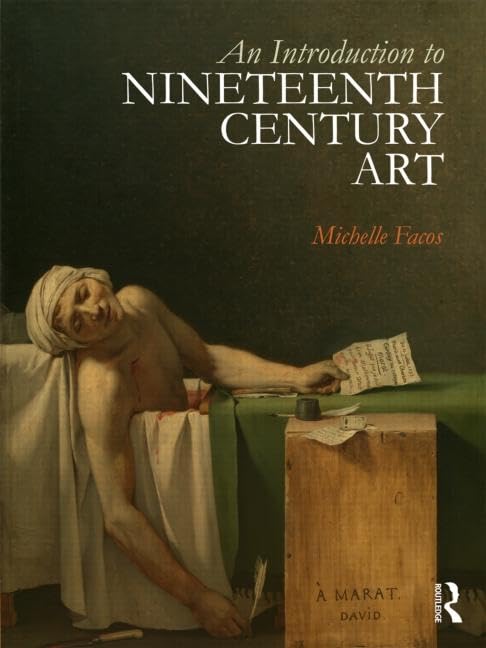
Title
An Introduction To Nineteenthcentury Art,New
Sold by Ergodebooks, an authorized reseller.
Returns accepted within 30 days | support@ergodebooks.com
Shipping Information
- Free Standard Shipping — United States only
- Processing Time: 3–5 business days
- Estimated Delivery: 6–10 business days after dispatch
- Double-boxed, fully insured & discreetly packaged
- Tracking number sent via email once dispatched
Returns & Refund
Returns accepted within 30 days of delivery.
Damaged or Defective Item
Free return shipping + replacement or full refund
Wrong Item Received
Free return shipping + replacement or full refund
Change of Mind
Return shipping at customer's expense · 25% restocking fee applies
Payment Option

Using The Tools Of The 'New' Art History (Feminism, Marxism, Social Context, Etc.) An Introduction To Nineteenthcentury Art Offers A Richly Textured, Yet Clear And Logical, Introduction To Nineteenthcentury Art And Culture. This Textbook Will Provide Readers With A Basic Historical Framework Of The Period And The Critical Tools For Interpreting And Situating New And Unfamiliar Works Of Art.Michelle Facos Goes Beyond Existing Histories Of Nineteenthcentury Art, Which Often Focus Solely On France, Britain, And The United States, To Incorporate Artists And Artworks From Scandinavia, Germany, And Eastern Europe.The Book Expertly Balances Its Coverage Of Trends And Individual Artworks: Where The Salient Trends Are Clear, Trendsetting Works Are Highlighted, And The Complexity Of The Period Is Respected By Situating All Works In Their Proper Social And Historical Context. In This Way, The Student Reader Achieves A More Nuanced Understanding Of The Way In Which The Story Of Nineteenthcentury Art Is The Story Of The Ways In Which Artists And Society Grappled With The Problem Of Modernity.Key Pedagogical Features Include:Data Boxes Provide Statistics, Timelines, Charts, And Historical Information About The Period To Further Situate Artworks.Text Boxes Highlight Extracts From Original Sources, Citing The Ideas Of Artists And Their Contemporaries, Including Historians, Philosophers, Critics, And Theorists, To Place Artists And Works In The Broader Context Of Aesthetic, Cultural, Intellectual, Social, And Political Conditions In Which Artists Were Working.Beautifully Illustrated With Over 250 Color Images.Margin Notes And Glossary Definitions.Online Resources At Www.Routledge.Com/Textbooks/Facos With Access To A Wealth Of Information, Including Original Documents Pertaining To Artworks Discussed In The Textbook, Contemporary Criticism, Timelines And Maps To Enrich Your Understanding Of The Period And Allow For Further Comparison And Exploration.Chapters Take A Thematic Approach Combined Within An Overarching Chronology And More Detailed Discussions Of Individual Works Are Always Put In The Context Of The Broader Social Picture, Thus Providing Students With A Sense Of Art History As A Controversial And Alive Arena Of Study.Michelle Facos Teaches Art History At Indiana University, Bloomington. Her Research Explores The Changing Relationship Between Artists And Society Since The Enlightenment And Issues Of Identity. Prior Publications Include Nationalism And The Nordic Imagination: Swedish Painting Of The 1890S (1998), Art, Culture And National Identity In Findesicle Europe, Coedited With Sharon Hirsh (2003), And Symbolist Art In Context (2009).
⚠️ WARNING (California Proposition 65):
This product may contain chemicals known to the State of California to cause cancer, birth defects, or other reproductive harm.
For more information, please visit www.P65Warnings.ca.gov.
- Q: How many pages does the book 'An Introduction to Nineteenth-Century Art' have? A: The book has four hundred thirty-six pages. This extensive length provides a comprehensive exploration of nineteenth-century art and culture.
- Q: What size is the book 'An Introduction to Nineteenth-Century Art'? A: The book measures seven point twenty-five inches in length, one inch in width, and nine point five inches in height. This size is typical for a textbook, making it suitable for reading and referencing.
- Q: What type of binding does 'An Introduction to Nineteenth-Century Art' have? A: The book is published in paperback binding. This allows for flexibility and ease of handling, ideal for students and casual readers.
- Q: How should I approach reading 'An Introduction to Nineteenth-Century Art'? A: You can read it thematically or chronologically, as it combines both approaches. This method helps in understanding the context of artworks and their social implications.
- Q: Is 'An Introduction to Nineteenth-Century Art' suitable for beginners? A: Yes, the book is suitable for beginners. It offers a clear framework and critical tools for interpreting art, making it accessible for those new to art history.
- Q: What resources are available alongside 'An Introduction to Nineteenth-Century Art'? A: Online resources are available at www.routledge.com/textbooks/facos. These include original documents, contemporary criticism, and additional timelines to enhance understanding.
- Q: How can I keep 'An Introduction to Nineteenth-Century Art' in good condition? A: Store the book in a cool, dry place to prevent damage. Avoid exposing it to direct sunlight, as this can fade the cover and illustrations.
- Q: Are there any specific cleaning instructions for 'An Introduction to Nineteenth-Century Art'? A: No specific cleaning instructions are necessary. Simply handle the book with clean hands to maintain its condition.
- Q: What should I do if 'An Introduction to Nineteenth-Century Art' arrives damaged? A: Contact the retailer where you purchased the book for their return policy. Most retailers will offer a replacement or refund for damaged items.
- Q: Can I find similar books to 'An Introduction to Nineteenth-Century Art'? A: Yes, there are many books on art history that focus on different periods and styles. Look for titles that also cover social context and critical interpretations.
- Q: Is 'An Introduction to Nineteenth-Century Art' more focused on individual artists or broader trends? A: The book expertly balances both individual artworks and broader trends. It highlights key works while situating them in their social and historical context.
- Q: Does 'An Introduction to Nineteenth-Century Art' include illustrations? A: Yes, the book is beautifully illustrated with over two hundred fifty color images. These visuals enhance the text and provide a richer understanding of the artworks discussed.
- Q: Who is the author of 'An Introduction to Nineteenth-Century Art'? A: The author is Michelle Facos. She teaches art history at Indiana University and has written extensively on the relationship between artists and society.
- Q: What themes are explored in 'An Introduction to Nineteenth-Century Art'? A: The book explores themes of modernity, identity, and the social context of art. It provides critical tools for interpreting art from diverse geographical regions.
- Q: Is 'An Introduction to Nineteenth-Century Art' a suitable textbook for university courses? A: Yes, it is designed as a textbook, making it suitable for university courses in art history. Its structured approach aids both teaching and self-study.