
Title

An Introduction To Personalism
Sold by Ergodebooks, an authorized reseller.
Returns accepted within 30 days | support@ergodebooks.com
Shipping Information
- Free Standard Shipping — United States only
- Processing Time: 3–5 business days
- Estimated Delivery: 6–10 business days after dispatch
- Double-boxed, fully insured & discreetly packaged
- Tracking number sent via email once dispatched
Returns & Refund
Returns accepted within 30 days of delivery.
Damaged or Defective Item
Free return shipping + replacement or full refund
Wrong Item Received
Free return shipping + replacement or full refund
Change of Mind
Return shipping at customer's expense · 25% restocking fee applies
Payment Option

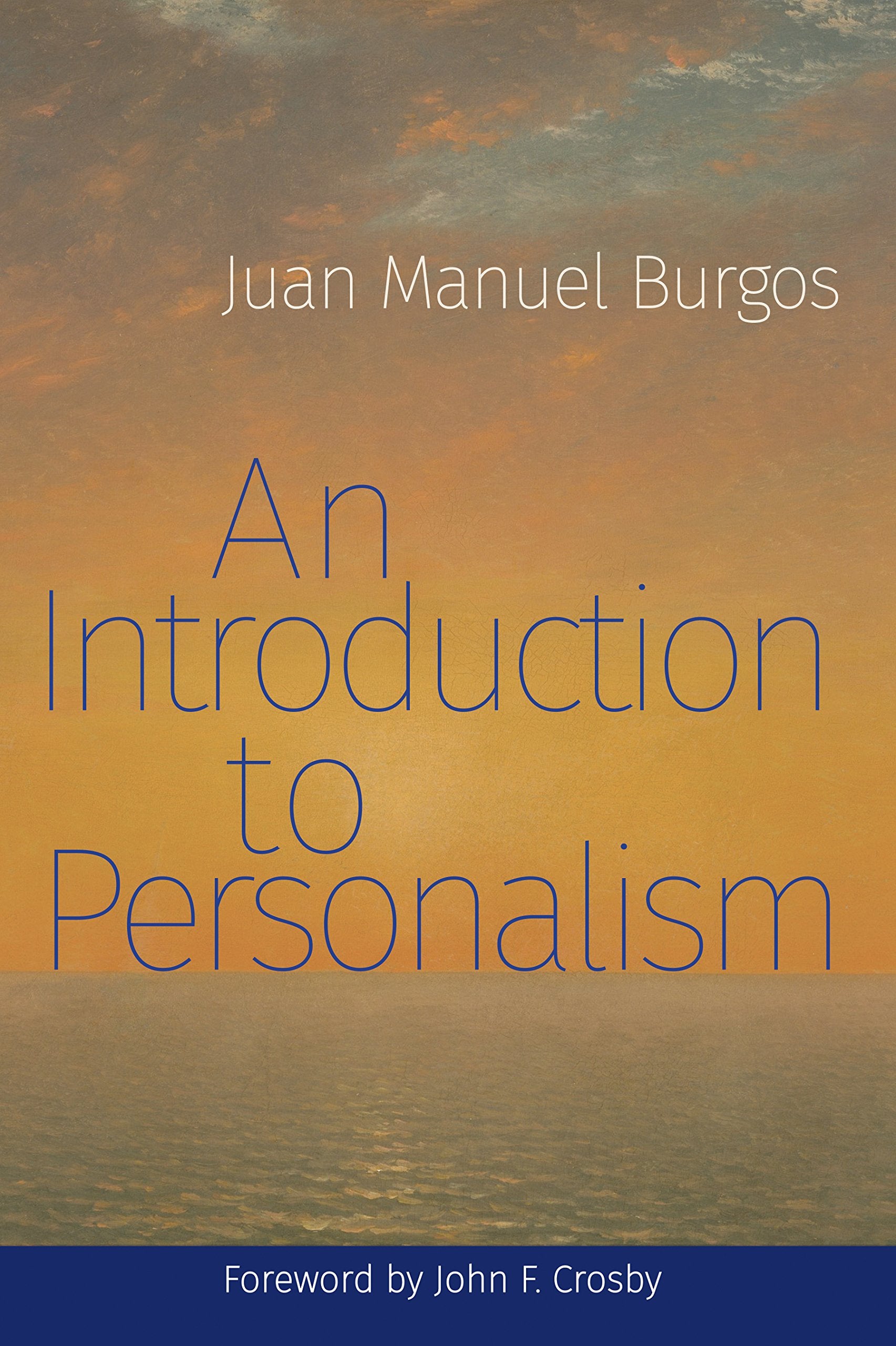
Much Has Been Written About The Great Personalist Philosophers Of The 20Th Century Including Jacques Maritain And Emmanuel Mournier, Martin Buber And Emmanuel Levinas, Dietrich Von Hildebrand And Edith Stein, Max Scheler And Karol Wojtyla (Later Pope John Paul Ii) But Few Books Cover The Personalist Movement As A Whole. An Introduction To Personalism Fills That Gap.Juan Manuel Burgos Shows The Reader How Personalist Philosophy Was Born In Response To The Tragedies Of Two World Wars, The Great Depression, And The Totalitarian Regimes Of The 1930S. Through A Revitalization Of The Concept Of The Person, An Array Of Thinkers Developed A Philosophy Both Rooted In The Best Of The Intellectual Tradition And Capable Of Dialoguing With Contemporary Concerns.Burgos Then Delves Into The Potent Ideas Of More Than Twenty Thinkers Who Have Contributed To The Growth Of Personalism, Including Romano Guardini, Gabriel Marcel, Xavier Zubiri, And Michael Polanyi. Burgos'S Encyclopedic Knowledge Of The Movement Allows For A Concise And Wellrounded Perspective On Each Of The Personalists Studied.An Introduction To Personalism Concludes With A Synthesis Of Personalist Thought, Bringing Together The Brightest Insights Of Each Personalist Philosopher Into An Organic Whole. Burgos Argues That Personalism Is Not An Eclectic Hodgepodge, But A Fullfledged School Of Philosophy, And Gives A Dynamic And Rigorous Exposition Of The Key Features Of The Personalist Position.Our Times Are Marked By Numerous And Often Contradictory Ideas About The Human Person. An Introduction To Personalism Presents An Engaging Anthropological Vision Capable Of Taking The Lead In The Debate About The Meaning Of Human Existence And Of Winning Hearts And Minds For The Cause Of The Dignity Of Every Person In The 21St Century And Beyond.
⚠️ WARNING (California Proposition 65):
This product may contain chemicals known to the State of California to cause cancer, birth defects, or other reproductive harm.
For more information, please visit www.P65Warnings.ca.gov.
- Q: What is 'An Introduction to Personalism' about? A: 'An Introduction to Personalism' explores the personalist philosophy, highlighting its development in response to the challenges of the 20th century, including two World Wars and totalitarian regimes. The book discusses the contributions of key personalist thinkers and synthesizes their insights into a cohesive philosophical framework.
- Q: Who is the author of 'An Introduction to Personalism'? A: The author of 'An Introduction to Personalism' is Juan Manuel Burgos, who provides an encyclopedic overview of the personalist movement and its key philosophers.
- Q: How many pages does the book have? A: 'An Introduction to Personalism' contains 288 pages, providing a comprehensive exploration of personalist thought.
- Q: What is the publication date of this book? A: 'An Introduction to Personalism' was published on April 1, 2018.
- Q: What is the binding type of 'An Introduction to Personalism'? A: The book is available in paperback binding, making it accessible for readers who prefer physical copies.
- Q: Is 'An Introduction to Personalism' suitable for beginners? A: Yes, 'An Introduction to Personalism' is suitable for both beginners and those familiar with philosophical concepts, as it provides clear explanations of complex ideas and the contributions of various personalist thinkers.
- Q: What philosophical themes are covered in the book? A: 'An Introduction to Personalism' covers themes related to the dignity of the human person, the impact of historical events on personalist philosophy, and the dialogue between personalism and contemporary concerns.
- Q: Does the book discuss specific personalist philosophers? A: Yes, the book delves into the ideas of over twenty personalist philosophers, including Jacques Maritain, Emmanuel Mournier, and Karol Wojtyla, providing insights into their contributions to the movement.
- Q: What is the target audience for 'An Introduction to Personalism'? A: The book is aimed at students, scholars, and anyone interested in philosophy, particularly those looking to understand personalism and its relevance in modern discussions about human existence.
- Q: What makes 'An Introduction to Personalism' unique? A: 'An Introduction to Personalism' is unique in that it offers a comprehensive overview of the personalist movement as a whole, synthesizing key insights from multiple thinkers rather than focusing on individual philosophies.