
Title
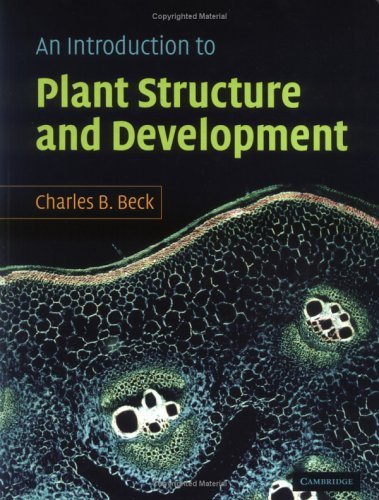
An Introduction to Plant Structure and Development: Plant Anatomy for the TwentyFirst Century,Used
Sold by Ergodebooks, an authorized reseller.
Returns accepted within 30 days | support@ergodebooks.com
Shipping Information
- Free Standard Shipping — United States only
- Processing Time: 3–5 business days
- Estimated Delivery: 6–10 business days after dispatch
- Double-boxed, fully insured & discreetly packaged
- Tracking number sent via email once dispatched
Returns & Refund
Returns accepted within 30 days of delivery.
Damaged or Defective Item
Free return shipping + replacement or full refund
Wrong Item Received
Free return shipping + replacement or full refund
Change of Mind
Return shipping at customer's expense · 25% restocking fee applies
Payment Option

Unlike many other plant anatomy textbooks, the 18 chapters in this volume incorporate information from the latest research in cellular and molecular biology as related to plant development. Topics include the integrative significance of plasmodesmata and the concept of the symplast, the concept of multicellularity, the role of the cytoskeleton in development, signal transduction, and the genetic control of development. Brief sections on evolution and function are also included. The textbook has been designed for undergraduate and graduate students with a basic knowledge of plant science. .
⚠️ WARNING (California Proposition 65):
This product may contain chemicals known to the State of California to cause cancer, birth defects, or other reproductive harm.
For more information, please visit www.P65Warnings.ca.gov.
- Q: What is the page count of this book? A: This book contains four hundred fifty pages. It covers a wide range of topics in plant anatomy and development.
- Q: What is the binding type of this book? A: This book is bound in hardcover. The durable binding is suitable for both classroom use and personal study.
- Q: What are the dimensions of this book? A: The book measures eight inches in length, one point twenty-six inches in width, and ten inches in height. These dimensions make it a standard size for textbooks.
- Q: Who is the author of this book? A: The author of this book is Charles B. Beck. He has contributed significantly to the field of plant anatomy.
- Q: What is the main focus of this book? A: The main focus of this book is on plant structure and development. It incorporates the latest research in cellular and molecular biology.
- Q: Is this book suitable for beginners? A: Yes, this book is designed for undergraduate and graduate students with a basic knowledge of plant science. It serves as both an introduction and a detailed study resource.
- Q: How is this book organized? A: The book is organized into eighteen chapters, each covering different aspects of plant anatomy and development. This structure facilitates easy navigation and understanding.
- Q: What topics are covered in this book? A: Topics include plasmodesmata, multicellularity, cytoskeleton roles, signal transduction, and genetic control of development. Brief sections on evolution and function are also included.
- Q: How can this book be used in a classroom setting? A: This book can be used as a textbook for courses in plant anatomy and development. Its comprehensive coverage makes it a valuable resource for discussions and assignments.
- Q: Is there any information on the evolution of plants in this book? A: Yes, the book includes brief sections on the evolution and function of plants. This context enhances the understanding of anatomical concepts.
- Q: How should I store this book to keep it in good condition? A: Store this book in a cool, dry place, away from direct sunlight. Proper storage helps maintain its condition and prolongs its lifespan.
- Q: Can this book be used for research purposes? A: Yes, this book is suitable for research purposes. It includes current research findings and theories relevant to plant anatomy and development.
- Q: What is the condition of used copies of this book? A: Used copies of this book are generally in good condition. However, it's advisable to check the condition description before purchasing.
- Q: Is there a warranty or return policy for this book? A: Typically, return policies depend on the seller. It's best to review the specific return policy before making a purchase.
- Q: What if the book arrives damaged? A: If the book arrives damaged, contact the seller immediately. Most sellers provide options for returns or replacements.