
Title
An Introduction to Practical Formal Methods Using Temporal Logic,Used
Sold by Ergodebooks, an authorized reseller.
Returns accepted within 30 days | support@ergodebooks.com
Shipping Information
- Free Standard Shipping — United States only
- Processing Time: 3–5 business days
- Estimated Delivery: 6–10 business days after dispatch
- Double-boxed, fully insured & discreetly packaged
- Tracking number sent via email once dispatched
Returns & Refund
Returns accepted within 30 days of delivery.
Damaged or Defective Item
Free return shipping + replacement or full refund
Wrong Item Received
Free return shipping + replacement or full refund
Change of Mind
Return shipping at customer's expense · 25% restocking fee applies
Payment Option

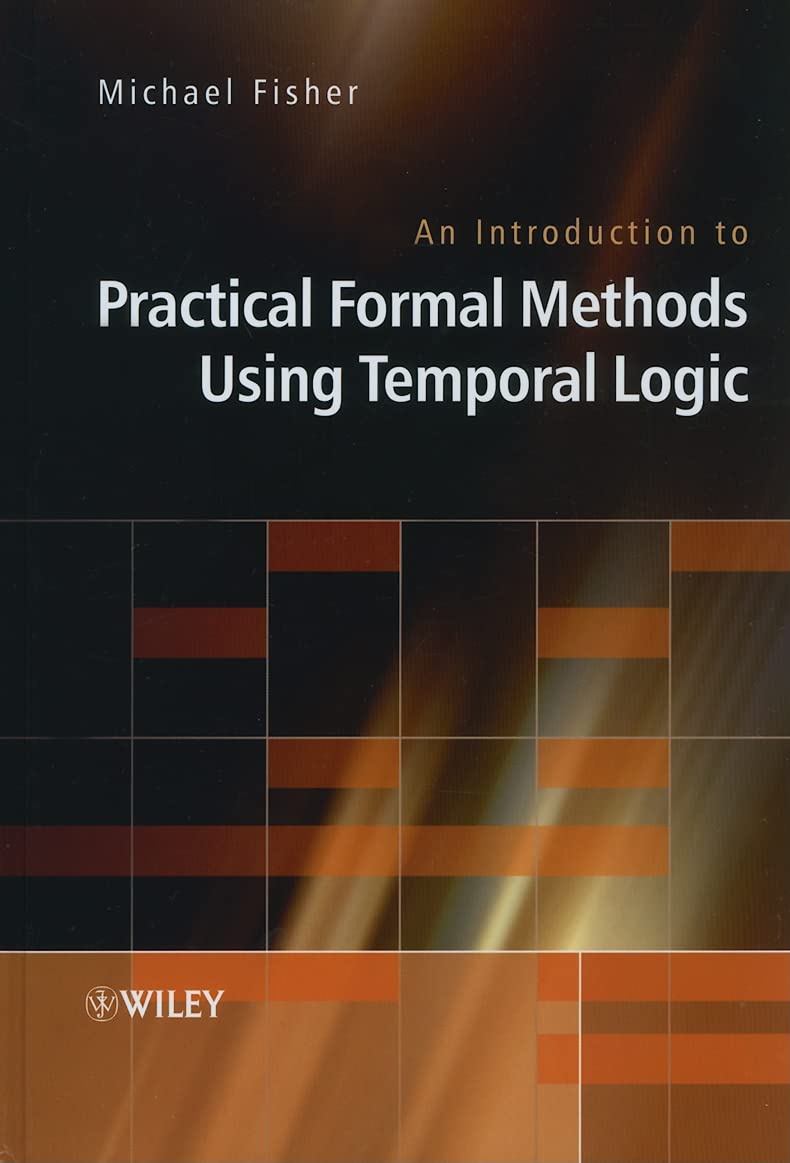
The name "temporal logic" may sound complex and daunting; but while they describe potentially complex scenarios, temporal logics are often based on a few simple, and fundamental, concepts highlighted in this book. An Introduction to Practical Formal Methods Using Temporal Logic provides an introduction to formal methods based on temporal logic, for developing and testing complex computational systems. These methods are supported by many welldeveloped tools, techniques and results that can be applied to a wide range of systems.Fisher begins with a full introduction to the subject, covering the basics of temporal logic and using a variety of examples, exercises and pointers to more advanced work to help clarify and illustrate the topics discussed. He goes on to describe how this logic can be used to specify a variety of computational systems, looking at issues of linking specifications, concurrency, communication and composition ability. He then analyses temporal specification techniques such as deductive verification, algorithmic verification, and direct execution to develop and verify computational systems. The final chapter on case studies analyses the potential problems that can occur in a range of engineering applications in the areas of robotics, railway signalling, hardware design, ubiquitous computing, intelligent agents, and information security, and explains how temporal logic can improve their accuracy and reliability. Models temporal notions and uses them to analyze computational systems Provides a broad approach to temporal logic across many formal methods including specification, verification and implementation Introduces and explains freely available tools based on temporal logics and shows how these can be applied Presents exercises and pointers to further study in each chapter, as well as an accompanying website providing links to additional systems based upon temporal logic as well as additional material related to the book.
⚠️ WARNING (California Proposition 65):
This product may contain chemicals known to the State of California to cause cancer, birth defects, or other reproductive harm.
For more information, please visit www.P65Warnings.ca.gov.