
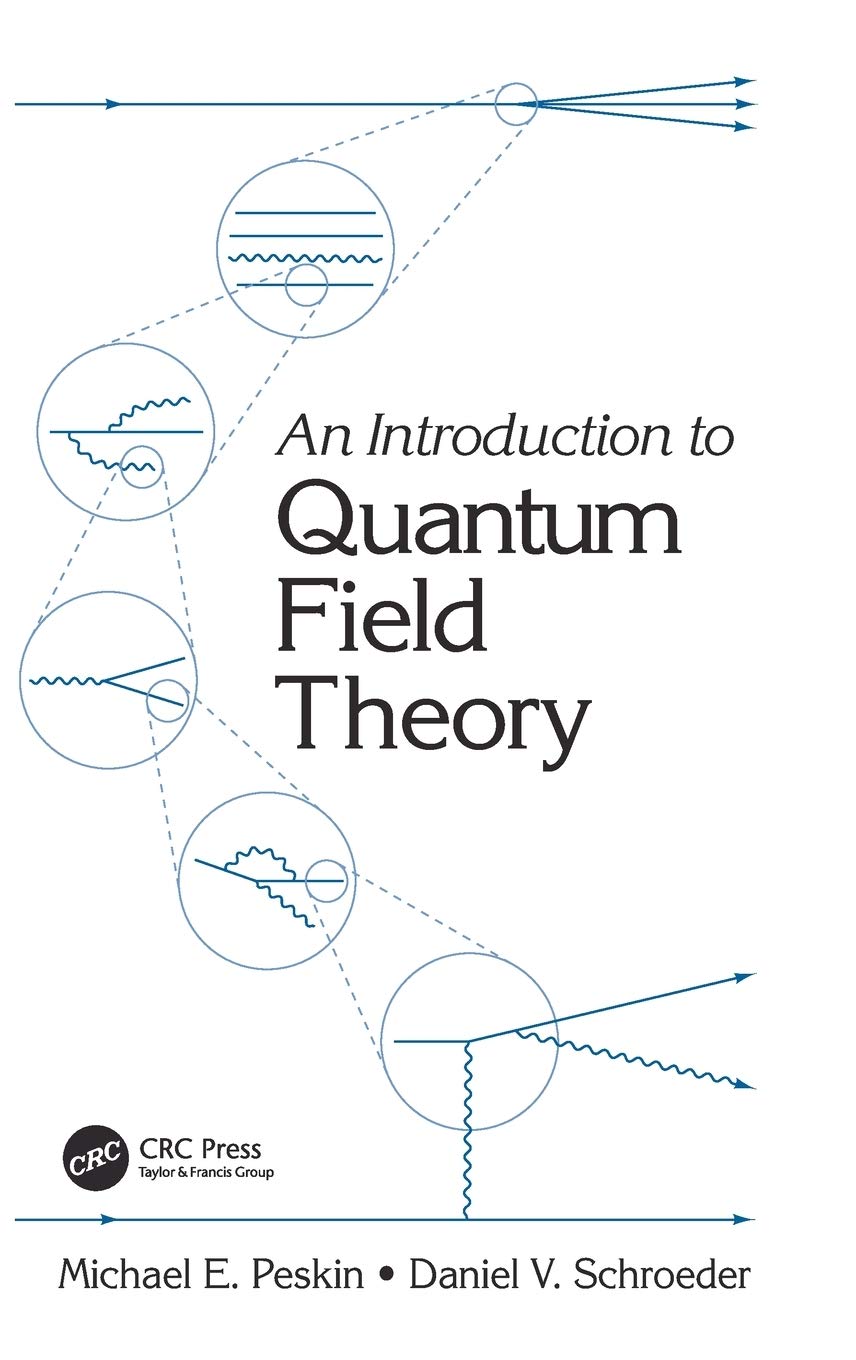
Title


An Introduction To Quantum Field Theory (Frontiers in Physics),Used
Sold by Ergodebooks, an authorized reseller.
Returns accepted within 30 days | support@ergodebooks.com
Shipping Information
- Free Standard Shipping — United States only
- Processing Time: 3–5 business days
- Estimated Delivery: 6–10 business days after dispatch
- Double-boxed, fully insured & discreetly packaged
- Tracking number sent via email once dispatched
Returns & Refund
Returns accepted within 30 days of delivery.
Damaged or Defective Item
Free return shipping + replacement or full refund
Wrong Item Received
Free return shipping + replacement or full refund
Change of Mind
Return shipping at customer's expense · 25% restocking fee applies
Payment Option

An Introduction to Quantum Field Theory is a textbook intended for the graduate physics course covering relativistic quantum mechanics, quantum electrodynamics, and Feynman diagrams. The authors make these subjects accessible through carefully worked examples illustrating the technical aspects of the subject, and intuitive explanations of what is going on behind the mathematics.After presenting the basics of quantum electrodynamics, the authors discuss the theory of renormalization and its relation to statistical mechanics, and introduce the renormalization group. This discussion sets the stage for a discussion of the physical principles that underlie the fundamental interactions of elementary particle physics and their description by gauge field theories.
⚠️ WARNING (California Proposition 65):
This product may contain chemicals known to the State of California to cause cancer, birth defects, or other reproductive harm.
For more information, please visit www.P65Warnings.ca.gov.
- Q: What is the binding type of this book? A: This book has a hardcover binding. Hardcover bindings provide durability and protection for the pages inside.
- Q: How many pages are in 'An Introduction to Quantum Field Theory'? A: This textbook contains eight hundred sixty-four pages. It offers a comprehensive exploration of quantum field theory topics.
- Q: What are the dimensions of this book? A: The book measures six point twenty-six inches in width and nine point twenty-five inches in height. These dimensions make it a standard size for textbooks.
- Q: Who is the author of this textbook? A: The author of this book is Michael E. Peskin. He is known for his expertise in quantum field theory.
- Q: What topics does this book cover? A: This book covers relativistic quantum mechanics, quantum electrodynamics, and Feynman diagrams. It is designed for graduate-level physics courses.
- Q: Is this textbook suitable for beginners in quantum physics? A: No, this textbook is intended for graduate-level students. It assumes prior knowledge of advanced physics concepts.
- Q: How can I use this book effectively for studying? A: To use this book effectively, read each chapter thoroughly and work through the examples provided. This will enhance your understanding of the concepts.
- Q: What is the recommended reading level for this book? A: The recommended reading level is graduate-level physics. It is best suited for students who have completed introductory physics courses.
- Q: How should I store this hardcover book to keep it in good condition? A: Store this book upright on a shelf in a cool, dry place. Avoid exposing it to direct sunlight to prevent fading.
- Q: Is there a specific way to clean this book? A: Yes, clean the book by gently dusting it with a soft, dry cloth. Avoid using liquids that could damage the cover or pages.
- Q: What if I receive a damaged copy of this book? A: If you receive a damaged copy, contact the seller for a return or exchange. Most sellers offer a return policy for damaged items.
- Q: Can I return this book if I change my mind? A: Yes, you can return the book if it is in its original condition. Check the seller’s return policy for specific details.
- Q: How does this book compare to other quantum field theory texts? A: This book is known for its clear explanations and worked examples. It is often recommended for its accessibility compared to other texts.
- Q: Are there any prerequisites for understanding this book? A: Yes, a solid background in quantum mechanics and statistical mechanics is recommended before tackling this book.
- Q: Is this book suitable for self-study? A: Yes, this book is suitable for self-study if you have the necessary background in physics. It includes examples that aid in learning.
- Q: What is the main focus of the Feynman diagrams discussed in this book? A: The main focus is on their application in quantum electrodynamics. Feynman diagrams provide a visual way to represent particle interactions.