
Title
An Introduction To The Physics Of Semiconductor Devices (The ^Aoxford Series In Electrical And Computer Engineering)-used
Sold by Ergodebooks, an authorized reseller.
Returns accepted within 30 days | support@ergodebooks.com
Shipping Information
- Free Standard Shipping — United States only
- Processing Time: 3–5 business days
- Estimated Delivery: 6–10 business days after dispatch
- Double-boxed, fully insured & discreetly packaged
- Tracking number sent via email once dispatched
Returns & Refund
Returns accepted within 30 days of delivery.
Damaged or Defective Item
Free return shipping + replacement or full refund
Wrong Item Received
Free return shipping + replacement or full refund
Change of Mind
Return shipping at customer's expense · 25% restocking fee applies
Payment Option

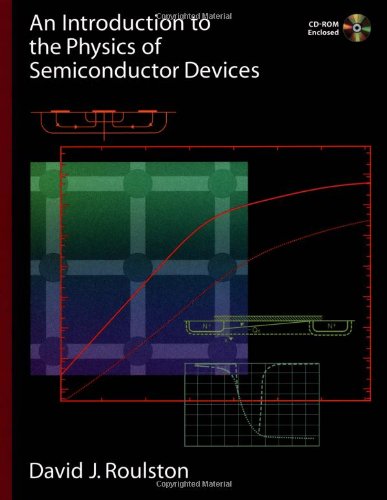
An Introduction To The Physics Of Semiconductor Devices Provides A Thorough Yet Concise Introduction To The Physical Operation Of Semiconductor Devices Including Diodes, Bipolar Transistors, Mos Fieldeffect Transistors, And Junction Fieldeffect Transistors, As Well As An Overview Of Numerous Other Devices. Ideal For Second And Thirdyear Students In Electrical Engineering, Electronics, And Physics, The Text Is Selfcontained And Includes Enough Background Physics To Be Accessible To Students With No Previous Exposure To Semiconductor Devices. The Author Covers Only Essential Topics, Yet Provides An Indepth, Authoritative Treatment Of The Subject. Taking A Novel Approach, He Keeps The Mathematics Simple And Emphasizes The Basic Physical Operation Of Each Device, Making It Easier For Students To Grasp The Underlying Physical Principles. Numerous Worked Examples Facilitate Student Selfstudy And Helpful Appendices Contain Additional Material That Advanced Students May Consult For Further Background. The Text Is Accompanied By A Cdrom Featuring Student Bipole (With Mos Option), A Userfriendly Software Program That Allows Students To Study The Important Physical Characteristics Of Diodes, Bjts, And Mosfets, Enabling Them To Step Beyond The Idealized World And Look At Real Devices.
⚠️ WARNING (California Proposition 65):
This product may contain chemicals known to the State of California to cause cancer, birth defects, or other reproductive harm.
For more information, please visit www.P65Warnings.ca.gov.
- Q: How many pages does this book have? A: This book has three hundred twenty pages. It provides a comprehensive yet concise overview of semiconductor devices, ideal for students.
- Q: What is the binding type of this book? A: The binding type is hardcover. This durable format is designed to withstand regular use, making it suitable for academic environments.
- Q: What are the dimensions of this book? A: The dimensions are nine point one inches in length, zero point nine one inches in width, and seven point six inches in height. These measurements make it a portable and easy-to-handle textbook.
- Q: What level of students is this book suitable for? A: This book is suitable for second- and third-year students. It covers essential topics in semiconductor physics, making it accessible to those with basic background knowledge.
- Q: Is prior knowledge of semiconductor devices required to understand this book? A: No prior knowledge is required. The text includes enough background physics to help students unfamiliar with semiconductor devices grasp the concepts.
- Q: How can I effectively use this book for self-study? A: You can use this book for self-study by leveraging the numerous worked examples provided. These examples facilitate understanding and application of the principles discussed.
- Q: Does this book include any supplementary materials? A: Yes, it includes a CD-ROM featuring Student BIPOLE software. This program allows students to explore the physical characteristics of various semiconductor devices.
- Q: Is this book suitable for self-study without a teacher? A: Yes, it is suitable for self-study. The self-contained nature of the text and included worked examples support independent learning.
- Q: What kind of examples does the book provide? A: The book provides numerous worked examples. These examples illustrate the practical application of semiconductor device principles, aiding student comprehension.
- Q: How should I store this book to keep it in good condition? A: Store this book in a cool, dry place to keep it in good condition. Avoid exposure to direct sunlight and moisture to prevent damage.
- Q: Can I clean the book cover if it gets dirty? A: Yes, you can clean the book cover gently with a damp cloth. Avoid using harsh chemicals that might damage the cover material.
- Q: Is there a warranty for this book? A: Typically, books do not come with a warranty. However, check with the retailer for their return policy in case of damage upon arrival.
- Q: What if the book arrives damaged? A: If the book arrives damaged, contact the retailer immediately for a return or replacement. Most sellers have policies to address such issues.
- Q: How does this book compare to other semiconductor physics textbooks? A: This book offers a concise overview compared to more comprehensive texts. It focuses on essential topics and simplifies complex concepts for better understanding.
- Q: Is this book more suitable for beginners or advanced students? A: This book is more suitable for beginners and intermediate students. It provides foundational knowledge in semiconductor physics, making it accessible for those new to the subject.