
Title
An Investigation of PeaktoAverage Power Reduction: in MIMOOFDM Systems,Used
Sold by Ergodebooks, an authorized reseller.
Returns accepted within 30 days | support@ergodebooks.com
Shipping Information
- Free Standard Shipping — United States only
- Processing Time: 3–5 business days
- Estimated Delivery: 6–10 business days after dispatch
- Double-boxed, fully insured & discreetly packaged
- Tracking number sent via email once dispatched
Returns & Refund
Returns accepted within 30 days of delivery.
Damaged or Defective Item
Free return shipping + replacement or full refund
Wrong Item Received
Free return shipping + replacement or full refund
Change of Mind
Return shipping at customer's expense · 25% restocking fee applies
Payment Option

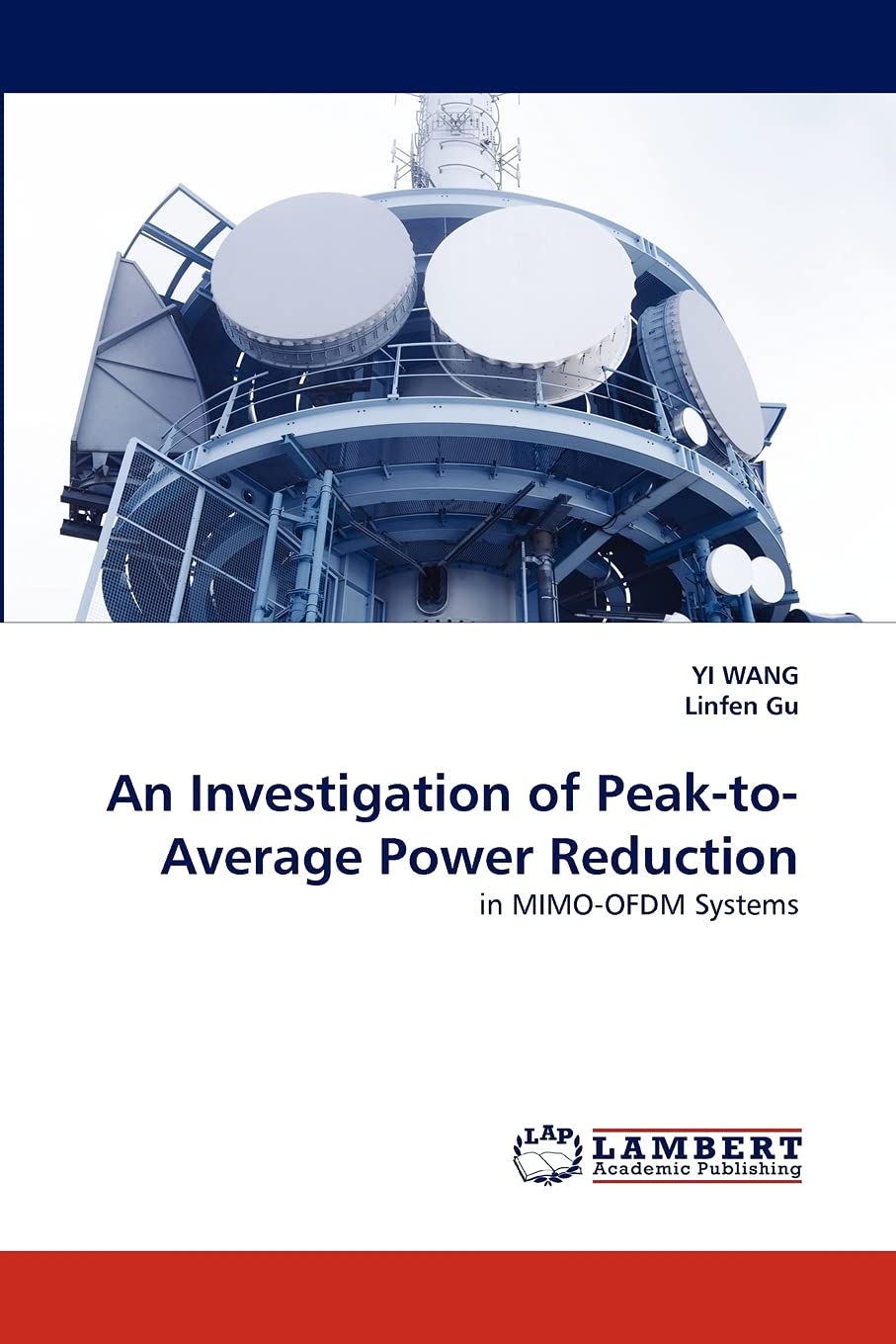
Multipleinput multipleoutput orthogonal frequency division multiplexing (MIMOOFDM) technology is one of the most attractive candidates for fourth generation(4G)mobile radio communication. It effectively combats the multipath fading channel and improves the bandwidth efficiency. At the same time, it also increases system capacity so as to provide a reliable transmission. However, the main drawback of MIMOOFDM system is high peaktoaverage power ratio (PAPR) for large number of subcarriers, which result in many restrictions for practical applications. Coding, phase rotation and clipping are among many PAPR reduction schemes that have been proposed to overcome this problem. In this thesis, we will mainly investigate the PAPR reduction performance with two different PAPR reduction methods: partial transmit sequence (PTS) and selective mapping(SLM). These two methods are sub entities of phase rotation scheme. In addition, several corresponding modified algorithms are studied with respect to balanced performance and applicability.
⚠️ WARNING (California Proposition 65):
This product may contain chemicals known to the State of California to cause cancer, birth defects, or other reproductive harm.
For more information, please visit www.P65Warnings.ca.gov.