
Title
An Unnatural History of Emerging Infections,New
Sold by Ergodebooks, an authorized reseller.
Returns accepted within 30 days | support@ergodebooks.com
Shipping Information
- Free Standard Shipping — United States only
- Processing Time: 3–5 business days
- Estimated Delivery: 6–10 business days after dispatch
- Double-boxed, fully insured & discreetly packaged
- Tracking number sent via email once dispatched
Returns & Refund
Returns accepted within 30 days of delivery.
Damaged or Defective Item
Free return shipping + replacement or full refund
Wrong Item Received
Free return shipping + replacement or full refund
Change of Mind
Return shipping at customer's expense · 25% restocking fee applies
Payment Option

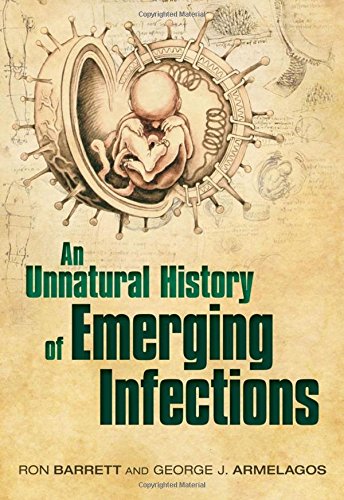
This book traces the social and environmental determinants of human infectious diseases from the Neolithic to the present day. Despite recent high profile discoveries of new pathogens, the major determinants of these emerging infections are ancient and recurring. These include changing modes of subsistence, shifting populations, environmental disruptions, and social inequalities. The recent labeling of the term 'reemerging infections' reflects a reemergence, not so much of the diseases themselves, but rather a reemerging awareness in affluent societies of longstanding problems that were previously ignored.An Unnatural History of Emerging Infections illustrates these recurring problems and determinants through an examination of three major epidemiological transitions. The First Transition occurred with the Agricultural Revolution beginning 10,000 years ago, bringing a rise in acute infections as the main cause of human mortality. The Second Transition first began with the Industrial Revolution; it saw a decline in infectious disease mortality and an increase in chronic diseases among wealthier nations, but less so in poorer societies. These culminated in today's 'worst of both worlds syndrome' in which globalization has combined with the challenges of the First and Second Transitions to produce a Third Transition, characterized by a confluence of acute and chronic disease patterns within a single global disease ecology.This accessible text is suitable for advanced undergraduate and graduate level students and researchers in the fields of epidemiology, disease ecology, anthropology, health sciences, and the history of medicine. It will also be of relevance and use to undergraduate students interested in the history and social dynamics of infectious diseases.
⚠️ WARNING (California Proposition 65):
This product may contain chemicals known to the State of California to cause cancer, birth defects, or other reproductive harm.
For more information, please visit www.P65Warnings.ca.gov.