If you have any questions, you are always welcome to contact us. We'll get back to you as soon as possible, withing 24 hours on weekdays.
Customer service
All questions about your order, return and delivery must be sent to our customer service team by e-mail at yourstore@yourdomain.com
Sale & Press
If you are interested in selling our products, need more information about our brand or wish to make a collaboration, please contact us at press@yourdomain.com
Help
If you have any questions, you are always welcome to contact us. We'll get back to you as soon as possible, withing 24 hours on weekdays.
Customer service
All questions about your order, return and delivery must be sent to our customer service team by e-mail at yourstore@yourdomain.com
Sale & Press
If you are interested in selling our products, need more information about our brand or wish to make a collaboration, please contact us at press@yourdomain.com
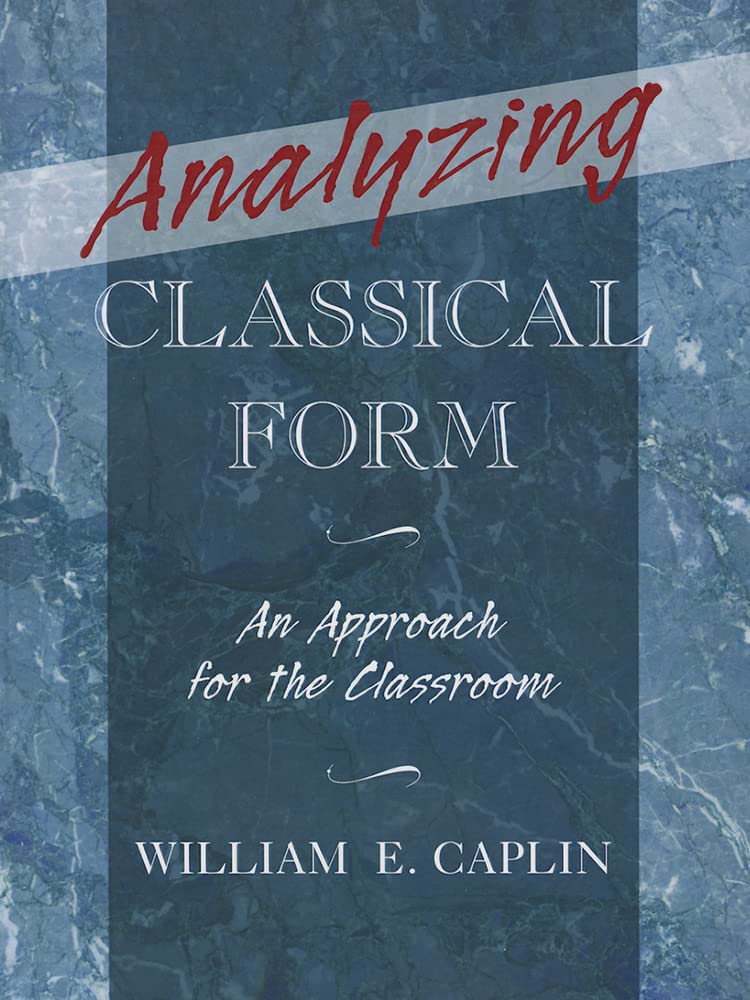
Analyzing Classical Form builds upon the foundations of the author's critically acclaimed Classical Form by offering an approach to the analysis of musical form that is especially suited for classroom use. Providing ample material for study in both undergraduate and graduate courses, Analyzing Classical Form presents the most uptodate version of the author's "theory of formal functions." Students will learn how to make complete harmonic and formal analyses of music drawn from the instrumental works of Haydn, Mozart, and Beethoven. Part 1 introduces the principal themetypes of classical instrumental music; part 2 provides a methodology for analyzing sonata form, the most important formal type in this style period; and part 3 considers other fullmovement forms found in this repertory (such as minuet, rondo, and concerto). The chapters are organized in a way that presents the most basic materials upfront and then leads the student through more details and finer points of theory. Every topic is illustrated with annotated musical examples; as well, the book contains many unannotated examples that can be used for inclass discussion and for outofclass analytical exercises. A complete glossary of terms and questions for reviewing the theory will help students assimilate the many theoretical concepts employed in the book. A companion website hosted by the author at music.mcgill.ca/acf/ provides audio and musical scores for all of the examples in the book as well as additional examples for the analysis of the simple themetypes presented in part 1.
⚠️ WARNING (California Proposition 65):
This product may contain chemicals known to the State of California to cause cancer,
birth defects, or other reproductive harm.
For MAP (Minimum Advertised Price) violations and Intellectual Property (IP) or Trademark concerns, please contact:
support@ergodebooks.com
⚠️ California Proposition 65 Warning: Some products sold on this website may expose you to chemicals known to the State of California to cause cancer, birth defects, or other reproductive harm. For more information, visit www.P65Warnings.ca.gov.