
Title
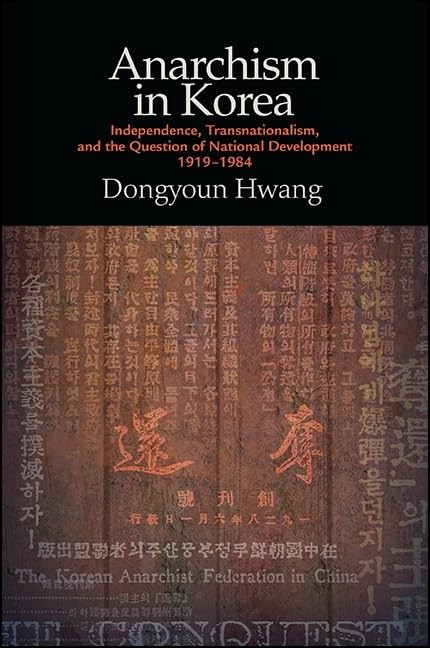
Anarchism In Korea: Independence, Transnationalism, And The Question Of National Development, 19191984 (Suny Series In Global M
Sold by Ergodebooks, an authorized reseller.
Returns accepted within 30 days | support@ergodebooks.com
Shipping Information
- Free Standard Shipping — United States only
- Processing Time: 3–5 business days
- Estimated Delivery: 6–10 business days after dispatch
- Double-boxed, fully insured & discreetly packaged
- Tracking number sent via email once dispatched
Returns & Refund
Returns accepted within 30 days of delivery.
Damaged or Defective Item
Free return shipping + replacement or full refund
Wrong Item Received
Free return shipping + replacement or full refund
Change of Mind
Return shipping at customer's expense · 25% restocking fee applies
Payment Option

A Regional And Transnational History Of Anarchism In Korea.This Book Provides A History Of Anarchism In Korea And Challenges Conventional Views Of Korean Anarchism As Merely Part Of Nationalist Ideology, Situating The Study Within A Wider East Asian Regional Context. Dongyoun Hwang Demonstrates That Although The Anarchist Movement In Korea Began As Part Of Its Struggle For Independence From Japan, Connections With Anarchists And Ideas From China And Japan Gave The Movement A Regional And Transnational Dimension That Transcended Its Initial Nationalistic Scope. Following The Movement After 1945, Hwang Shows How Anarchism In Korea Was Deradicalized And Evolved Into An Idea For Both Social Revolution And Alternative National Development, With Emphasis On Organizing And Educating Peasants And Developing Rural Villages.In Contrast To Dominant Koreanlanguage Scholarship, This Book Has A Dialectical Understanding Of The Relationship Between Anarchism And Nationalism, One That Understands The Importance Of Nationalism For Revolution In The Colonial Context, But One That Also Shows Convincingly That As Anarchism In Korea Grew And Deepened, It Acquired Significantly Transnational Dimensions. Christopher Connery, Author Of The Empire Of The Text: Writing And Authority In Early Imperial China
⚠️ WARNING (California Proposition 65):
This product may contain chemicals known to the State of California to cause cancer, birth defects, or other reproductive harm.
For more information, please visit www.P65Warnings.ca.gov.
- Q: How many pages does the book have? A: This book contains three hundred six pages. It provides an in-depth exploration of anarchism in Korea.
- Q: What are the dimensions of the book? A: The book measures six inches in length, zero point seventy-nine inches in width, and nine point zero two inches in height. This makes it a standard paperback size.
- Q: What type of binding does this book have? A: This book is published in paperback binding. This format is lightweight and portable, ideal for reading on the go.
- Q: What themes are explored in the book? A: The book explores themes of anarchism, independence, and transnationalism. It situates Korean anarchism within a broader East Asian context.
- Q: Is this book suitable for academic study? A: Yes, this book is suitable for academic study. It offers a comprehensive analysis that challenges conventional views, making it a valuable resource.
- Q: What is the reading level of this book? A: This book is aimed at an adult audience, particularly those interested in history or political theory. It may be complex for younger readers.
- Q: How should I care for this book? A: To keep this book in good condition, store it in a dry place and avoid exposing it to direct sunlight. This will help preserve its pages.
- Q: Can this book be read by beginners? A: Yes, beginners can read this book, but some prior knowledge of historical context may enhance understanding. It is approachable for those new to the subject.
- Q: What if my book arrives damaged? A: If your book arrives damaged, contact the seller for a replacement or refund. Most sellers have a return policy for such issues.
- Q: Is there a warranty for this book? A: No, books typically do not come with a warranty. However, you can return it if it is defective or damaged during shipping.
- Q: What makes this book different from other history books? A: This book uniquely combines regional and transnational perspectives on anarchism in Korea, distinguishing it from many traditional history texts.
- Q: Does the book include references or citations? A: Yes, the book includes references and citations. This supports the author's arguments and provides sources for further research.
- Q: What is the author's background? A: The author, Dongyoun Hwang, specializes in East Asian history and has a deep understanding of anarchist movements, adding credibility to the text.
- Q: Is this book appropriate for a book club? A: Yes, this book is appropriate for a book club. Its rich themes and historical context can lead to engaging discussions.
- Q: How does this book address nationalism? A: The book analyzes the relationship between anarchism and nationalism in Korea, presenting a nuanced view that recognizes the complexities involved.