
Title
Ancestral Lines: The Maisin of Papua New Guinea and the Fate of the Rainforest (Teaching Culture: UTP Ethnographies for the Clas,Used
Sold by Ergodebooks, an authorized reseller.
Returns accepted within 30 days | support@ergodebooks.com
Shipping Information
- Free Standard Shipping — United States only
- Processing Time: 3–5 business days
- Estimated Delivery: 6–10 business days after dispatch
- Double-boxed, fully insured & discreetly packaged
- Tracking number sent via email once dispatched
Returns & Refund
Returns accepted within 30 days of delivery.
Damaged or Defective Item
Free return shipping + replacement or full refund
Wrong Item Received
Free return shipping + replacement or full refund
Change of Mind
Return shipping at customer's expense · 25% restocking fee applies
Payment Option

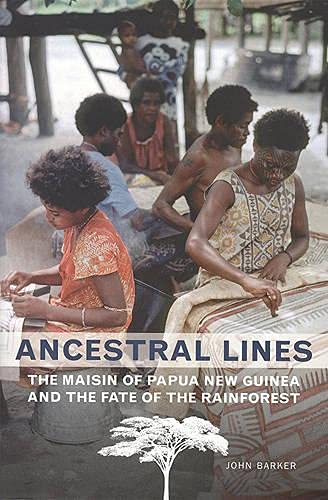
More than a century of interaction with colonial and global agencies and forces have brought many changes to the lives of the Maisin people who live on the northeastern coast of Papua New Guinea. Yet ancestral traditions continue to strongly inform their way of life. Their beautifully designed tapa cloth, made from the pounded inner bark of the paper mulberry tree, most vividly connects the past with the present.Using the various stages of tapa cloth production to frame a broader discussion of changes and continuities in Maisin culture (economic pursuit, social arrangements, gender relations, religion, politics, and the environment) Barker offers a nuanced understanding of how the Maisin came to reject commercial logging on their traditional lands. Viewed in isolation, the decision appears to be a confirmation of tradition over 'modernity.' Yet the book shows that it is the most recent, and perhaps dramatic, instance in a long chain of improvisations and compromises that have allowed the Maisin to remain true to core ancestral values while participating in wider social, political, and economic systems. Ancestral Lines provides an important counterpoint to the stereotype of indigenous peoples as passive victims of impersonal global forces.While accessible to most readers, including those with little or no knowledge of Melanesia or anthropology, Ancestral Lines has been designed with introductory anthropology courses in mind. Each chapter opens with a description of succeeding stages in the creation and use of a piece of tapa cloth. These, in turn, lead into discussions of dimensions of Maisin life that correspond to the sections and order of most standard introductory textbooks.
⚠️ WARNING (California Proposition 65):
This product may contain chemicals known to the State of California to cause cancer, birth defects, or other reproductive harm.
For more information, please visit www.P65Warnings.ca.gov.