
Title
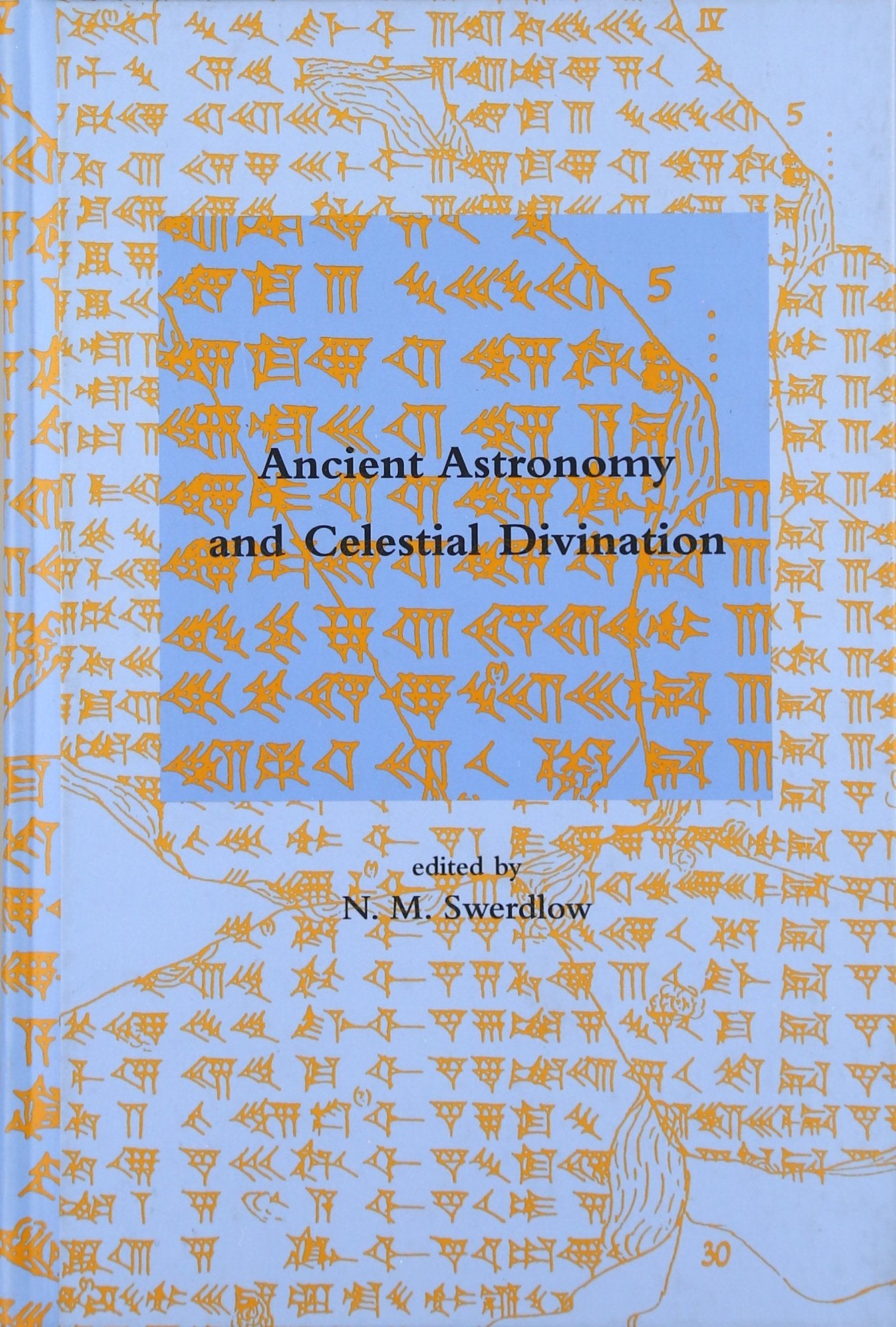
Ancient Astronomy and Celestial Divination (Dibner Institute Studies in the History of Science and Technology),Used
Sold by Ergodebooks, an authorized reseller.
Returns accepted within 30 days | support@ergodebooks.com
Shipping Information
- Free Standard Shipping — United States only
- Processing Time: 3–5 business days
- Estimated Delivery: 6–10 business days after dispatch
- Double-boxed, fully insured & discreetly packaged
- Tracking number sent via email once dispatched
Returns & Refund
Returns accepted within 30 days of delivery.
Damaged or Defective Item
Free return shipping + replacement or full refund
Wrong Item Received
Free return shipping + replacement or full refund
Change of Mind
Return shipping at customer's expense · 25% restocking fee applies
Payment Option

This volume presents recent work on Babylonian celestialdivination and on the Greek inheritors of the Babyloniantradition.In the ancient world, the collection and study of celestial phenomena and the intepretation of their prophetic significance, especially as applied to kings and nations, were closely related sciences carried out by the same scholars. Both ancient sources and modern research agree that astronomy and celestial divination arose in Babylon. Only in the late nineteenth century, however, did scholars begin to identify and decipher the original Babylonian sources, and the process of understanding those sources has been long and difficult. This volume presents recent work on Babylonian celestial divination and on the Greek inheritors of the Babylonian tradition. Both philological and mathematical work are included. The essays shed new light on all of the known textual sources, including the omen series Enuma Anu Enlil, which contains omens from as far back as the early second or even third millennium, and the earliest personal horoscopes, from about 400 B.C., as well as the Astronomical Diaries, ephemerides, and other observational and mathematical texts. One essay concerns astronomical papyri that confirm the extensive transmission of Babylonian methods into Greek; a study of Ptolemy's lunar theory suggests that Ptolemy relied more on his own observations than previously thought; and an analysis of Theon's commentary on Ptolemy's Handy Tables shows that Theon explicated their meaning both conscientiously and competently.ContributorsAsger Aaboe, Alan C. Bowen, Lis BrackBernsen, John P. Britton, Bernard R. Goldstein, Gerd Grahoff, Hermann Hunger, Alexander Jones, Erica Reiner, F. Rochberg, N. M. Swerdlow, Anne Tihon, C. B. F. Walker
⚠️ WARNING (California Proposition 65):
This product may contain chemicals known to the State of California to cause cancer, birth defects, or other reproductive harm.
For more information, please visit www.P65Warnings.ca.gov.