
Title
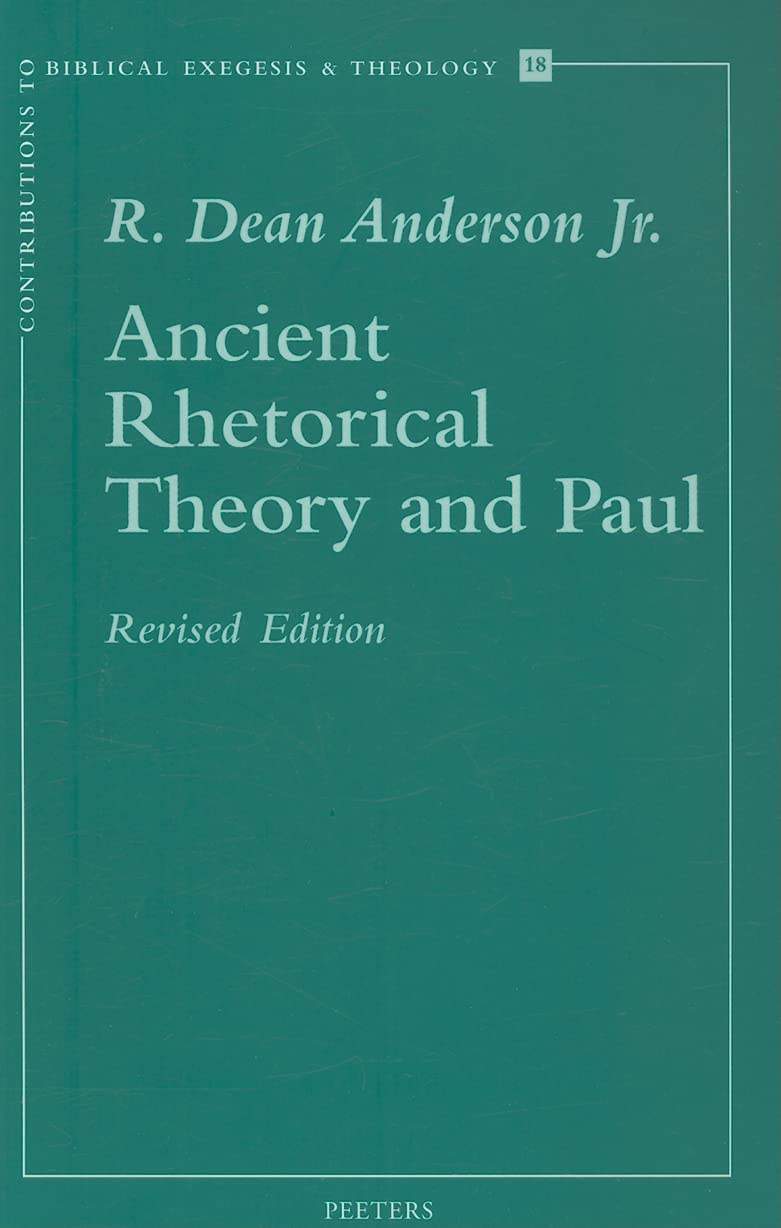
Ancient Rhetorical Theory and Paul Revised Edition (Contributions to Biblical Exegesis and Theology),Used
Sold by Ergodebooks, an authorized reseller.
Returns accepted within 30 days | support@ergodebooks.com
Shipping Information
- Free Standard Shipping — United States only
- Processing Time: 3–5 business days
- Estimated Delivery: 6–10 business days after dispatch
- Double-boxed, fully insured & discreetly packaged
- Tracking number sent via email once dispatched
Returns & Refund
Returns accepted within 30 days of delivery.
Damaged or Defective Item
Free return shipping + replacement or full refund
Wrong Item Received
Free return shipping + replacement or full refund
Change of Mind
Return shipping at customer's expense · 25% restocking fee applies
Payment Option

This new edition of Anderson's Ancient Rhetorical Theory and Paul is the result of a considerable reworking and bringing uptodate of many aspects of the original book. Anderson, after giving a brief critical introduction to the rhetorical approach generally, focuses upon the application of ancient rhetorical theory to the letters of the apostle Paul, paying particular attention to questions of methodology. He provides an extensive review of the sources of ancient rhetorical theory which may be considered most relevant to a Greek speaker of the first century AD such as Paul, carefully distinguishing between philosophical and school rhetorical theory. Having determined which aspects of ancient rhetorical theory may be most suitable in respect of Paul's letters, Anderson goes to examine the letters to the Galatians, the Romans, and the first letter to the Corinthians. In each case a critical assessment of recent literature concerning the application of ancient rhetorical theory to these letters is given. In addition, an enlightening rhetorical analysis of the doctrinal portions of the letters to the Galatians and Romans is provided from the perspective of contemporary rhetorical theory. Anderson approaches his analysis in terms of how a contemporary professor of rhetoric may have looked at Paul's letters. The study concludes by addressing difficult questions concerning the relationship of Paul's style and argumentation to rhetorical theory and the likelihood of his conscious use of such theory, as well as the overall value of an ancient rhetorical approach to Paul's letters.
⚠️ WARNING (California Proposition 65):
This product may contain chemicals known to the State of California to cause cancer, birth defects, or other reproductive harm.
For more information, please visit www.P65Warnings.ca.gov.