
Title
Angelic Music: The Story of Ben Franklin's Glass Armonica,Used
Sold by Ergodebooks, an authorized reseller.
Returns accepted within 30 days | support@ergodebooks.com
Shipping Information
- Free Standard Shipping — United States only
- Processing Time: 3–5 business days
- Estimated Delivery: 6–10 business days after dispatch
- Double-boxed, fully insured & discreetly packaged
- Tracking number sent via email once dispatched
Returns & Refund
Returns accepted within 30 days of delivery.
Damaged or Defective Item
Free return shipping + replacement or full refund
Wrong Item Received
Free return shipping + replacement or full refund
Change of Mind
Return shipping at customer's expense · 25% restocking fee applies
Payment Option

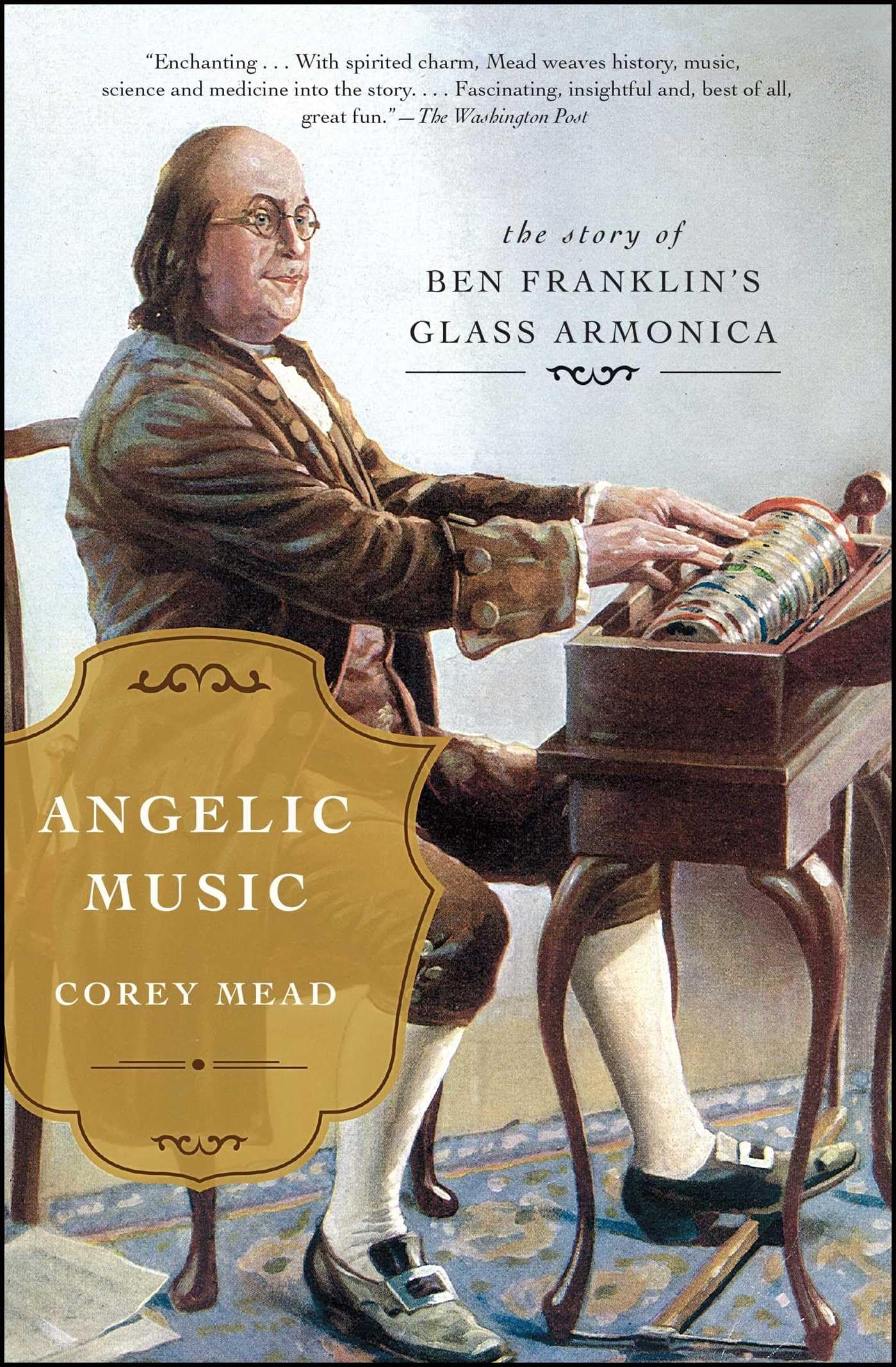
Fascinating, insightful, and, best of all, great funwith spirited charm, Mead weaves history, music, science, and medicine into the story (The Washington Post) of Ben Franklins favorite invention: the glass armonica.Benjamin Franklin is renowned for his landmark inventions, including bifocals, the Franklin stove, and the lightning rod. Yet his own favorite inventionthe one he said gave him the greatest personal satisfactionis unknown to the general public. The glass armonica, the first musical instrument invented by an American, was constructed of stacked glass bowls and played by rubbing ones fingers on the rims. It was so popular in the late eighteenth and early nineteenth centuries that Mozart, Beethoven, Handel, and Strauss composed for it; Marie Antoinette and numerous monarchs played it; Goethe and Thomas Jefferson praised it; Dr. Franz Mesmer used it for his Mesmerism sessions. Franklin played it for Washington and Jefferson.In Angelic Music, Corey Mead describes how Franklins instrument fell out of popular favor, partly due to claims that its haunting sounds could drive musicians out of their minds. Audiences were also susceptible; a child died during a performance in Germany. Some thought its ethereal tones summoned spirits or had magical powers. It was banned in some places.Charming and fascinatingpart musicology and part cultural historyMeads lively storytelling opens a window into a (as it were) mesmerizing chapter of music history (Publishers Weekly). The armonica has in recent years enjoyed a revival. Composers are again writing pieces for it in genres ranging from chamber music and opera to electronic and popular music. Mead brings this instrument back to the public eye in Angelic Music, a highly readable and informativefrom a genial historical guide (Kirkus Reviews).
⚠️ WARNING (California Proposition 65):
This product may contain chemicals known to the State of California to cause cancer, birth defects, or other reproductive harm.
For more information, please visit www.P65Warnings.ca.gov.