
Title
Angels of Art: Women and Art in American Society, 18761914,Used
Sold by Ergodebooks, an authorized reseller.
Returns accepted within 30 days | support@ergodebooks.com
Shipping Information
- Free Standard Shipping — United States only
- Processing Time: 3–5 business days
- Estimated Delivery: 6–10 business days after dispatch
- Double-boxed, fully insured & discreetly packaged
- Tracking number sent via email once dispatched
Returns & Refund
Returns accepted within 30 days of delivery.
Damaged or Defective Item
Free return shipping + replacement or full refund
Wrong Item Received
Free return shipping + replacement or full refund
Change of Mind
Return shipping at customer's expense · 25% restocking fee applies
Payment Option

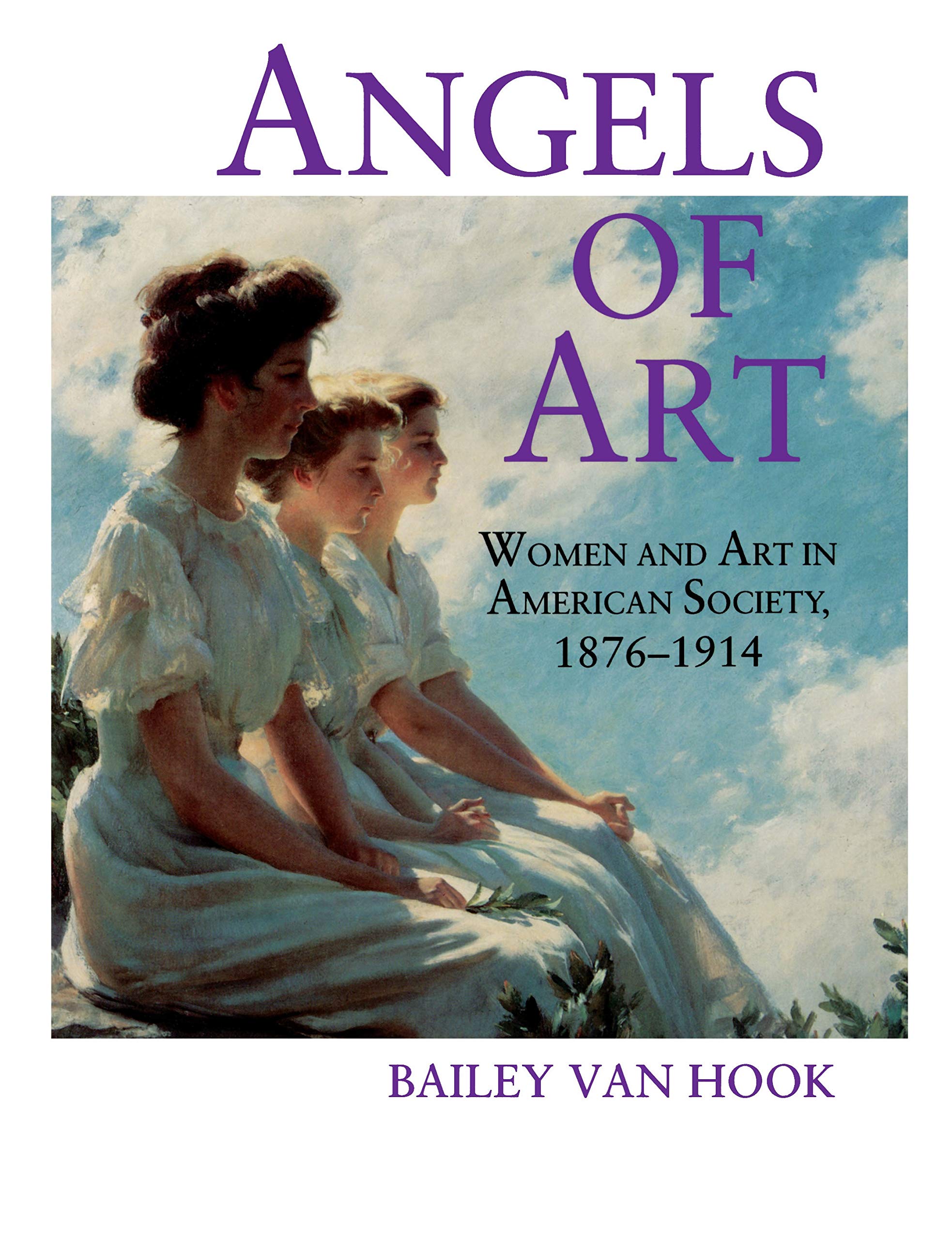
Images of women were ubiquitous in America at the turn of the last century. In painting and sculpture, they took on a bewildering variety of identities, from Venus, Ariadne, and Diana to Law, Justice, the Arts, and Commerce. Bailey Van Hook argues here that the artists' concepts of art coincided with the construction of gender in American culture. She finds that certain characteristics such as "ideal," "beautiful," "decorative," and "pure" both describe this art and define the perceived role of women in American society at the time.Most late nineteenthcentury American artists had trained in Paris, where they learned to use female imagery as a pictorial language of provocative sensuality. Van Hook first places the American artists in an international context by discussing the works of their French teachers, including JeanLon Grme and Alexandre Cabanel. She goes on to explore why they soon had to distance themselves from that context, primarily because their art was perceived as either openly sensual or too obliquely foreign by American audiences. Van Hook delineates the modes of representation the American painters chose, which ranged from the more traditional allegorical or mythological subjects to a decorative figure painting indebted to Whistler. Changing American culture ultimately rejected these idealized female images as too genteel and, eventually, too academic and European.Angels of Art is the first study to discuss the predominance of images of women across stylistic boundaries and within the wider context of European art. It relies heavily on contemporary sources both to document critical responses and to find intersecting patterns in attitudes toward women and art.
⚠️ WARNING (California Proposition 65):
This product may contain chemicals known to the State of California to cause cancer, birth defects, or other reproductive harm.
For more information, please visit www.P65Warnings.ca.gov.