
Title
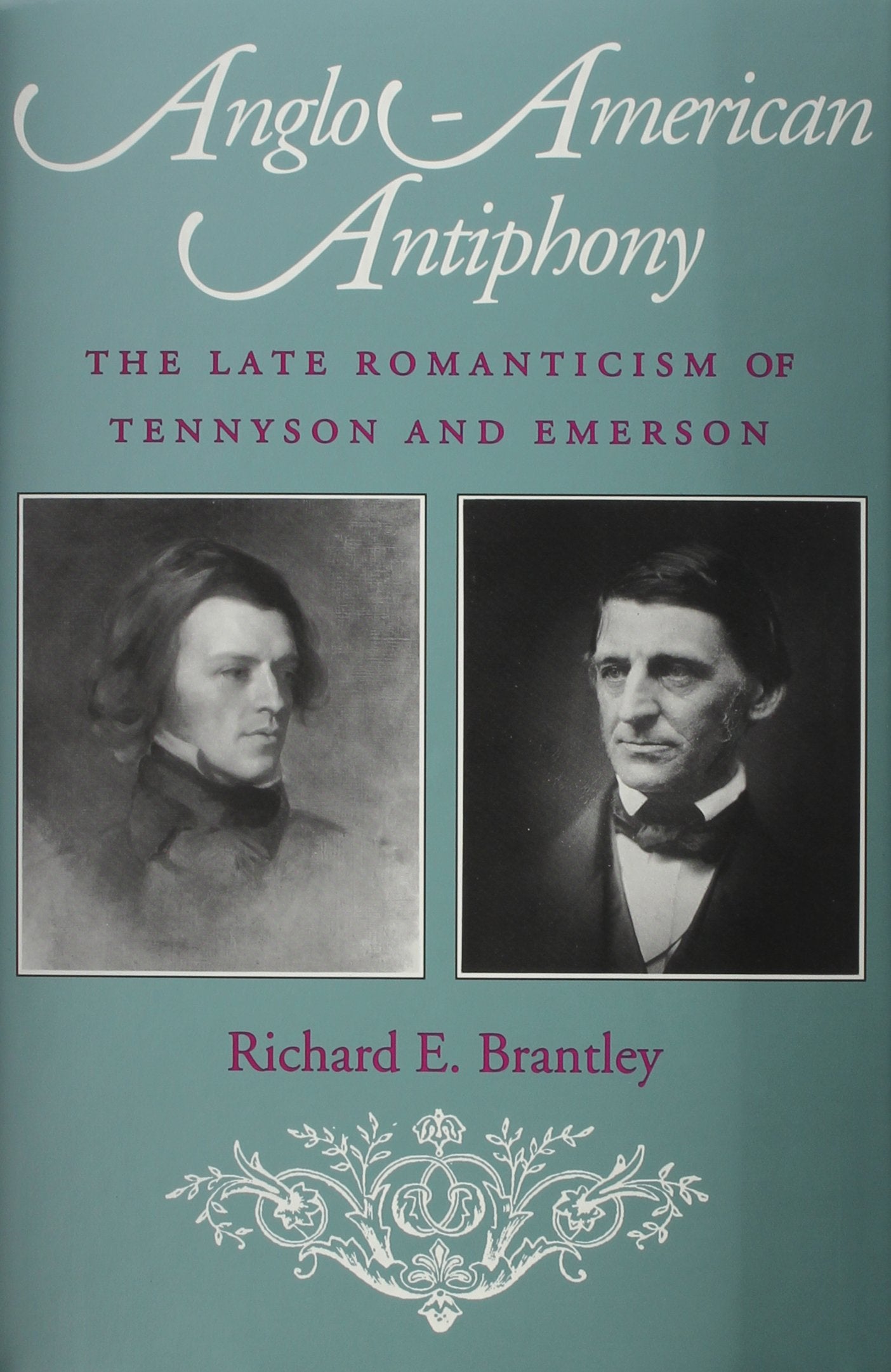
Angloamerican Antiphony: The Late Romanticism Of Tennyson And Emerson,Used
Sold by Ergodebooks, an authorized reseller.
Returns accepted within 30 days | support@ergodebooks.com
Shipping Information
- Free Standard Shipping — United States only
- Processing Time: 3–5 business days
- Estimated Delivery: 6–10 business days after dispatch
- Double-boxed, fully insured & discreetly packaged
- Tracking number sent via email once dispatched
Returns & Refund
Returns accepted within 30 days of delivery.
Damaged or Defective Item
Free return shipping + replacement or full refund
Wrong Item Received
Free return shipping + replacement or full refund
Change of Mind
Return shipping at customer's expense · 25% restocking fee applies
Payment Option

This is Brantley's best book yet. It is wonderfully lively and informative, and actually provides a conspectus of much of the current, ongoing scene in academic literary criticism. Brantley is hugely erudite and full of a quiet humor, and he writes in a clear, concise style.'Harold Bloom, Sterling Professor of Humanities, Yale UniversityThis is Richard Brantley's most wideranging and his most personal book. It connects the epistemology of John Locke to evangelical Christianity, showing how the late ('but not belated') Romanticism of Emerson's prose and Tennyson's In Memoriam A. H. H. exemplifies the period's trust in experience as the best means of knowing what is true.Interpreting their work in light of the eighteenthcentury thought of John Wesley (founder of British Methodism) and Jonathan Edwards (leader of the American Great Awakening), Brantley composes a complex harmony of ideas, much as the antiphonal voices in a divided chancel choir rejoice in agreeable, yet complicated, song.With a willingness to risk the widest ramifications of his ideas, Brantley explores the creative tension between empiricism and evangelicalism, reaffirming the hopefulness of Romantic literature and of the Romantic writers who used their poetry and prose to examine issues of personal urgency. He seeks specific answers to the question of ultimate meaning in human existence, boldly asserting that the optimism of Tennyson and Emerson 'makes so much sense for their social world that it may even make sense for today's individualinsociety.' His method is relatively unsystematic, for he invokes Keats's 'Negative Capability,' the ability to rest with 'uncertainties, Mysteries, doubts, without any irritable reaching after fact and reason.' While emphasizing this value amid multiple perspectives and cultures, Brantley, in this concluding volume of his historicalcritical tetralogy, aspires to the condition of open mind and warm heart that he finds in Wesley, Edwards, Tennyson, and Emerson.Richard E. Brantley is alumni professor of English at the University of Florida. He is the author of Coordinates of AngloAmerican Romanticism: Wesley, Edwards, Carlyle, and Emerson (UPF, 1993), Wordsworth's 'Natural Methodism,' andLocke, Wesley, and the Method of English Romanticism (UPF, 1984), which won the Conference on Christianity and Literature award for best book of 1984.
⚠️ WARNING (California Proposition 65):
This product may contain chemicals known to the State of California to cause cancer, birth defects, or other reproductive harm.
For more information, please visit www.P65Warnings.ca.gov.