
Title
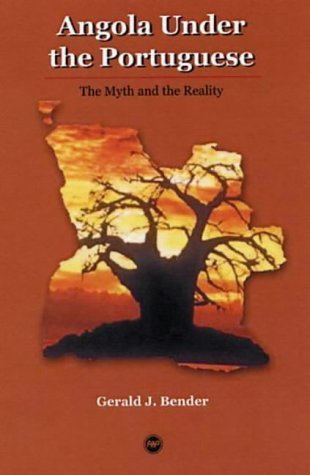
Angola Under the Portuguese: The Myth and the Reality,Used
Sold by Ergodebooks, an authorized reseller.
Returns accepted within 30 days | support@ergodebooks.com
Shipping Information
- Free Standard Shipping — United States only
- Processing Time: 3–5 business days
- Estimated Delivery: 6–10 business days after dispatch
- Double-boxed, fully insured & discreetly packaged
- Tracking number sent via email once dispatched
Returns & Refund
Returns accepted within 30 days of delivery.
Damaged or Defective Item
Free return shipping + replacement or full refund
Wrong Item Received
Free return shipping + replacement or full refund
Change of Mind
Return shipping at customer's expense · 25% restocking fee applies
Payment Option

The book is the first comprehensive study of race relations in Angola. It covers the entire fivecenturylong relationship between the peoples of Angola and Portugal. Portuguese imperial thinkers asserted that they were unique among European colonizers in their ability to establish and maintain egalitarian and nondiscriminatory relationships with tropical peoples. This concept was elevated to a philosophical plateau and given the name Luscotropicalism. Propagated with fervor by Portuguese colonial thinkers, Lusotropical doctrines were widely accepted as being valid by twentiethcentury diplomats and political thinkers in both Europe and the United States, many of whom believed that Portuguese colonialism in Africa would continue indefinitely.The evidence presented in this work indicates that Portuguese rule in Angola was deeply racist. This conclusion is based on a considerable body of data gleaned from archival sources, personal collections, and systematic interviewing of racially diverse Angolans and Portuguese functionaries in the colonial administration and the private sector. Special emphasis is placed on devices that the Portuguese used to delude themselves and others about the realities of their attitudes and behavior as ruling elites. The study concludes with an assessment of the impact of Lusotropical myths on independent Angola.
⚠️ WARNING (California Proposition 65):
This product may contain chemicals known to the State of California to cause cancer, birth defects, or other reproductive harm.
For more information, please visit www.P65Warnings.ca.gov.
- Q: What is the page count of the book? A: The book has three hundred twenty-six pages. This length provides a comprehensive overview of race relations in Angola.
- Q: What are the dimensions of the book? A: The book measures eight point three one inches in length, five point two five inches in width, and zero point seven five inches in height. These dimensions make it a portable read.
- Q: What type of binding does the book have? A: The book is available in paperback binding. This type of binding is lightweight and flexible, ideal for casual reading.
- Q: Who is the author of this book? A: The author is Gerald J. Bender. His expertise adds credibility to the analysis of Angola's history.
- Q: What is the main subject of the book? A: The main subject is the study of race relations in Angola under Portuguese rule. It provides insights into the complexities of colonial relationships.
- Q: Is this book suitable for academic use? A: Yes, the book is suitable for academic use. It includes extensive research from archival sources and interviews, making it a valuable resource.
- Q: Does the book discuss any philosophical concepts? A: Yes, the book discusses Lusotropicalism, a philosophical concept regarding Portuguese colonialism. This idea is critically examined throughout the text.
- Q: How does the book address racism? A: The book presents evidence indicating that Portuguese rule in Angola was deeply racist. It challenges previous notions of egalitarianism propagated by colonial thinkers.
- Q: What kind of sources are cited in the book? A: The book cites archival sources, personal collections, and interviews with racially diverse Angolans and Portuguese functionaries. This variety enhances its credibility.
- Q: What is the target audience for this book? A: The target audience includes students, historians, and anyone interested in colonial studies. It offers a thorough analysis of a complex subject.
- Q: What themes are explored in the book? A: The themes explored include race relations, colonialism, and the impacts of Lusotropical myths. These themes are critical for understanding Angola's history.
- Q: Is the book intended for adults only? A: Yes, the book is intended for adult readers. It deals with complex historical and racial themes that require mature understanding.
- Q: Can this book be used for research purposes? A: Yes, it can be used for research purposes. The book's comprehensive study makes it a reliable source for academic inquiries.
- Q: How does the book conclude its findings? A: The book concludes with an assessment of the impact of Lusotropical myths on independent Angola. This final analysis ties together the key arguments presented.
- Q: What year was the book published? A: The book was published by Africa World Press. The publication date provides context for understanding its relevance in contemporary discussions.