
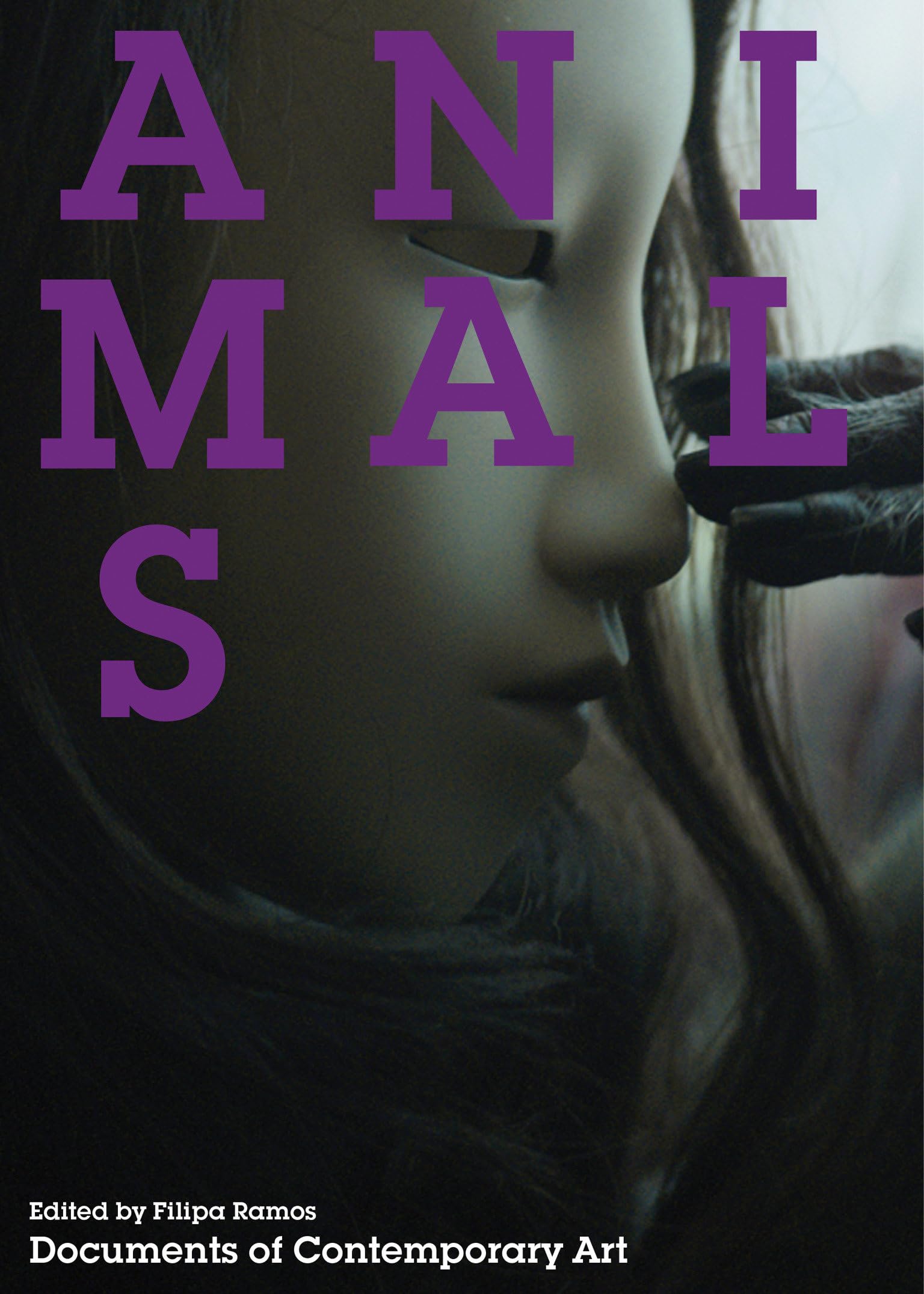
Title
Animals (Whitechapel: Documents of Contemporary Art),Used
Sold by Ergodebooks, an authorized reseller.
Returns accepted within 30 days | support@ergodebooks.com
Shipping Information
- Free Standard Shipping — United States only
- Processing Time: 3–5 business days
- Estimated Delivery: 6–10 business days after dispatch
- Double-boxed, fully insured & discreetly packaged
- Tracking number sent via email once dispatched
Returns & Refund
Returns accepted within 30 days of delivery.
Damaged or Defective Item
Free return shipping + replacement or full refund
Wrong Item Received
Free return shipping + replacement or full refund
Change of Mind
Return shipping at customer's expense · 25% restocking fee applies
Payment Option

The emergence of contemporary art, engaging widely with other disciplines, as a platform for exploring animal nature.Animals have become the focus of much recent art, informing numerous works and projects featured at major exhibitions including dOCUMENTA (13) (2013), the 10th Shanghai Biennale (2014), and the 56th Venice Biennale (2015). Contemporary art has emerged as a privileged terrain for exploring interspecies relationships, providing the conditions for diverse disciplines and theoretical positions to engage with animal behavior and consciousness.This interest in animal nature reflects a number of current issues. Observations of empathy among nonhumans prompt reconsiderations of the human. The nonverbal communication of animals has been compared with poetic expansion of the boundaries of language. And the freedom of animal life in the wild from capitalist subordination is seen as a potential model for reconfiguring society and our relationship to the wider environment. Artists' engagement with animals also opens up new perspectives on the dynamics of dominance, oppression, and exclusion, with parallels in human society. Animal nature is at the heart of debates on the Anthropocene era and the ecological concerns of scientists, thinkers, and artists alike. Centered on contemporary artworks, this anthology attests to the transdisciplinary nature of this subject, with art as one of the principal points of convergence.Artists surveyed includeAllora & Calzadilla, Francis Als, Julieta Aranda, Brandon Ballenge, Joseph Beuys, Marcel Broodthaers, Lygia Clark, Marcus Coates, Jimmie Durham, Marcel Dzama, Simone Forti, Pierre Huyghe, Natalie Jeremijenko, Joan Jonas, Eduardo Kac, Mike Kelley, Henri Michaux, Robert Morris, Henrik Olesen, Lea Porsager, Julia Reodica, Carolee Schneemann, Michael Stevenson, Rodel Tapaya, Rosemarie Trockel, Apichatpong Weerasethakul, Haegue Yang, Adam ZaretskyWriters includeGiorgio Agamben, Steve Baker, Raymond Bellour, Walter Benjamin, John Berger, Jonathan Burt, Ted Chiang, Simon Critchley, Gilles Deleuze, Jacques Derrida, David Elliott, Carla Freccero, Maria Fusco, Tristan Garca, Flix Guattari, Donna J. Haraway, SeungHoon Jeong, Miwon Kwon, Chus Martinez, Brian Massumi, Thomas Nagel, JeanLuc Nancy, Ingo Niermann, Vincent Normand, Ana Teixeira Pinto, Will Self, Jan Verwoert, Eduardo Viveiros de Castro
⚠️ WARNING (California Proposition 65):
This product may contain chemicals known to the State of California to cause cancer, birth defects, or other reproductive harm.
For more information, please visit www.P65Warnings.ca.gov.
- Q: What is the main theme of 'Animals (Whitechapel: Documents of Contemporary Art)'? A: The main theme of this book is the exploration of animal nature through contemporary art, examining interspecies relationships and addressing ecological concerns relevant to the Anthropocene era.
- Q: Who are some of the artists featured in this anthology? A: Some of the featured artists include Allora & Calzadilla, Francis Alÿs, Julieta Aranda, Joseph Beuys, and Joan Jonas, among others.
- Q: What type of content can I expect in this book? A: The book includes contemporary artworks, essays, and discussions that engage with animal behavior, consciousness, and the dynamics of dominance and exclusion.
- Q: Is 'Animals (Whitechapel: Documents of Contemporary Art)' suitable for academic use? A: Yes, this book is suitable for academic use as it features contributions from notable writers and theorists, making it a valuable resource for studies in contemporary art and animal ethics.
- Q: How many pages does the book have? A: The book contains 240 pages.
- Q: What is the binding type of this book? A: This book is available in paperback binding.
- Q: When was 'Animals (Whitechapel: Documents of Contemporary Art)' published? A: The book was published on September 9, 2016.
- Q: Who is the author of this book? A: The author of the book is Filipa Ramos.
- Q: What category does this book fall under? A: This book falls under the category of Criticism.
- Q: What are the key issues discussed in the book regarding animals? A: The book discusses issues such as empathy among nonhumans, nonverbal communication of animals, and the impact of capitalism on animal life, all within the context of contemporary art.