
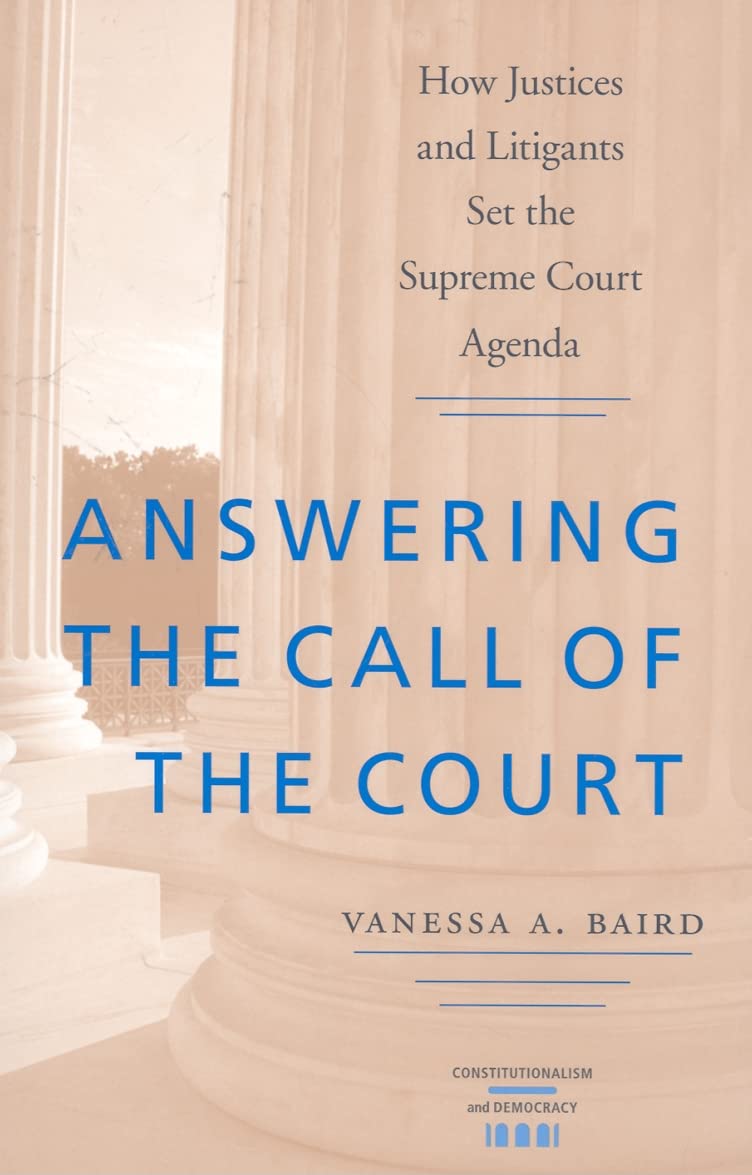
Title
Answering The Call Of The Court: How Justices And Litigants Set The Supreme Court Agenda (Constitutionalism And Democracy),New
Sold by Ergodebooks, an authorized reseller.
Returns accepted within 30 days | support@ergodebooks.com
Shipping Information
- Free Standard Shipping — United States only
- Processing Time: 3–5 business days
- Estimated Delivery: 6–10 business days after dispatch
- Double-boxed, fully insured & discreetly packaged
- Tracking number sent via email once dispatched
Returns & Refund
Returns accepted within 30 days of delivery.
Damaged or Defective Item
Free return shipping + replacement or full refund
Wrong Item Received
Free return shipping + replacement or full refund
Change of Mind
Return shipping at customer's expense · 25% restocking fee applies
Payment Option

The U.S. Supreme Court Is The Quintessential Example Of A Court That Expanded Its Agenda Into Policy Areas That Were Once Reserved For Legislatures. Yet Scholars Know Very Little About What Causes Attention To Various Policy Areas To Ebb And Flow On The Supreme Courts Agenda. Vanessa A. Bairds Answering The Call Of The Court: How Justices And Litigants Set The Supreme Court Agenda Represents The First Scholarly Attempt To Connect Justices Priorities, Litigants Strategies, And Aggregate Policy Outputs Of The U.S. Supreme Court.Most Previous Studies On The Supreme Courts Agenda Examine Case Selection, But Baird Demonstrates That The Agendasetting Process Begins Long Before Justices Choose Which Cases They Will Hear. When Justices Signal Their Interest In A Particular Policy Area, Litigants Respond By Sponsoring Wellcrafted Cases In Those Policy Areas. Approximately Four To Five Years Later, The Supreme Courts Agenda In Those Areas Expands, With Cases That Are Comparatively More Politically Important And Divisive Than Other Cases The Court Hears. From Issues Of Discrimination And Free Expression To Welfare Policy, From Immigration To Economic Regulation, Strategic Supporters Of Litigation Pay Attention To The Goals Of Supreme Court Justices And Bring Cases They Can Use To Achieve Those Goals.Since Policy Making In Courts Is Iterative, Multiple Wellcrafted Cases Are Needed For Courts To Make Comprehensive Policy. Baird Argues That Judicial Policymaking Power Depends On The Actions Of Policy Entrepreneurs Or Other Litigants Who Systematically Respond To The Priorities And Preferences Of Supreme Court Justices.
⚠️ WARNING (California Proposition 65):
This product may contain chemicals known to the State of California to cause cancer, birth defects, or other reproductive harm.
For more information, please visit www.P65Warnings.ca.gov.