
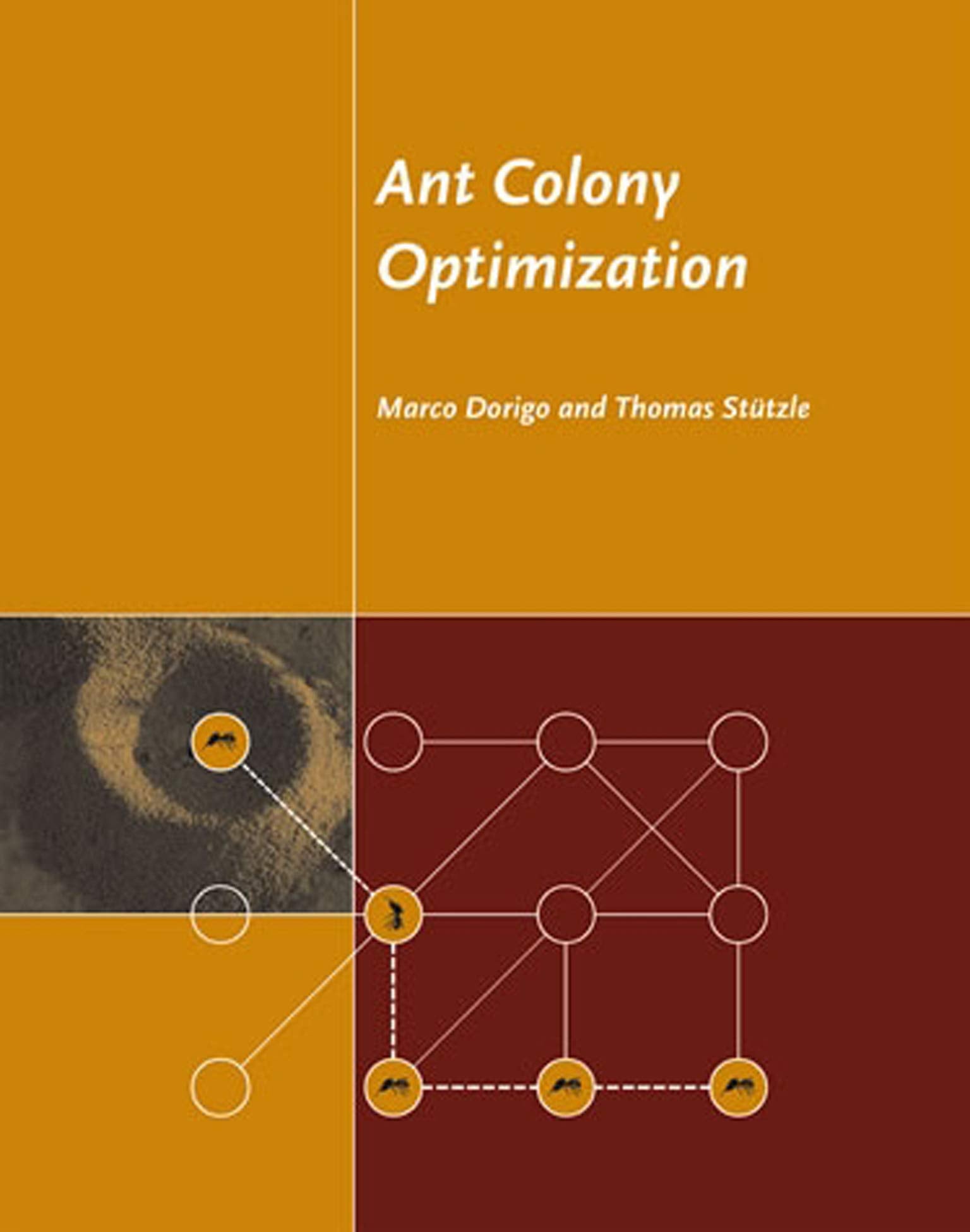
Title
Ant Colony Optimization,Used
Sold by Ergodebooks, an authorized reseller.
Returns accepted within 30 days | support@ergodebooks.com
Shipping Information
- Free Standard Shipping — United States only
- Processing Time: 3–5 business days
- Estimated Delivery: 6–10 business days after dispatch
- Double-boxed, fully insured & discreetly packaged
- Tracking number sent via email once dispatched
Returns & Refund
Returns accepted within 30 days of delivery.
Damaged or Defective Item
Free return shipping + replacement or full refund
Wrong Item Received
Free return shipping + replacement or full refund
Change of Mind
Return shipping at customer's expense · 25% restocking fee applies
Payment Option

An overview of the rapidly growing field of ant colony optimization that describes theoretical findings, the major algorithms, and current applications.The complex social behaviors of ants have been much studied by science, and computer scientists are now finding that these behavior patterns can provide models for solving difficult combinatorial optimization problems. The attempt to develop algorithms inspired by one aspect of ant behavior, the ability to find what computer scientists would call shortest paths, has become the field of ant colony optimization (ACO), the most successful and widely recognized algorithmic technique based on ant behavior. This book presents an overview of this rapidly growing field, from its theoretical inception to practical applications, including descriptions of many available ACO algorithms and their uses.The book first describes the translation of observed ant behavior into working optimization algorithms. The ant colony metaheuristic is then introduced and viewed in the general context of combinatorial optimization. This is followed by a detailed description and guide to all major ACO algorithms and a report on current theoretical findings. The book surveys ACO applications now in use, including routing, assignment, scheduling, subset, machine learning, and bioinformatics problems. AntNet, an ACO algorithm designed for the network routing problem, is described in detail. The authors conclude by summarizing the progress in the field and outlining future research directions. Each chapter ends with bibliographic material, bullet points setting out important ideas covered in the chapter, and exercises. Ant Colony Optimization will be of interest to academic and industry researchers, graduate students, and practitioners who wish to learn how to implement ACO algorithms.
⚠️ WARNING (California Proposition 65):
This product may contain chemicals known to the State of California to cause cancer, birth defects, or other reproductive harm.
For more information, please visit www.P65Warnings.ca.gov.