If you have any questions, you are always welcome to contact us. We'll get back to you as soon as possible, withing 24 hours on weekdays.
Customer service
All questions about your order, return and delivery must be sent to our customer service team by e-mail at yourstore@yourdomain.com
Sale & Press
If you are interested in selling our products, need more information about our brand or wish to make a collaboration, please contact us at press@yourdomain.com
Help
If you have any questions, you are always welcome to contact us. We'll get back to you as soon as possible, withing 24 hours on weekdays.
Customer service
All questions about your order, return and delivery must be sent to our customer service team by e-mail at yourstore@yourdomain.com
Sale & Press
If you are interested in selling our products, need more information about our brand or wish to make a collaboration, please contact us at press@yourdomain.com
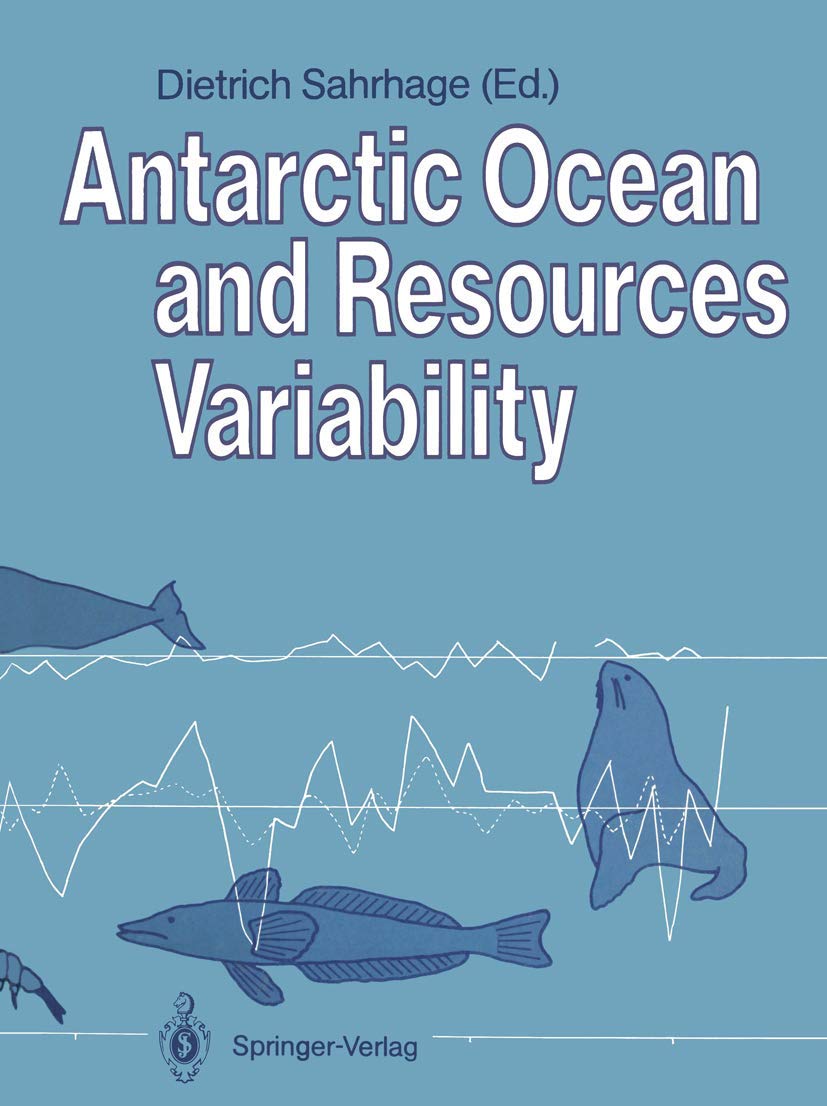
During the intensification of research activities in the Southern Ocean in recent years, both at national levels and through international cooperation in such projects as BIOMASS with its FIBEX and SIBEX phases, the need was felt increasingly for closer collaboration between biologists, meteorologists, and oceanographers in the study of the interaction between the atmospheric forces, the water masses, and the living resources. Better knowledge in this regard is not only of scientific interest but also of practical importance, especially for the management of the resources and the protection of the Antarctic marine ecosystem. As a followup on a recommendation by the IOC Program Group for the Southern Oceans made in March 1983, the Intergovernmental Oceanographic Commission organized a meeting of experts on oceanography related to the dynamics of the Antarctic ecosystems. During this meeting, held in Kiel, Federal Republic of Ger many, in May 1984, biologists and oceanographers involved in BIOMASS activities met with the oceanographers of SCOR Working Group 74 to discuss ways and means for additional physical and chemical observations in the oceanographic research within BIOMASS. It was the time when large fluctuations in the distribution of krill with subsequent detrimental effects on predator species dependent on krill had just been observed, and the question arose whether this was possibly the result of changes in the Antarctic water circulation.
⚠️ WARNING (California Proposition 65):
This product may contain chemicals known to the State of California to cause cancer,
birth defects, or other reproductive harm.
For MAP (Minimum Advertised Price) violations and Intellectual Property (IP) or Trademark concerns, please contact:
support@ergodebooks.com
⚠️ California Proposition 65 Warning: Some products sold on this website may expose you to chemicals known to the State of California to cause cancer, birth defects, or other reproductive harm. For more information, visit www.P65Warnings.ca.gov.