
Title


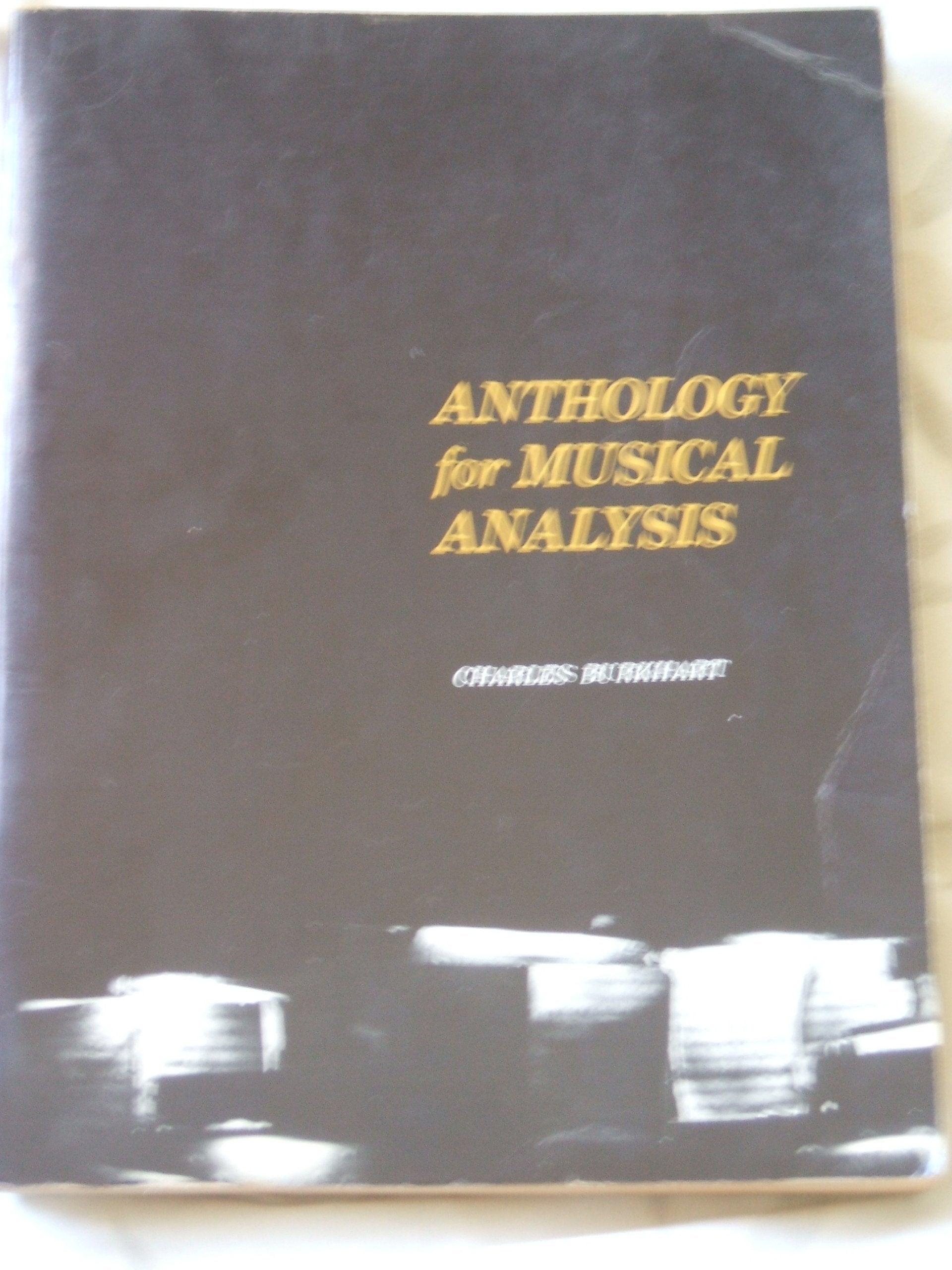
Anthology for Musical Analysis,Used
Sold by Ergodebooks, an authorized reseller.
Returns accepted within 30 days | support@ergodebooks.com
Shipping Information
- Free Standard Shipping — United States only
- Processing Time: 3–5 business days
- Estimated Delivery: 6–10 business days after dispatch
- Double-boxed, fully insured & discreetly packaged
- Tracking number sent via email once dispatched
Returns & Refund
Returns accepted within 30 days of delivery.
Damaged or Defective Item
Free return shipping + replacement or full refund
Wrong Item Received
Free return shipping + replacement or full refund
Change of Mind
Return shipping at customer's expense · 25% restocking fee applies
Payment Option

A landmark collection of over 200 complete musical compositions and movements, ranging from the Middle Ages to the present, Anthology for Musical Analysis offers first and secondyear music theory students a wealth of illustrations of chords, voiceleading techniques, and forms, plus some material for figuredbass realization and score reading. In addition, this book provides ample material for both a fullyear course in the analysis of musical forms and a onesemester course in twentiethcentury techniques. Because this book takes no theoretical position, it is adaptable to any theoretical approach and to any type of curriculum, including those that combine theory study with music literature and the history of musical style.About This EditionNew FeatureThe new edition features new repertoire, including pieces by Giacomo Carissimi, J. S. Bach, W. A. Mozart, Franz Schubert, Robert Schumann, Frdric Chopin, Giuseppe Verdi, Johannes Brahms, Gabriel Faur, Arnold Schoenberg, Sergei Prokofiev, Aaron Copland, Dmitri Shostakovich, Elliott Carter, and Milton Babbitt.Additional FeaturesThe website will include pieces that instructors can use to supplement the course.Two indexes serve as 'example finders,' locating by page and measure number many examples in the music of chords, harmonic and contrapuntal devices, musical forms and genres, and many other technical elements. Instructors will find this feature particularly useful to quickly find examples of what they want to teach.Each musical form (e.g., sonata form, rondo, variations, fugue, etc.) is represented by numerous examples progressing from simple to complex, providing students with a wide range of pieces to study.A glossary of foreign terms and expressions adds cultural context and defines relevant vocabulary for students.Burkhart includes works from more than 50 different composers and more than 200 complete musical compositions, providing a thorough sampling of styles for comparison and selections from which to choose. Although arranged chronologically, the pieces can be taught in the order that best suits the instructor's needs.See this title's supplement:Harmony and Voice Leading (Fourth Edition)
⚠️ WARNING (California Proposition 65):
This product may contain chemicals known to the State of California to cause cancer, birth defects, or other reproductive harm.
For more information, please visit www.P65Warnings.ca.gov.
- Q: What are the dimensions of the book? A: The book measures nine point zero two inches in length, one inch in width, and ten point five one inches in height.
- Q: How many pages does this book have? A: This book contains six hundred eighty-eight pages, providing extensive material for music theory students.
- Q: What is the binding type of this book? A: The book features spiral binding, allowing it to lay flat for easy reading and reference.
- Q: Who is the author of 'Anthology for Musical Analysis'? A: The author of the book is Charles Burkhart, a recognized figure in music theory.
- Q: What kind of musical styles does this book cover? A: The book includes a wide range of musical styles, from the Middle Ages to contemporary compositions.
- Q: Is this book suitable for beginners? A: Yes, this book is suitable for first- and second-year music theory students, making it accessible for beginners.
- Q: Can this book be used for advanced music theory courses? A: Yes, it contains ample material for both full-year and one-semester courses, including advanced techniques.
- Q: How can instructors use the supplemental website? A: The website provides additional pieces that instructors can use to supplement their courses effectively.
- Q: What is the focus of the musical examples in the book? A: The examples focus on various musical forms, such as sonata form and fugue, progressing from simple to complex.
- Q: Does this book include a glossary? A: Yes, it includes a glossary of foreign terms, providing cultural context and vocabulary definitions for students.
- Q: What is the return policy for this book? A: The return policy allows you to return the book if it is in new condition within a specified period.
- Q: What should I do if the book arrives damaged? A: If the book arrives damaged, contact customer support for a replacement or refund.
- Q: Are there any indexes in the book for finding examples? A: Yes, the book features two indexes that serve as example finders, helping locate musical examples by page and measure.
- Q: Is the book adaptable to different theoretical approaches? A: Yes, the book does not take a theoretical position, making it adaptable to various teaching methods.
- Q: Can this book be used in conjunction with music literature courses? A: Yes, it is suitable for curricula that combine music theory study with music literature and history.