If you have any questions, you are always welcome to contact us. We'll get back to you as soon as possible, withing 24 hours on weekdays.
Customer service
All questions about your order, return and delivery must be sent to our customer service team by e-mail at yourstore@yourdomain.com
Sale & Press
If you are interested in selling our products, need more information about our brand or wish to make a collaboration, please contact us at press@yourdomain.com
Help
If you have any questions, you are always welcome to contact us. We'll get back to you as soon as possible, withing 24 hours on weekdays.
Customer service
All questions about your order, return and delivery must be sent to our customer service team by e-mail at yourstore@yourdomain.com
Sale & Press
If you are interested in selling our products, need more information about our brand or wish to make a collaboration, please contact us at press@yourdomain.com
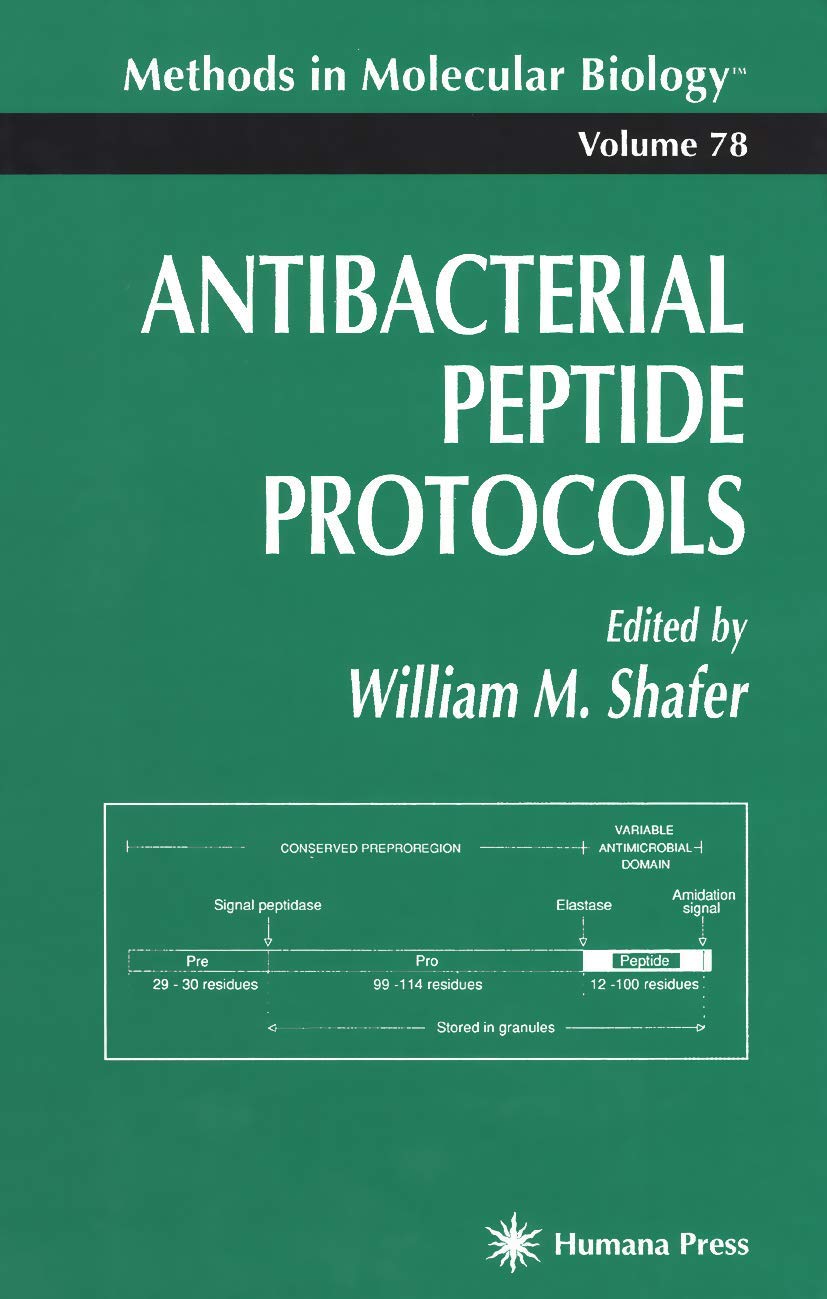
As this book. Antibacterial Peptide Protocols, will attest, my enthusi asm for the field of antibacterial peptides is based on a conviction (and I am unashamed to say, prejudice) that these substances are in essence antibiotics produced by the host that then participate in host defense against infectious agents. Because of their capacity to exert antibioticlike action against patho genic microorganisms (bacteria, fungi, parasites, and viruses), there is reason to believe that these agents will soon be used clinically to treat infectious diseases. In fact, in recent years, biotechnology companies have been formed for the sole purpose of developing antibacterial peptides for clinical use. It should be emphasized that antibacterial peptides will likely play a major role in the treatment of infectious diseases, particularly with the increasing prob lem of multidrugresistant microbes and the relative dearth of new antibiotics being provided by pharmaceutical companies. The topic of this volume of Methods in Molecular Biology, the diverse methods used in research on antibacterial peptides, is thus quite timely. As the subject of antibacterial peptides develops into its own discipline (something strongly suggested by the explosion in the number of papers published over the past decade), it is essential that reliable techniques and strategies be made available not only to those of us in the field, but also to the newcomers and researchers in complementary disciplines.
⚠️ WARNING (California Proposition 65):
This product may contain chemicals known to the State of California to cause cancer,
birth defects, or other reproductive harm.
For MAP (Minimum Advertised Price) violations and Intellectual Property (IP) or Trademark concerns, please contact:
support@ergodebooks.com
⚠️ California Proposition 65 Warning: Some products sold on this website may expose you to chemicals known to the State of California to cause cancer, birth defects, or other reproductive harm. For more information, visit www.P65Warnings.ca.gov.