If you have any questions, you are always welcome to contact us. We'll get back to you as soon as possible, withing 24 hours on weekdays.
Customer service
All questions about your order, return and delivery must be sent to our customer service team by e-mail at yourstore@yourdomain.com
Sale & Press
If you are interested in selling our products, need more information about our brand or wish to make a collaboration, please contact us at press@yourdomain.com
Help
If you have any questions, you are always welcome to contact us. We'll get back to you as soon as possible, withing 24 hours on weekdays.
Customer service
All questions about your order, return and delivery must be sent to our customer service team by e-mail at yourstore@yourdomain.com
Sale & Press
If you are interested in selling our products, need more information about our brand or wish to make a collaboration, please contact us at press@yourdomain.com
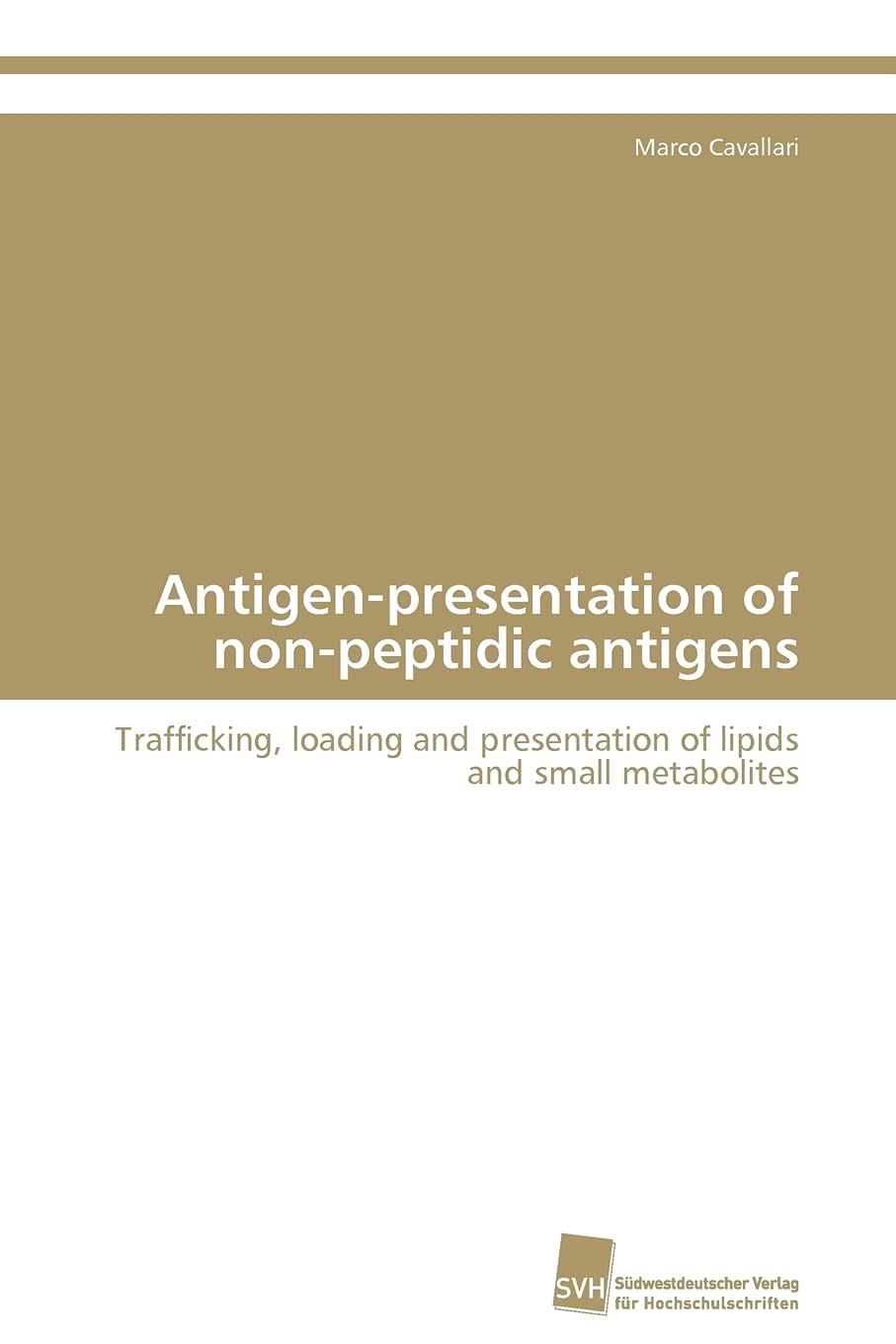
T cells recognize a broad variety of antigens, including peptides, lipids and nonpeptidic phosphorylated metabolites. Clarification of the rules rendering nonpeptidic molecules immunogenic is essential to understand and to influence the reactions of the immune system to this class of substances in health and disease. Molecular mechanisms governing the immunogenicity of nonpeptidic ligands such as their cell internalization, trafficking within intracellular organelles, association with dedicated antigenpresenting molecules, induction of central and peripheral tolerance, and finally their role in autoimmune diseases as well as in protection during infection are unknown to date. The aims were to assess the cell biological rules of immunogenicity and immunological functions of nonpeptidic antigens, with particular emphasis on cell trafficking of nonpeptidic antigens and antigenpresenting molecules focusing on the reactivity and presence of invariant natural killer T cells in disease, the role of CD1a trafficking in lipid antigen presentation, and the requirements for membrane translocation of phosphorylated mevalonate metabolites that stimulate T cell receptor gammadelta cells.
⚠️ WARNING (California Proposition 65):
This product may contain chemicals known to the State of California to cause cancer,
birth defects, or other reproductive harm.
For MAP (Minimum Advertised Price) violations and Intellectual Property (IP) or Trademark concerns, please contact:
support@ergodebooks.com
⚠️ California Proposition 65 Warning: Some products sold on this website may expose you to chemicals known to the State of California to cause cancer, birth defects, or other reproductive harm. For more information, visit www.P65Warnings.ca.gov.