
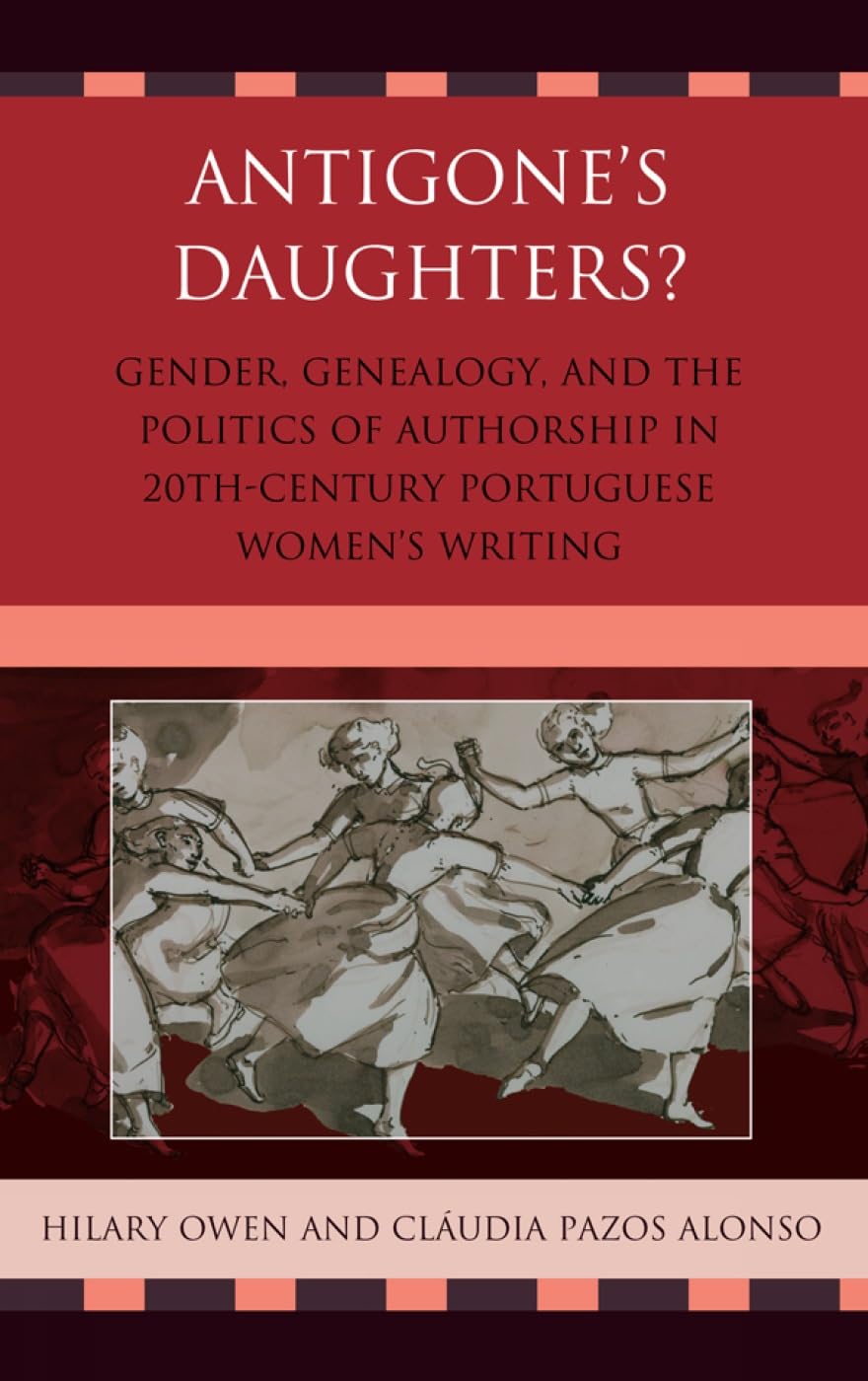
Title
Antigone'S Daughters?: Gender, Genealogy And The Politics Of Authorship In 20Thcentury Portuguese Women'S Writing
Sold by Ergodebooks, an authorized reseller.
Returns accepted within 30 days | support@ergodebooks.com
Shipping Information
- Free Standard Shipping — United States only
- Processing Time: 3–5 business days
- Estimated Delivery: 6–10 business days after dispatch
- Double-boxed, fully insured & discreetly packaged
- Tracking number sent via email once dispatched
Returns & Refund
Returns accepted within 30 days of delivery.
Damaged or Defective Item
Free return shipping + replacement or full refund
Wrong Item Received
Free return shipping + replacement or full refund
Change of Mind
Return shipping at customer's expense · 25% restocking fee applies
Payment Option

Antigone'S Daughters? Provides The First Detailed Discussion In English Of Six Wellknown Portuguese Women Writers, Working Across A Wide Range Of Genres: Florbela Espanca (18941930), Irene Lisboa (18921958), Agustina Bessa Lus, (1923 ), Natlia Correia (192393), Hlia Correia (1949 ) And Ldia Jorge (1946 ). Together They Cover The Span Of The 20Th Century And Afford Historical Insights Into The Complex Gender Politics Of Achieving Institutional Acceptance And Validation In The Portuguese National Canon At Different Points In The 20Th Century.Although A Patrilinear Evolutionary Model Visibly Structures National Literary History In Portugal To The Present Day, Women Writers And Critics Have Not Generally Sought To Replace This With A Matrilinear Feminist Counterhistory. The Unifying Metaphor That The Authors Adopt Here For The Purpose Of Discussing Portuguese Women'S Ambivalent Response To Female Genealogy Is The Classical Figure Of Antigone, Who Paradoxically Sacrifices Her Own Genealogical Continuity In The Name Of Defending Family And Kinship, While Resisting The Patriarchal Pragmatics Of Statebuilding. Should Women Writers, Faced With The Absence Of A Female Tradition, Posit A Womancentred Place Outside The Jurisdiction Of Male Genealogy, However Strategically Essentialist That Place May Be, Or Should They Primarily Eschew Fixed Sexual Identity To Act As Unnameable Saboteurs, Undoing The Law Of Patriarchal Tradition From Within?
⚠️ WARNING (California Proposition 65):
This product may contain chemicals known to the State of California to cause cancer, birth defects, or other reproductive harm.
For more information, please visit www.P65Warnings.ca.gov.
- Q: What is the page count of this book? A: This book has two hundred fifty pages. It provides a comprehensive discussion of Portuguese women writers and their contributions.
- Q: What are the dimensions of the book? A: The book measures six point thirty-eight inches in length, one point one inches in width, and nine point forty-one inches in height.
- Q: What type of binding does the book have? A: The book is bound in hardcover. This sturdy binding ensures durability for readers.
- Q: Who is the author of this book? A: The author of this book is Hilary Owen. She explores the complexities of gender and authorship in Portuguese literature.
- Q: Which genres does this book cover? A: This book falls under the Criticism and Theory category. It focuses on gender politics in Portuguese women's writing.
- Q: How does this book explore women's writing? A: The book discusses six notable Portuguese women writers. It examines their responses to gender politics and literary traditions.
- Q: Is this book suitable for academic study? A: Yes, this book is suitable for academic study. It provides critical insights into gender issues in literature.
- Q: What themes are explored in this book? A: The book explores themes of gender, genealogy, and authorship. It addresses the challenges faced by women writers.
- Q: What is the target audience for this book? A: The target audience includes scholars, students, and readers interested in gender studies. It appeals to those studying literature and cultural analysis.
- Q: How should I care for this hardcover book? A: To care for this book, store it upright in a cool, dry place. Avoid exposure to direct sunlight to prevent damage.
- Q: Can this book be returned if it's damaged? A: Yes, damaged books can typically be returned. Check the specific return policy of the retailer for details.
- Q: Is the book safe for young readers? A: This book is primarily intended for adults and academic audiences. It may not be suitable for younger readers due to its complex themes.
- Q: What if I have questions about the book's content? A: If you have questions about the content, consider reaching out to the publisher or checking scholarly reviews for detailed analyses.
- Q: Are there any special features in this book? A: No special features are mentioned for this book. It focuses on the text and critical analysis of the authors discussed.
- Q: How does this book compare to other works in its genre? A: This book offers a unique perspective on Portuguese women's writing. It differs by focusing specifically on gender and authorship in this literary context.
- Q: What is the significance of the title 'Antigone's Daughters'? A: The title refers to the metaphor of Antigone, symbolizing women's struggles against patriarchal traditions in literature. It highlights the challenges faced by women writers.